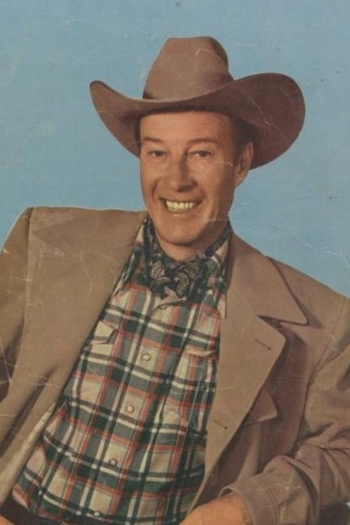
Bill Elliott
1904 - 1965Wild Bill Elliott (October 16, 1904 – November 26, 1965) was an American film actor. He specialized in playing the rugged heroes of B Westerns, particularly the Red Ryder series of films. By 1925, he was getting occasional extra work in films. He took classes at the Pasadena Playhouse and appeared in a few stage roles there. By 1927, he had made his first Western, The Arizona Wildcat, playing his first featured role. Several co-starring roles followed, and he renamed himself Gordon Elliott. But as the studios made the transition to sound films, he slipped back into roles as an extra and bit parts, as in Broadway Scandals, in 1929. For the next eight years, he appeared in over a hundred films for various studios, but almost always in unbilled parts as an extra.
Elliott began to be noticed in some minor B Westerns, enough so that Columbia Pictures offered him the title role in a serial, The Great Adventures of Wild Bill Hickok (1938). The serial was so successful, and Elliott so personable, that Columbia promoted him to starring in his own series of Western features, replacing Columbia's number-two cowboy star Robert "Tex" Allen. Henceforth Gordon Elliott would be known as Bill Elliott. Within two years, he was among the Motion Picture Herald's Top Ten Western Stars, where he would remain for the next 15 years.
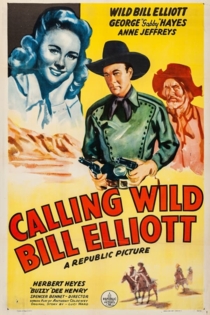
In 1943, Elliott signed with Republic Pictures, which cast him in a series of Westerns alongside George "Gabby" Hayes. The first of these, Calling Wild Bill Elliott, gave Elliott the name by which he would be best known and by which he would be billed almost exclusively for the rest of his career.
Following several films in which both actor and character shared the name Wild Bill Elliott, he took the role for which he would be best remembered, that of Red Ryder in a series of sixteen movies about the famous comic strip cowboy and his young Indian companion, Little Beaver (played in Elliott's films by Bobby Blake). Elliott played the role for only two years but would forever be associated with it. Elliott's trademark was a pair of six guns worn butt-forward in their holsters.
Elliott's career thrived during and after the Red Ryder films, and he continued making B Westerns into the early 1950s. He also had his own radio show during the late 1940s. His final contract as a Western star was with Monogram Pictures, where budgets declined as the B Western lost its audience to television. When Monogram became Allied Artists Pictures Corporation in 1953, it phased out its Western productions, and Elliott finished out his contract playing a homicide detective in a series of five modern police dramas, his first non-Westerns since 1938.
Elliott retired from films (except for a couple of TV Western pilots which were not picked up). He worked for a time as a spokesman for Viceroy cigarettes and hosted a local TV program in Las Vegas, Nevada, which featured many of his Western films.
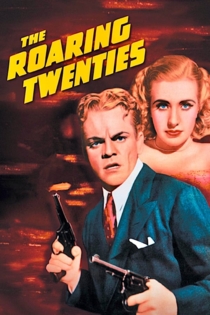
The Roaring Twenties
Raoul Walsh
James Cagney, Priscilla Lane
After World War I, Armistice Lloyd Hart goes back to practice law, former saloon keeper George Hally turns to bootlegging, and out-of-work Eddie Bartlett becomes a cab driver. Eddie builds a fleet of cabs through delivery of bootleg liquor and hires Lloyd as his lawyer. George becomes Eddie's partner and the rackets flourish until love and rivalry interfere.
The Roaring Twenties
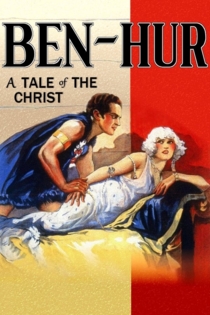
Ben-Hur: A Tale of the Christ
Fred Niblo
Ramon Novarro, Francis X. Bushman
Erstwhile childhood friends, Judah Ben-Hur and Messala meet again as adults, this time with Roman officer Messala as conqueror and Judah as a wealthy, though conquered, Israelite. A slip of a brick during a Roman parade causes Judah to be sent off as a galley slave, his property confiscated and his mother and sister imprisoned. Years later, as a result of his determination to stay alive and his willingness to aid his Roman master, Judah returns to his homeland an exalted and wealthy Roman athlete. Unable to find his mother and sister, and believing them dead, he can think of nothing else than revenge against Messala.
Ben-Hur: A Tale of the Christ
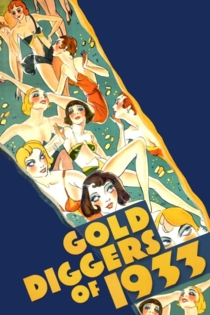
Gold Diggers of 1933
Mervyn LeRoy
Warren William, Joan Blondell
Things get tough for Carol and her showgirl pals, Trixie and Polly, when the Great Depression kicks in and all the Broadway shows close down. Wealthy songwriter Brad saves the day by funding a new Depression-themed musical for the girls to star in, but when his stuffy high-society brother finds out and threatens to disown Brad, Carol and her gold-digging friends scheme to keep the show going, hooking a couple of millionaires along the way.
Gold Diggers of 1933
Only Yesterday
John M. Stahl
Margaret Sullavan, John Boles
On the back of the Wall Street Crash of 1929, a young business man is about to commit suicide. With the note to his wife scribbled down and a gun in his hand, he notices a thick envelope addressed to him at the desk. As he begin to read, we're taken back to the days of WW1 and his meeting with a young woman named Mary Lane.
Only Yesterday
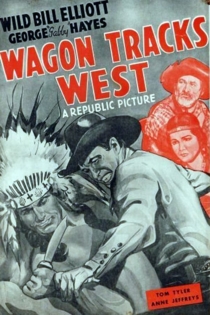
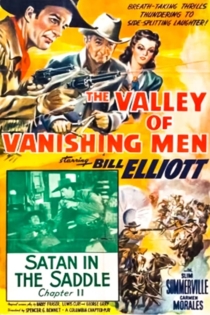
Calling Wild Bill Elliott
Spencer Gordon Bennet
Bill Elliott, George 'Gabby' Hayes
When territorial governor Steven Nichols (Herbert Heyes) terrorizes the population with violence and heavy taxes, the Culver family stands up to him, but after the family patriarch is murdered, wandering gunslinger Wild Bill Elliott (Wild Bill Elliott) is falsely accused of the crime.
Calling Wild Bill Elliott
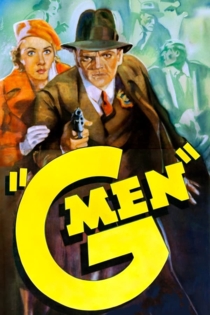
'G' Men
William Keighley
James Cagney, Margaret Lindsay
James “Brick” Davis, a struggling attorney, owes his education to a mobster, but always has refused to get involved with the underworld. When a friend of his is gunned down by a notorious criminal, Brick decides to abandon the exercise of the law and join the Department of Justice to capture the murderer.
'G' Men