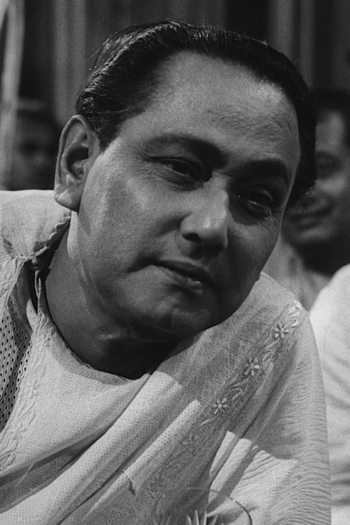
Chhabi Biswas
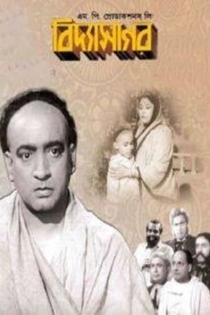
1900 - 1962He is best remembered for his numerous roles as the quintessential aristocratic patriarch, and was himself the scion of a rich and cultured North Kolkata family. He was born on 12 July 1900. His father, Bhupatinath Biswas, was well known for his charitable works. His first name was Sachindranath, but his mother nicknamed her handsome son Chhabi (a beautiful picture!) and the name stuck throughout his life and career. His portrayal of the formidable father figure, though often typecast, yet was powerful and convincing enough to earn both popular and critical accolades. That portrayal was culturally significant, too as in the British Raj, enlightened Bengali used to combined both the hoary tradition and the Anglicised urbanity.

Dada Thakur
Sudhir Mukherjee
Biswajit Chatterjee, Chhabi Biswas
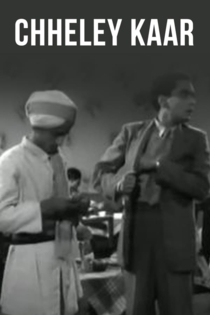
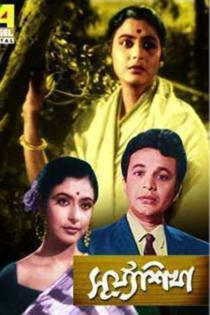
The film is based closely on the life of the real-life Dada Thakur, and was made in his lifetime. Dada Thakur (Chhabi Biswas) starts his career with a hand-operated press, with his wife as his assistant. Later he is joined by Nalini Kanta Sarkar, an underground freedom-fighter. Dada Thakur brings out the newspaper Jangipur Sangbad. He campaigns against social evils and earns the ire of the ruling classes. He saves a girl, Lata, from the unwanted advances of Darpanarayan (Biswajeet), scion of the local zamindar. Lata joins the ranks of freedom fighters working with Sarkar. Subsequently, a reformed Darpanarayan too becomes an ardent follower of Dada Thakur and joins the struggle for India's freedom. Dada Thakur's greatest success is when he helps an ordinary man, a petty shopkeeper, get elected as the Municipal Commissioner of Jangipur.
Dada Thakur

Adarsha Hindu Hotel
Ardhendu Sen
Chhabi Biswas, Dhiraj Bhattacharya
darsha Hindu Hotel is a Bengali drama film directed by Ardhendu Sen based on the same name novel of Bibhutibhushan Bandyopadhyay.[1][2] This film was released on 31 May 1957 under the banner of Sreelekha Pictures
Adarsha Hindu Hotel
Bicharak
Prabhat Mukherjee
Uttam Kumar, Chhabi Biswas
The plot revolves with series of flashbacks which reveals a judge's past and hidden secretes. Gyanendra, a judge lives with his wife Sarama. Being the Judge, every time of trial of similar cases he remembers his past, the truth about his questionable actions. Gyanendra always recalls when he was a popular lawyer, married to Sumoti, a suspicious and rude lady. But he had a weak feelings for his professor's daughter Sarama. One day Gyanendra's house was burnt and his first wife Sumoti dies. Gyanendra could not make any attempt to save her perhaps he was unable bear Sumati further. Thereafter he marries Sarama and becomes a judge but he realizes his crime and those past haunts him much.
The Judge
Saheb Bibi Golam
Kartick Chattopadhyay
Uttam Kumar, Chhabi Biswas
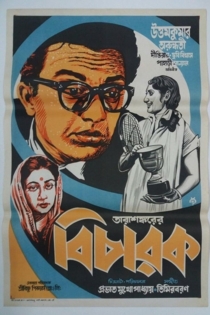
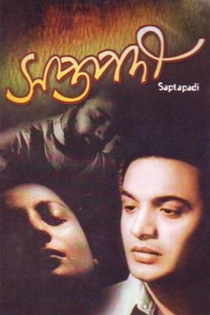
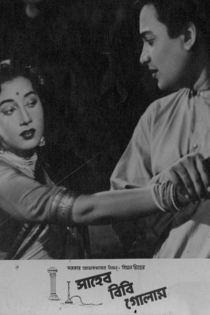
The film explores the tragic fall of feudalism in Bengal during the British Raj. The title of the movie and the story is a reference to the plot simultaneously exploring a platonic relationship between a beautiful, forlorn wife of an aristocrat and a career-driven clerk.
Saheb Bibi Golam
কাঞ্চনজঙ্ঘা
Satyajit Ray
Chhabi Biswas, Karuna Banerjee
Played out in real time, several complex family dramas intersect in the landscape of the Himalayan foothills, allowing the Bengali auteur to examine the class and generational differences of postcolonial India while celebrating the hopes of a society in transition.
Kanchenjungha

Jomalaye Jibanta Manush
Prafulla Chakraborty
Bhanu Bannerjee, Chhabi Biswas
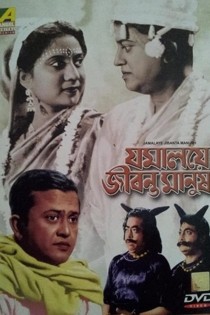
A living human being's funny adventure in hell. The film focuses on the Hindi mythology of the God of Death and how his messengers snatches the life of any living being who has supposedly completed his days on the Earth. The story focuses on the mistake of two messengers who mistakenly pronounce a man dead even before he was supposed to be. Knowing of this goof-up, the god of death gets scared as no living person is supposed to enter 'Hell". Nevertheless, due to the good deeds performed by this human being while he was alive, he is given permission to travel to Heaven where he begins searching for his wife who had passed away sometime back.
Jamalaye Jibanta Manush
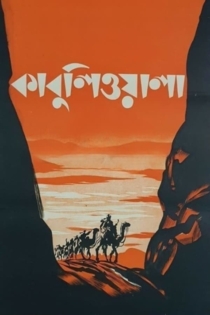
Kabuliwala
Tapan Sinha
Chhabi Biswas, Oindrila Tagore
Rahmat, a middle-aged fruit seller from Afghanistan, comes to Calcutta to hawk his merchandise and befriends a small Bengali girl called Mini who reminds him of his own daughter back in Afghanistan. One day Rehmat receives news of his daughter’s illness and decides to return to Afghanistan. But before he goes a violent fight with a customer leads to Rehmat killing him. He gets out of prison ten years later. Based on a Rabindranath Tagore story.
Kabuliwala

জলসাঘর
Satyajit Ray
Chhabi Biswas, Padmadevi
A wealthy landlord who lives a decadent life with his wife and son. His passion - his wife would call it his addiction - is music, and he spends a great deal of his fortune on concerts held for the locals in his magnificent music room. He feels threatened by his neighbour, a commoner who has attained riches through business dealings. His passion for music and quest for social respect are his undoing, as he sacrifices his family and wealth trying to retain it.
The Music Room


Louhakapat
Tapan Sinha
Bhanu Bannerjee, Kali Bannerjee
Based on a story of the Bengali writer Jorasandho, this film takes a sympathetic view of hardened criminals, and was notable in its time for its unsentimental and realistic depiction of the daily grind behind bars and the complex relationships that develop between the inmates.
Iron Door