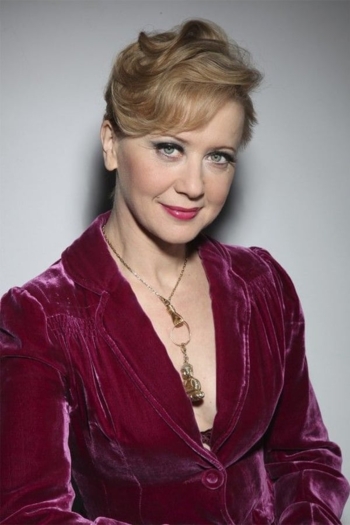
Enikő Eszenyi
1961 (65 лет)Eszenyi Enikő Csengerben született, Szabolcs-Szatmár-Megyében. Tanulmányait a budapesti Színház- és Filmművészeti Főiskolán végezte, ahol színésznőként szerzett diplomát 1983-ban. Mesterei Horvai István és Kapás Dezső voltak. A Vígszínházban töltötte két éves főiskolai gyakorlatát, majd 1983-ban oda is szerződött.
Színészként számos fontos szerepet eljátszott már a drámairodalom remekműveiből, elsősorban Shakespeare nőalakjai közül Lady Annát, Lady Machbeth-et, Kleopátrát, Rosalindát, Violát, a Lear királyban pedig Cordéliát és a Bolondot. Emlékezetes alakításai között szerepel Szent Johanna (Shaw: Szent Johanna), Nasztya (Gorkij: Éjjeli menedékhely), Blanche (Tennessee Williams: A vágy villamosa), Margaret (Tennesse Williams: Macska a forró tetőn), Alison (Osborne: Dühöngő ifjúság), Nóra (Ibsen: Nóra), Lulu (Frank Wedekind: Lulu), Ranyevszkaja (Csehov Cseresznyéskert). Színészi munkáját a szakma több előadásban is a legjobb alakításért járó díjjal jutalmazta.
Eszenyi Enikő 1991-ben kezdett rendezni. Első bemutatójára a Budapesti Kamaraszínházban került sor, ahol Büchner Leonce és Lénáját állította színpadra, mely hét díjat nyert az 1991-es Országos Színházi Találkozón – köztük a legjobb rendezésért járó elismerést és a legjobb férfi illetve legjobb női főszereplőnek járó díjakat is –, és nagy sikerrel játszották további öt évadon keresztül. Következő évadban Marton László igazgató felkérésére a Vígszínház nagyszínpadán megrendezte A West Side Story-t, mellyel ismét elnyerte a legjobb rendezés díját. Következő munkája – Kleist Heilbronni Katicája – is hasonló szakmai- és közönségsikert aratott és elnyerte a legjobb díszlet és a legjobb jelmez díját, és az egyik színész munkáját a legjobb férfi mellékszereplőnek járó díjjal honorálták.
Külföldi munkái mellett fáradhatatlanul rendezett Budapesten a Vígszínházban illetve a Pesti Színházban. A klasszikus drámairodalom remekművei közül színpadra állította Osztrovszkij Négy lába van a lónak, mégis megbotlik és Beumarchais Figaro házassága című drámáját; a kortársak közül pedig Grumberg Varrónők; Winterberg-Rukov-Hansen Az ünnep és Tracy Letts Augusztus Oklahomában című művét. Az Augusztus Oklahomában rendezése több szakmai elismerést illetve díjat kapott, és sikerrel szerepelt a Pécsi Országos Színházi Találkozón.
Eszenyi Enikő munkásságát nemcsak szakmai díjakkal és elismerésekkel, de több állami kitüntetéssel jutalmazták: a Jászai Mari-díj és az Érdemes Művész elismerés után 2002-ben megkapta a Kossuth-díjat, ami a legrangosabb magyar állami kitüntetés, 2007-ben pedig a Magyar Köztársaság Tisztikeresztjét. 2010-ben a Magyar Kultúra Nagykövetének választották. 2012 januárjában az Év Embere díjazottjai közé választották, és elnyerte az Év Művésze 2011 díjat. 2009. február 1-jén a Vígszínház igazgatójának nevezték ki. Igazgatóként fontos számára, hogy a társulattal közösen, a hagyományokat megőrizve, új energiákkal szülessen újra a színház, mely erőteljes, friss, mai hangon tud szólni közönségéhez.
Forrás: Wikipédia
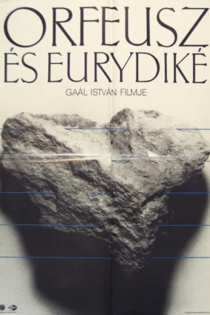
Orfeusz és Eurydiké
István Gaál
Sándor Téri, Lajos Miller
The opera-film, as opposed to Gluck's Vienna version, is a recollection of the ancient tragic Greek myth. Orpheus, who is able to defeat Hades with the power of art, is unable to conquer his own human defects. Amor is sympathetic to Orpheus' sufferings as he mourns his dead beloved, and lets him know the message sent by the Gods, namely that he may take her home from the underworld if he is capable of not looking at her.
Orpheus and Eurydice
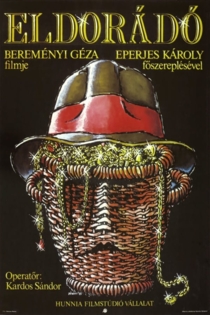
The Midas Touch
Géza Bereményi
Károly Eperjes, Judit Pogány
A deep drama about life in Hungary after the WW2 until the revolt against Russians in '56. The main character is the head of the black market in Budapest. He thinks he can buy everyone and everything but at the end he must face that he can't buy life. A must-see for everyone. Casting involves some of the greatest Hungarian actors. The story takes place in the eighth district of Budapest focusing on the market place on Teleki square which is still working. The movie contains some archive footage of real fight during the revolution.
The Midas Touch
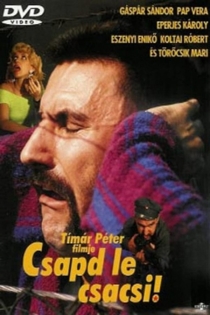
Control
Nimród Antal
Sándor Csányi, Csaba Pindroch
A tale about a strange young man, Bulcsú, and the fellow ticket inspectors on his team who work aboard the subterranean Budapest Metro. A tale about racing along the tracks, and about a mysterious serial killer. And a tale about love.
Kontroll
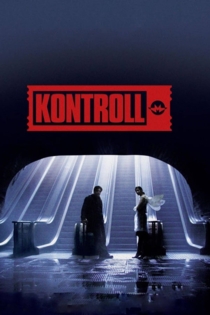
The Music of Life
György Palásthy
Péter Huszti, Ildikó Piros
The Soviet-Hungarian film version of the biography of one of the most talented composers of our time, the classic of the Vienna operetta - Imre Kálmán, known for all his music for operettas "The Csárdás Princess", "Countess Maritza", "The Circus Princess", "The Violet of Montmartre", "Die Bajadere" and many others. The music of Imre Kálmán has no equal in operetta for its festivity, “elegance”, and the refinement of melodics and orchestration.
The Music of Life
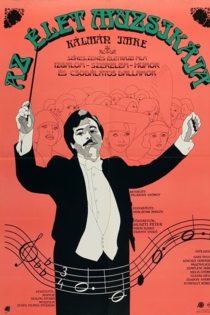
The Right Man for a Delicate Mission
János Kovácsi
Ottilia Borbáth, István Bozóky
In this somewhat uneven political satire, good revolutionaries have overthrown a totalitarian state riddled with corruption on all levels when a truly naive bureaucrat (Boguslaw Linda) is placed on a jury that will judge the results of a history competition. Once on the jury, the young bureaucrat starts looking into the past himself and gets embroiled in a labyrinth. The past may well be unclear because recent leaders have certain facts that need to be kept buried. Filmmaker Janos Kovacsi borrows characteristics from revolutions in the Eastern European block (1950s-1980s) to create this post-revolutionary society with an idealist commander (Ferenc Zenthe) meant to lead them. A clue as to what happens next lies in the opening scene -- the funeral of the commander who has given his life for his cause. Ironically, Kovacsi undoubtedly faced censorship on this film. That would not only account for some uneven narration, but it adds a dimension of reality to the topic at hand.
The Right Man for a Delicate Mission

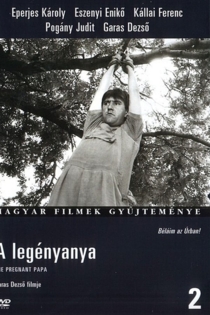

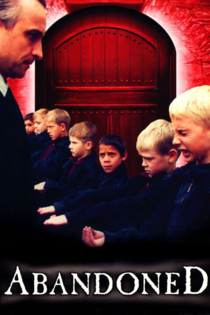
Abandoned
Árpád Sopsits
Tamás Mészáros, Szabolcs Csizmadia
Áron is a happy child in his family. But at some point things take a different turn, and his mother starts to lose her health rapidly. As this happens, the man in charge decides what's best for Áron without consulting the young boy's opinion, and the boy finds himself thrown out of his warm home into an orphanage in the woods. He's utterly displeased by what's happening, without knowing he has yet to face much worse...
Abandoned
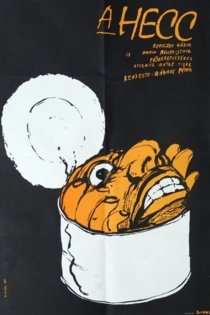
Just For Kicks
Péter Gárdos
Reviczky Gábor, Armin Mueller-Stahl
The life of Tamás, antiquities dealer, runs in a normal, everyday way, he is stealing, swindling, cheating on his wife just like everybody else. Suddenly three men, who live in the attic, start harassing him. They construct coarse and unpleasant schemes against him and carry them into effect at the most unexpected times and places.
Just For Kicks
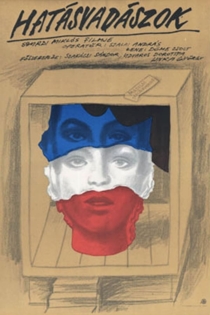
Midnight Rehearsal
Miklós Szurdi
György Linka, Enikő Eszenyi
A country theatre wants to stage the historical play of the opposition author, who is famous abroad but it is well known, that he is fatally ill. The ministry unexpectedly bans the premier. The author is not informed about the decision and he wants - before his death - the costume rehearsal of the play. The director and his actors set up a false rehearsal at the price of a long night's tedious job.
Midnight Rehearsal
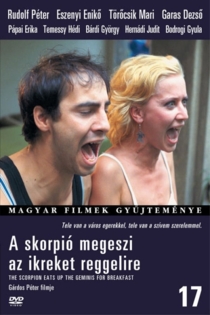
A skorpió megeszi az ikreket reggelire
Péter Gárdos
Péter Rudolf, Enikő Eszenyi
This is a story of a man who wants to grasp and hold his beloved one by him and a woman who insists on that her love can't be grasped; 'she' only can deliver hers. It has written Comedy, Romance etc... but, this movie doesn't include anything funny, I believe. After I see the movie, I thought that love springs through a one's heart and it has its own spirit. It doesn't have to have any company. The matter is if it coincides its mate; that's it.
Scorpio Eats Gemini for Breakfast
Paths of Death and Angels
Zoltán Kamondi
Enikő Eszenyi, Rudolf Hrušínský
Reviewers found this somewhat surreal film so visually stunning as to be worth watching even when it was not clear to them what was going on. In the story, Jozef Schrevek is a man with unusual powers which he wishes to pass on to his son before his death, which is coming soon. Unfortunately, his son is much more interested in boozing and womanizing and being a well-known habitué of nightclubs, than in taking his father seriously and receiving his powers and the responsibilities which come along with them. The tension between the two escalates when a young woman enters their lives.
Paths of Death and Angels

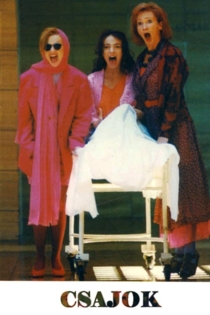
Csajok
Ildikó Szabó
Enikő Eszenyi, Dorottya Udvaros
Enikős and Dorkas marriage is unbearable. Hysterical, cruel and humiliating scenes are enacted in front of the childrens eyes, while the childless Barbara is held by her husband, the painter, to be a toy and sometimes a painting screen.
Bitches
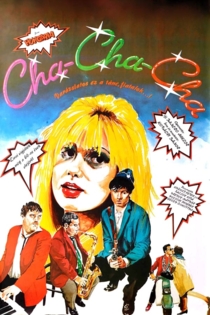
Cha-Cha-Cha
János Kovácsi
Péter Rudolf, Rita Tallós
Gruber is a normal 16-year-old growing up in Budapest in 1962, but he has a problem -- how does he get to know the opposite sex? At the Sunday afternoon dance classes the young "ladies and gentlemen" hold each other while dancing, and that makes the lessons worth something. Otherwise, the pianist's attention wanders and the orchestra does not exactly play with a single-minded dedication. In fact, everybody seems to have other things on their minds, except for the enthusiastic dance instructor and his ever-smiling assistant.
Cha-Cha-Cha