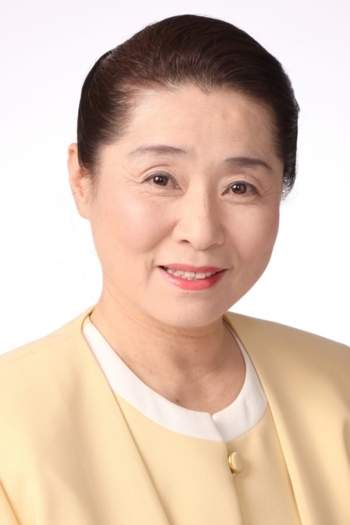
Mari Okamoto
1954 (71 год)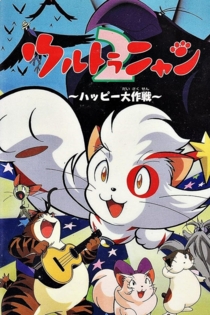
まことちゃん
Tsutomu Shibayama
Junji Chiba, Takeshi Kitano
The series follows the odd life of kindergartener Makoto Sawada and his family. Makoto gets into all sorts of toilet and adult humor. He sometimes dresses in his mother's and sister's clothing, and often has a long strand of mucus dangling from his nose.
Makoto-chan
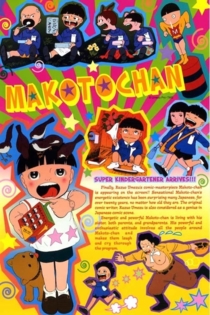
The Yellow Handkerchief
Yoji Yamada
Ken Takakura, Chieko Baisho
The story is about a convict released from prison for an old murder who is thinking about returning to his ex-wife and his former life. If she puts a yellow handkerchief on the window, it would mean that she wants him back at home.
The Yellow Handkerchief
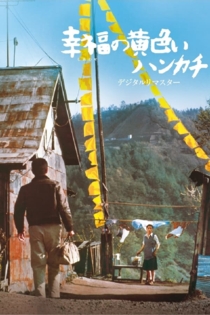
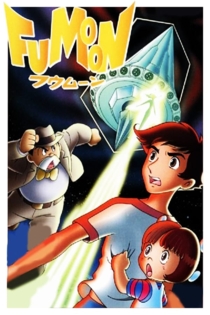
フウムーン
Hisashi Sakaguchi
Kousei Tomita, Minori Matsushima
Nuclear testing has resulted in the abrupt evolution of the Fumoon, a tiny but highly intelligent humanoid race on a small island, who are detected by Dr. Yamadano. Except for a few witnesses including the detective Shinsaku Ban, and the young men Rock and Kenichi and Kenichi’s sister Pichi (Pinoko), no one believes him. The Fumoon are kidnapping animals from around the world to bring with them as they use their space ships to evacuate the earth, because they know Earth is shortly to be destroyed by an enveloping cloud of black gas created by a stellar explosion. The Fumoon intend to abandon mankind, but one Fumoon, Rokoko, who becomes good friends with Kenichi, tries to help Dr. Yamadano and the others to develop a space ship to allow a few humans to escape, with the help of Dr. Ochanomizu and Dr. Frankenstein.
Fumoon
あゝ野麦峠
Satsuo Yamamoto
Shinobu Ōtake, Mieko Harada
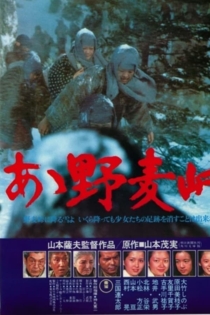
The story of the silk industry and the young girls who worked as silk spinners in the early 1900s in Japan. The silk mills were located in Okaya which lies just beyond the Nomugi Pass. The women and girls worked in a hot, humid atmosphere without rest, and endured those conditions and sexual harassment to earn money for their poor families. Across the ocean, it was the great depression in America.
Nomugi Pass
同胞
Yoji Yamada
Chieko Baisho, Akira Terao
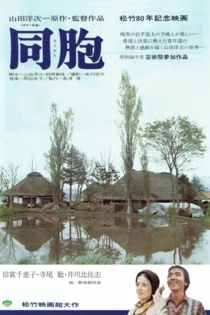
This appears to be a labor of love. Its about a village which is given the opportunity to put on a musical. They would have to pay the overhead and, being that they are farmers and always busy and not rich, question the wisdom and feasibility of such an idea. A spokesperson for the acting troupe Ms. Kono lays out the whole thing and they must decide. You get little slices of rural life in Japan far, at least in sentiment, from Tokyo. The best thing about this film is that it has heart. The acting is good, but it is really about the simple storyline of outing on a show. Films rarely get made with such simplistic plots these days. Enjoy this little slice of what city people call “the simple life”.
The Village
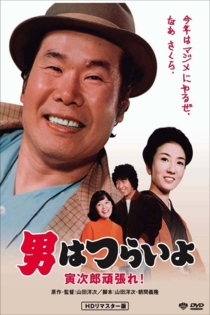
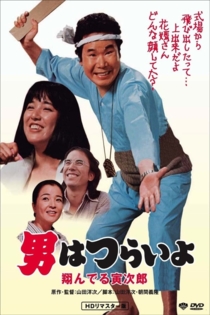
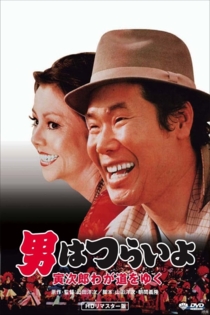
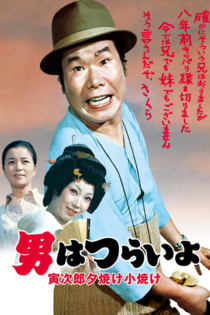
男はつらいよ 寅次郎夕焼け小焼け
Yoji Yamada
Kiyoshi Atsumi, Chieko Baisho
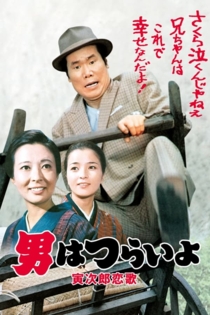
Tora-san arrives in Shibamata on Mitsuo's first day of school only to find that on his account, Mitsuo was embarrassed. After a fight with his family, he goes to a bar to drink, then brings home a surly old man with a sad story, whose identity will surprise everyone. Later, Tora meets Botan, a geisha.
Tora-san's Sunrise and Sunset
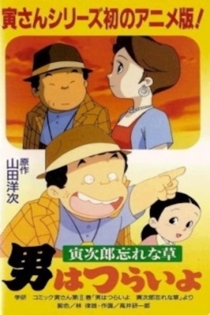
Otoko wa Tsurai yo: Torajirou Wasurenagusa
Setsuko Shibuichi
Kouichi Yamadera, Eken Mine
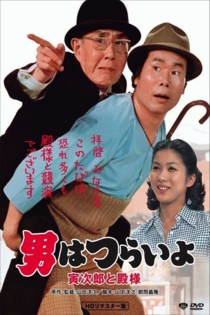
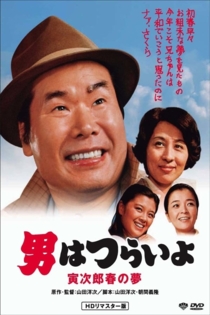
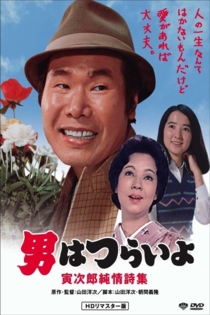
Anime adaptation of the "Otoko wa Tsurai yo (It's tough being a man)" film series by Youji Yamada. Kuruma Torajirou (or Tora-san), a traveling salesman whose sole possessions include only the contents of a small suitcase, the clothes on his back and some pocket money, wanders from town to town peddling his wares.
Otoko wa Tsurai yo: Torajirou Wasurenagusa
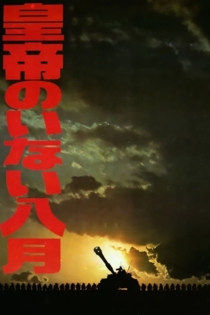
皇帝のいない八月
Satsuo Yamamoto
Tsunehiko Watase, Sayuri Yoshinaga
Taking the Chilean coup as an example, a group of young officers plan to overthrow the Japanese government on V-J Day. They aim to abolish the post-war constitution, restore the national army and revive the traditional spirit of Japan. As the conspiracy is exposed, the coup squadrons are wiped out one by one. The remaining squadron takes over a night train bound for Tokyo.
August without Emperor