
Samuel Adamčík
1904 - 1984The Millennial Bee
Juraj Jakubisko
Jozef Kroner, Štefan Kvietik
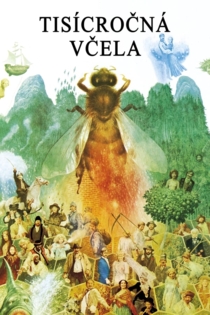
A family saga taking place mostly in a small Slovak village over a period of thirty years (1887–1917). The first part captures the life of Martin Pichandu in the development of his craft, masonry; in the second part, his son is center stage living in a period of socio-political crisis, which ultimately results in the first World War. After originally airing on Czechoslovakian television in 1983 as a four-part 226-minute mini-series, this production received a 163-minute theatrical release in 1984.
The Millennial Bee
Štyridsaťštyri
Paľo Bielik
Juraj Sarvaš, Dušan Blaškovič
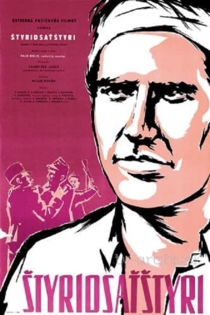
Drama about the rebellion of the Trencín Infantry Regiment against its superior officers in the Serbian city of Kragujevac, at the end of the First World War. It was the biggest and deadliest rebellion in the Austro-Hungarian army.
Štyridsaťštyri
Jánošík
Paľo Bielik
František Kuchta, Ctibor Filčík
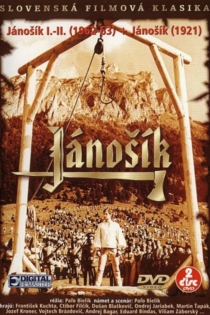
This film is one of the most popular pictures of Slovak cinema and relates the story about the legendary folk hero and brigand Juro Jánošík [1688-1713] and the social situation in Slovakia of the late 17th and early 18th centuries. The first part talks about Jánošík's childhood, studies and return to his native village. In the second part Jánošík leaves for the hills, where he organizes his band of brigands and starts an anti-feudal resistance. The film concludes with Jánošík's execution.
Jánošík
Živý bič
Martin Ťapák
Viera Strnisková, Emília Vášáryová
A film about the dramatic lives ofthe people of the village of Ráztoka during WW I. Women are left without husbands, families fall apart, finding themselves on the verge of poverty. Eva, the main heroine, is going through difficulties after her husband was drafted to the army. Her defilement and her tragic death cause a rebellion by which the village inhabitants finally stand up against their unbearable situation.
Živý bič
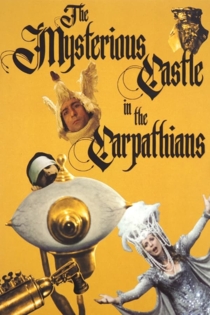
The Mysterious Castle in the Carpathians
Oldřich Lipský
Evelyna Steimarová, Michal Dočolomanský
In 1897, in a castle near the town of Werewolfville in the Carpithians, a slightly deranged Professor Orfanik experiments with his new inventions which include, even at this early date, television and a film camera. He is also an obsessed opera fan, keeps the body of his favorite diva preserved in a crypt in the castle. In order to keep away nosy visitors, the baron's mad-scientist assistant, invents all sorts of spooky phenomena in order to give the castle a creepy reputation.
The Mysterious Castle in the Carpathians
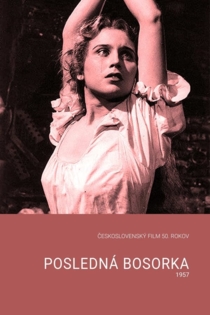
Posledná bosorka
Vladimír Bahna
Oľga Zöllnerová, Mikuláš Huba
This dramatic story is situated in the town of Trnava of the 18th century. Painter Peter paints an altar-piece of the Martyrdom of St. Juliet and his model is a young girl. This is much disliked by the clergy who unjustly accuse the girl of witchcraft. She is saved from being burnt at a stake by the students of the Trnava University. (IMDb)
The Last Witch
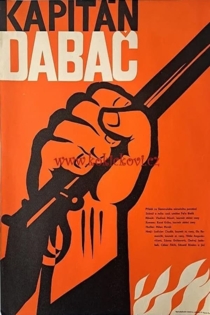
Kapitán Dabač
Paľo Bielik
Ladislav Chudík, Elo Romančík
Капитан Дабач служил в словацких частях гитлеровской армии, видел зверства и бессмысленную жестокость фашистов. Он всегда бездумно подчинялся приказам. Но однажды он не выполнил приказа и отказался расстреливать беззащитное население маленькой украинской деревни. Его судили, приговорили к расстрелу. Дабачу удалось бежать, и он примкнул к партизанам. В дни национального восстания против оккупантов Дабач был одним из его активных участников.
Kapitán Dabač
Zbehovia a pútnici
Juraj Jakubisko
Ferencz Gejza, Mikuláš Ladižinský
An apocalyptic story of three wars in three film tales encompassing the end of the WWI,WWII, as well as a vision of the world destroyed by nuclear weapons. This film was honored at the film festivals in Venice and Sorrento. Immediately after that the copy with Italian subtitles was locked in a safe as evidence of the anti-communist activities of the director, who used real footage of the Soviet invasion.
The Deserter and the Nomads