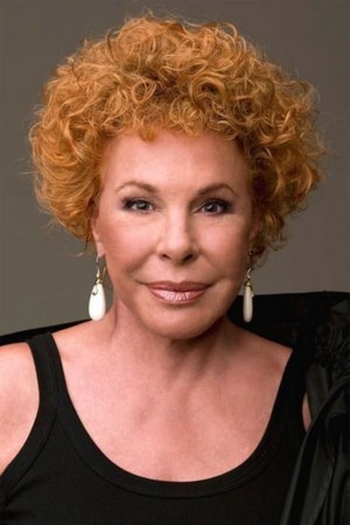
Ornella Vanoni
1934 (91 год)Vanoni started her artistic career in 1960 as a theatre actress. She mostly performed in Bertolt Brecht works, under the direction of Giorgio Strehler at his Piccolo Teatro in Milan. At the same time, she started a music career. The folklore and popular songs she explored in her early records, especially the ones about the criminal underworld in Milan, resulted in her receiving the nickname cantante della mala ("Underworld Singer") for singing Milanese songs on that genre.
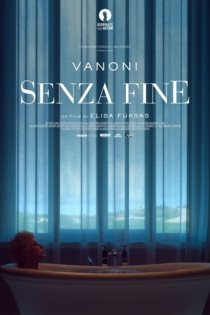
Vanoni scored two major hits in 1963 with "Senza Fine" and "Che cosa c'è", both written for her by Gino Paoli. In 1964 she won the Festival of Neapolitan song with "Tu si na cosa grande". In the following years, she took part in a series of Festivals of Italian song in San Remo with the songs "Abbracciami forte" (1965), "Io ti darò di più" (1966), "La musica è finita" (1967), "Casa Bianca" (1968), and "Eternità" (1970). "Casa Bianca", which finished second in 1968, was the subject of a copyright dispute between the composer of the song, Don Backy, and the Clan Celentano label.
In the late 1960s, Vanoni recorded "Una ragione di più", "Un'ora sola ti vorrei", "L'appuntamento" (a cover of the Brazilian song "Sentado à Beira do Caminho" by Erasmo Carlos and Roberto Carlos) and "Non Dirmi Niente", a cover of Burt Bacharach's "Don't Make Me Over". In 1972 she sang "Quei giorni insieme a te", the theme from Lucio Fulci's critically acclaimed mystery thriller film Don't Torture a Duckling.
In 1976, Vanoni collaborated with Vinicius de Moraes and Toquinho on the song "La voglia, la pazzia, l'incoscienza e l'allegria". During the 1980s, she released "Ricetta di donna", "Uomini", and "Ti lascio una canzone" (with Gino Paoli). In 1989, she returned to the Sanremo Music Festival with the song "Io come farò". In 1999, she recorded "Alberi", a duet with Enzo Gragnaniello. In 2004 she released an album of duets with Paoli to celebrate her 70th birthday.
In addition to her music career, Ornella Vanoni was active in other creative fields, starring in stage and TV shows, movies. In January 1977 she posed nude for the Italian edition of Playboy magazine and requested a statute by her long time friend the artist Arnaldo Pomodoro as payment. The inclusion of her song "L'Appuntamento" (1970) in the soundtrack of Steven Soderbergh's Ocean's Twelve in 2004 sparked a worldwide renewal of interest in her music.
Source: Article "Ornella Vanoni" from Wikipedia in English, licensed under CC-BY-SA 3.0.
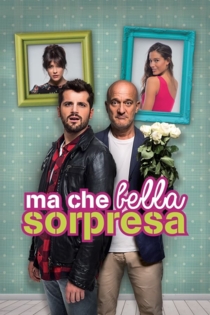
Ma che bella sorpresa
Alessandro Genovesi
Claudio Bisio, Frank Matano
High school professor Guido is a hopeless romantic whose life falls apart after his girlfriend leaves him for another man. Paolo, a former student of his, helps him to exit his depression, only in order to become a PE teacher himself.
Ma che bella sorpresa
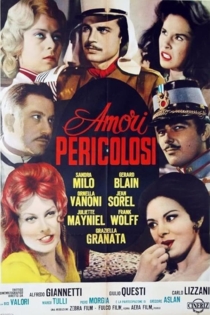
Amori pericolosi
Carlo Lizzani, Giulio Questi
Juliette Mayniel, Frank Wolff
Three episodes of varying pitch and quality. In the first a maid plans the elimination of her lover's wife with him, but she doesn't enjoy the fruits of victory. In the second (The patrol) a soldier of the Foreign Legion neglects his duties for running after a prostitute. The third segment has as its protagonist a general of the belle époque that goes on a date.
Amori pericolosi
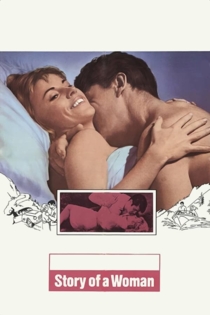
Storia di una donna
Leonardo Bercovici
Bibi Andersson, Robert Stack
Karin studies music in Rome and falls in love with Bruno. She learns that he is married and therefore returns to Sweden. She meets David. They marry and have a daughter. David is sent to Rome. Karin meets Bruno again.
Story of a Woman
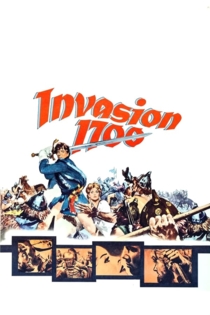
Col ferro e col fuoco
Fernando Cerchio
Jeanne Crain, Pierre Brice
Set in 18th-century Eastern Europe, the film concerns the star-crossed romance between a Polish military officer and a gorgeous Slavic princess. The princess' vengeful lover cuts a path of death and destruction throughout the land.
Invasion 1700