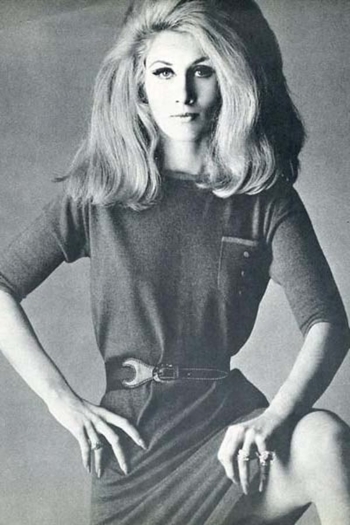
Jane Holzer
1940 (85 лет)Taylor & Ultra: On the 60s, The Factory, and Being a Warhol Superstar
Brian Bayerl
Taylor Mead, Ultra Violet
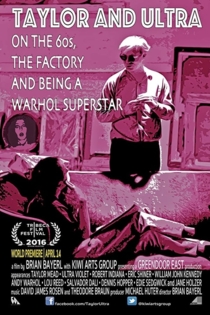
Warhol Superstar Ultra Violet (Isabelle Colin Dufresne) and Lower East Side Icon Taylor Mead (Poet/Actor/Artist) share their stories of Manhattan in the 1960s.
Taylor & Ultra: On the 60s, The Factory, and Being a Warhol Superstar
13 Most Beautiful… Songs for Andy Warhol's Screen Tests
Andy Warhol
Paul America, Ann Buchanan
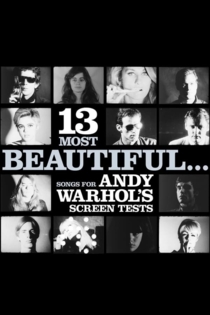
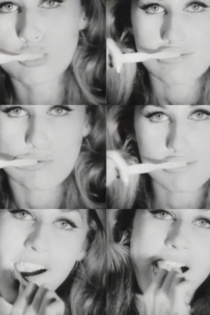
Between 1964 and 1966, Andy Warhol shot nearly 500 Screen Tests, beautiful and revealing portraits of hundreds of different individuals, from Warhol superstars and celebrities to friends or anyone he thought had "star potential". All visitors to his studio, the Factory. Subjects were captured in stark relief by a strong keylight, and filmed by Warhol with his stationary 16mm Bolex camera on silent, black and white, 100-foot rolls of film. The resulting two-and-a-half-minute film reels were then screened in slow motion, resulting in a fascinating collection of four-minute masterpieces that startle and entrance, mesmerizing in the purest sense of the word. Songwriters Dean Wareham and Britta Phillips, formerly of the band Luna and currently recording as Dean & Britta, incorporated original compositions as well as cover songs to create new soundtracks for the 13 films.
13 Most Beautiful… Songs for Andy Warhol's Screen Tests
Warhol
Bill Verity, David Bailey
Andy Warhol, Pat Ast
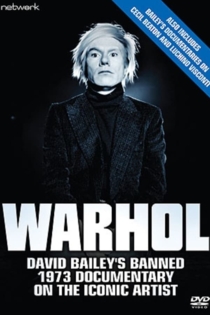
David Bailey, self-taught photographer and one of the prime architects of the Swinging Sixties, broadened his horizons in the early 1970s by making high-profile documentaries for ATV. With his standing among the artistic community, Bailey was given unprecedented access to Pop Art legend Andy Warhol and his followers, in an attempt to penetrate behind the expressionless exterior of a man who was one of the most controversial figures of his generation.
Warhol
Award Presentation to Andy Warhol
Jonas Mekas
Andy Warhol, Jane Holzer
In 1964 Film Culture magazine chose Andy Warhol for its annual Independent Film award. The plan was to show some of Andy's films and have Andy come on stage and hand him the award. Andy said, no, he didn't want a public presentation.
Award Presentation to Andy Warhol

Brand X
Win Chamberlain
Taylor Mead, Sally Kirkland
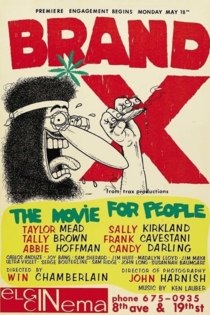
In 1969, Taylor Mead complained to his friend artist Wynn Chamberlain that Andy Warhol had never paid him for any of the work he had done for him and Wynn said he would make a film especially for Taylor. Inspired by the banality of 1960's television, Chamberlain wrote and directed Brand X, an 87 minute series of faux television shows spoofing the politics and mass media of the day, complete with commercials for Sex, Sweat, Computer Dating and Peanut Butter. BRAND X follows Taylor Mead through a day in a wacky television studio as he portrays an exercise guru, a talk show host, a veteran returning from the American Civil War, a hospital patient in a soap opera, the President of the United States and a televangelist giving the Nightly Sermon. BRAND X satirizes President Nixon, the Vietnam War, sex, drugs, computers, money and race relations.
Brand X
Battle at Versailles
Fritz Mitchell
Stanley Tucci, Ajak Deng
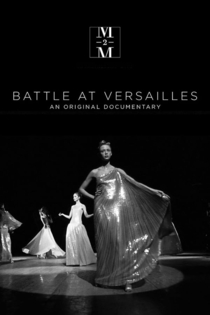
M2M's first original long-form documentary, Battle at Versailles, follows an event in 1973 at Palace of Versailles where top French designers such as Yves Saint Laurent and Pierre Cardin faced of against American newcomers Oscar de la Renta, Bill Blass, Anne Klein and Halston. That pitted France’s best designers against the best America had to offer. It was the first time the fashion world's gaze was fixated on American design.
Battle at Versailles
Ciao! Manhattan
David Weisman, John Palmer
Edie Sedgwick, Wesley Hayes
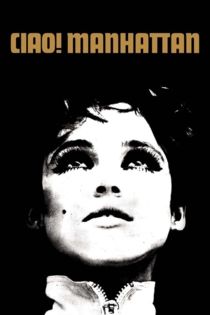
Warhol superstar and icon of sixties bohemia Edie Sedgwick delivers her final performance in this semiautobiographical look at the price of fame. Fiction and documentary—including snippets from Sedgwick’s own audio dairies—mingle in a freewheeling portrait of Susan Superstar (Sedgwick), a New York celebrity on a drug-fueled downward slide that mirrors Sedgwick’s own self-destructive spiral. Released after her death from an overdose of barbiturates, CIAO! MANHATTAN endures as a testament to Sedgwick’s unique magnetism and as a haunting elegy for the counterculture she embodied.
Ciao! Manhattan
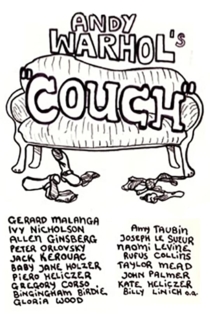
Couch
Andy Warhol
Bingingham Birdie, Rufus Collins
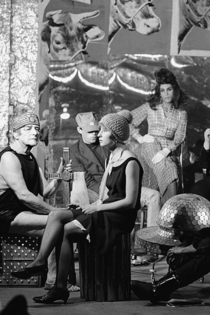
The couch at Andy Warhol's Factory was as famous in its own right as any of his Superstars. In Couch, visitors to the Factory were invited to "perform" on camera, seated on the old couch. Their many acts-both lascivious and mundane-are documented in a film that has come to be regarded as one of the most notorious of Warhol's early works. Across the course of the film we encounter such figures as poets Allen Ginsberg and Gregory Corso, the writer Jack Kerouac, and perennial New York figure Taylor Mead.
Couch
Batman Dracula
Andy Warhol
Gregory Battcock, David Bourdon
Batman Dracula is a 1964 black and white American film produced and directed by Andy Warhol, without the permission of DC Comics. The film was screened only at Warhol's art exhibits. A fan of the Batman series, Warhol made the movie as a homage. Batman Dracula is considered to be the first film featuring a blatantly campy Batman. The film was thought to have been lost until scenes from it were shown at some length in the documentary Jack Smith and the Destruction of Atlantis.
Batman Dracula
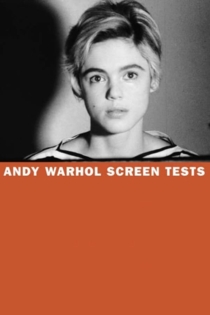
Andy Warhol Screen Tests
Andy Warhol
Eric Andersen, Paul America
The films were made between 1964 and 1966 at Warhol's Factory studio in New York City. Subjects were captured in stark relief by a strong key light, and filmed by Warhol with his stationary 16mm Bolex camera on silent, black and white, 100-foot rolls of film at 24 frames per second. The resulting two-and-a-half-minute film reels were then screened in 'slow motion' at 16 frames per second.
Andy Warhol Screen Tests