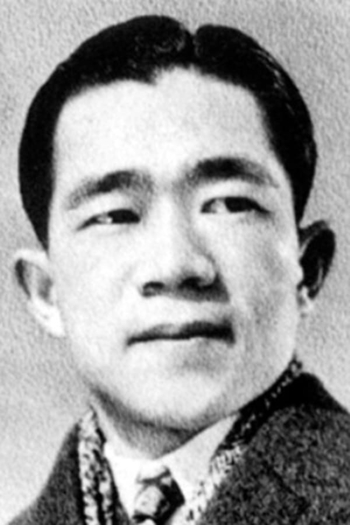
Sadao Maruyama
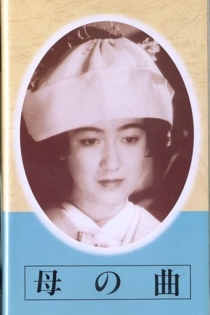
1901 - 1945Haha no kyoku
Satsuo Yamamoto
Setsuko Hara, Joji Oka
The prewar film Haha no kyoku (Mother's Melody, 1937) is known for its place in Japanese film history as one of the top three melodramas as well as for its authorship: Yamamoto Satsuo is an auteur not usually associated with filming melodramas. Yamamoto made the film right after he moved, along with his mentor Naruse Mikio, to the Toho film company. A number of subsequent postwar mother's films adopted some of its essences, making it a genre-defining moment in Japanese cinema. This great melodrama is atypical of Yamamoto's output, much of which deals with political corruption and inequities within social institutions and offers a strong anti-establishment appeal.
Mother's Melody
Hometown
Mansaku Itami
Bandō Mitsugorō VIII, Fusako Fujima
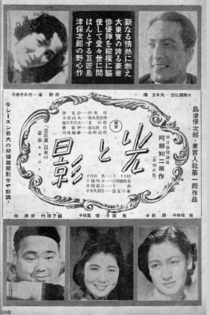
Set in a rural area of Shinshu, a drama in which a woman who graduated from a women's college in Tokyo with her brother's efforts opens up a new life in her hometown where she is tired of the city. The original is a stage play by Yobun Kaneko. Directed and written by Mansaku Itami.
Hometown

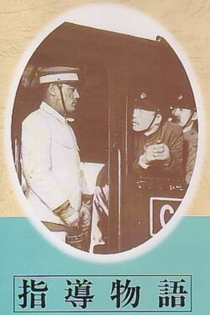
指導物語
Hisatora Kumagai
Sadao Maruyama, Susumu Fujita
In this semi-documentary, an older locomotive driver is tasked with training younger ones and is currently training two in particular. The old man is finding the task overwhelming as it is hard work with practical lessons and classroom components. His wife has died, but he has three daughters with the oldest taking care of her younger siblings.
Story of Leadership
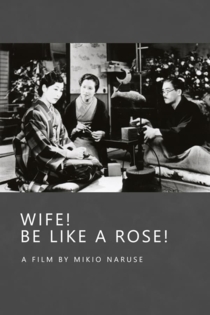
妻よ薔薇のやうに
Mikio Naruse
Sachiko Chiba, Yuriko Hanabusa
Kimiko, a Tokyo white-collar working girl, lives with her serious, intellectual, haiku-writing mother. Kimiko seeks to marry her boyfriend but needs her absent father to act as the go-between and negotiate the marriage. Kimiko travels and finds her father living with a second family.
Wife! Be Like a Rose!
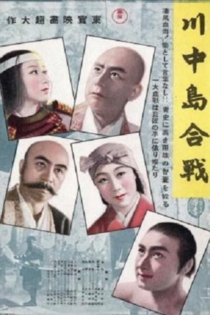
川中島合戰
Teinosuke Kinugasa
Ennosuke Ichikawa, Denjirō Ōkōchi
This epic depicts the battle between Uesugi Kenshin and Takeda Shingen. The focus of the story is the struggle by the unit leader in charge of the main supply wagons and the supply troops to transport materiel to the Uesugi army. To this are added episodes involving an itinerant woman.
The Battle of Kawanakajima
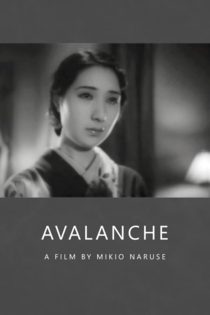
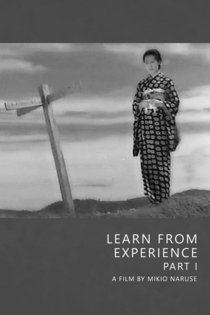
禍福 前篇
Mikio Naruse
Takako Irie, Chieko Takehisa
Part 1 of a 2-part romance based on a story by noted author Kikuchi Kan. The central character here is Toyomi (played by Takako IRIE, star of Mizoguchi’s "Water Magician), a rich young woman in love with Shintaro (Minoru TAKADA), a rich young man. Unfortunately, Shintaro’s father is in the process of arranging a marriage for him with Yurie (Chieko TAKEHISA), the scion of an even wealthier family. In order to avoid this, the two young lovers flee to Tokyo to live together. When Shintaro comes back to proclaim his intent to marry Toyomi, his father browbeats him into attending the long-arranged marriage meeting with Yurie. While Shintaro is back home, Toyomi goes on a vacation trip with her closest chum, Michiko (Yumeko AIZOME). At a class reunion, Toyomi is to distressed (at not having heard from Shintaro for so long), she doesn’t go out on the town with her classmates. Michiko, however, runs into Shintaro and Yurie (also out on the town), and pulling him aside, demands an explanation.
Learn from Experience, Part One
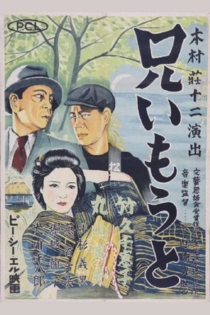
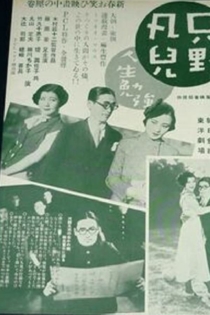
兄いもうと
Sotoji Kimura
Chieko Takehisa, Sadao Maruyama
Ino tries to control Mon’s every move, but she becomes a fallen woman, having an affair with a student, Obata whereas her sister San remains a “good girl.” The mother is very supportive of her daughters, but, the father, Akaza, who is the stonecutter foreman on the damn, lacks control of his family.
Brother and Sister
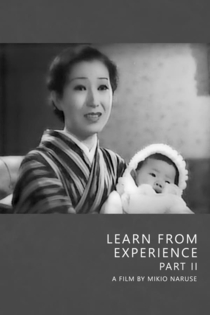
禍福 後篇
Mikio Naruse
Takako Irie, Chieko Takehisa
Part 2 of a 2-part romance (fist part - Kafuku zempen) based on a story by noted author Kikuchi Kan. In the second half, we discover that Toyomi is pregnant -- and while Shintaro and Yurie are on their extended honeymoon, she bears his child, a girl named Kiyoko. She is supported in adversity by Michiko -- and gets considerable moral support from not only her own mother but also from Shintaro's mother and siblings. Even more surprisingly, Yurie strikes up a friendship of sorts with her. When Yurie learns that the child is Shintaro's, she convinces Toyomi that it would be best to let Shintaro (and her) raise Kiyoko, so Toyomi can get on with making a proper life for herself. Tearfully, Toyomi agrees. Sometime later, Michiko goes to visit Toyomi -- and sees her at work, as a kindergarten teacher.
Learn from Experience, Part Two
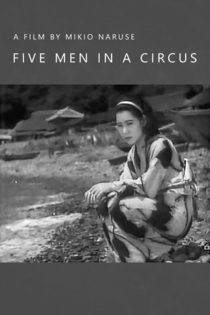
サーカス五人組
Mikio Naruse
Heihachirô Ôkawa, Hiroshi Uruki
The main focus is on the 5 member band of a small circus as it runs into problems while touring rural Japan. It also pays lots of attention to the two daughters of the aging and irascible ringmaster-circus owner. The high points are the sound (and score) and cinematography featuring a lot of vertiginous panning (appropriate - as high wire trapeze artists are also an important element in the film). A fascinating side-light on 30s Japan.
Five Men in a Circus
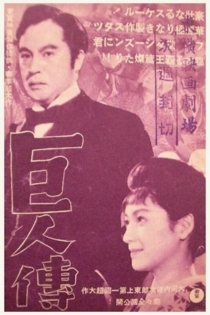
巨人伝
Mansaku Itami
Setsuko Hara, Yoshio Kosugi
Japanese adaptation of LES MISERABLES. The last film of director Itami took inspiration from Les Miserables. Transpiring during the Southwestern War of 1877 in Japan, which was the last civil war in the country, a criminal escapes prison only to be found by a monk. The criminal decides to turn a new leaf based on their conversation and goes on to become a town's mayor. He hears news of a mistaken arrest and identity. The revelation of truth is the start of a series of miseries.
The Giant
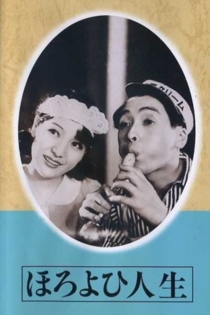
Ongaku kigeki: Horoyoi jinsei
Sotoji Kimura
Musei Tokugawa, Dekao Yokoo
The film generally regarded as Japan’s first true musical was also the first film made entirely in-house by the pioneering studio P.C.L., a company founded specifically to take advantage of emergent sound technology. P.C.L. worked in collaboration with a brewer’s firm, Dai Nihon Biru, who met the production costs of the film in full, and whose products are featured in the film in an example of the sophisticated and modern merchandising typical of the studio’s early work. The film is partially set in a beer hall, and its story concerns a beer seller at a train station and her relationship with a music student trying to create a hit song. Director Sotoji Kimura was to become a company stalwart, making such films as Ino and Mon, while actress Sachiko Chiba would emerge the studio’s first real star, appearing in such films as Wife Be Like a Rose.
Tipsy Life