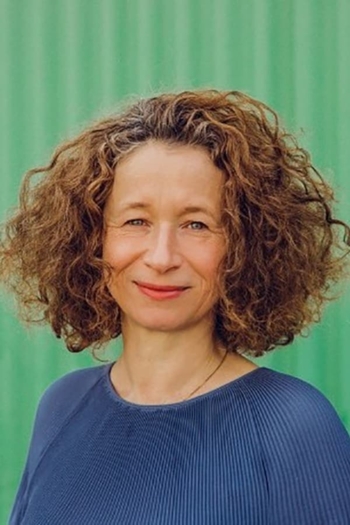
Aliona van der Horst
2021Stemmen van Bam
Aliona van der Horst, Maasja Ooms
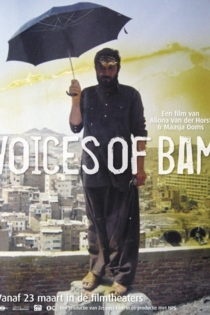
Two Dutch filmmakers travel to the Iranian city of Bam to chronicle the aftermath of a December 2006 earthquake that claimed 43,000 lives and left 60,000 homeless. Survivors reflect on the catastrophe in voice-over narration that's accompanied by images of a wrecked metropolis fighting to pull itself back together. The gripping documentary received its North American premiere at the 2006 Tribeca Film Festival.
Voices of Bam
Boris Ryzhy
Aliona van der Horst
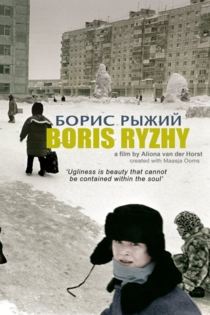
Russian Poet Boris Ryzhy was handsome, talented and famous. So why did he end his own life at the age of 26? A quest to find the answer takes the filmmaker to the notorious neighbourhood in the cold industrial city of Yekaterinenburg where Boris grew up...
Boris Ryzhy
Water Children
Aliona van der Horst
Tomoko Mukaiyama
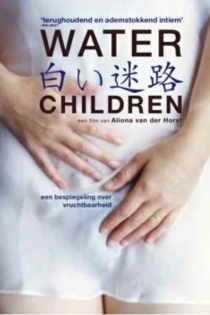
As a film about fertility, Water Children is an ode to womanhood and the body Filmmaker Aliona van der Horst followed the trail of the unconventional Dutch-Japanese pianist and artist Tomoko Mukaiyama who made a huge work of art on the theme of womanhood and fertility. She created a cathedral-like space out of twelve thousand white silk dresses in which visitors, as in a ritual, roamed around and fell silent. And where people confessed intimate details about children who were or were not born, about sexuality and life-choices. This resulted in a majestic epic about motherhood, miscarriages and menopause. In a visual and poetic way, the film penetrates into what is probably still one of the greatest of taboos, menstruation, and, as a consequence, touches upon universal themes around life and death.
Water Children
Liefde is aardappelen
Aliona van der Horst
Aliona van der Horst
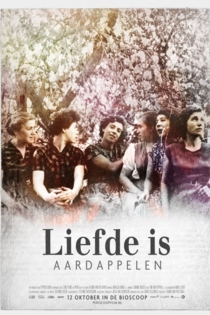
One day, Dutch film maker van der Horst was given her inheritance: 6 square meters, one sixth of a small, wooden house in the Russian countryside where her mother grew up. It was as if life had handed her a card she felt forced to play. She began a journey into the past, back into the childhood of her Russian mother and her five sisters, all of whom struggled with fear, famine and war in Stalin’s Russia; experiences that left them scarred to their very soul. Aliona’s quest into the lives and fate of her family becomes a loving, poignant, and poetic film with Chekhovian characters. Accompanied by the magical animation of acclaimed Italian artist Simone Massi, unimaginable events in the Soviet past are given an immediate charge. Along with the stories of ordinary people living in the small farmhouse, the film maker tells the tale of Soviet terror, immense bravery and a fear that has never left those four walls.
Love Is Potatoes
Don't Shoot the Messenger
Suzanne Raes, Fabie Hulsebos
Four people,in their struggle to improve the world during Occupy Amsterdam. The downfall of the encampment is part of their search for ways to bring about change. But why don't we want to hear their message?
Don't Shoot the Messenger

Dame met het witte hoedje
Aliona van der Horst
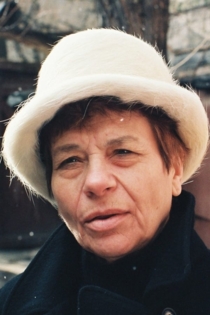
Documentary about the abuse of psychiatry for political purposes in the former Soviet Union. Hanna Michailenko, an Ukrainian schoolteacher from Odessa was locked up in a psychiatric ward from 1980 until 1988 for refusing to work for the Soviet Secret Service, the KGB.
The Lady with the White Hat
My Father's Silence
Aliona van der Horst
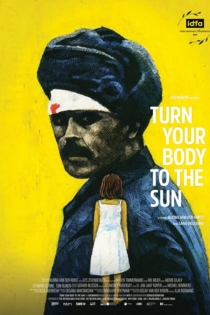
The incredible life story of a Soviet soldier of Tatar descent who was captured by the Nazis during WWII. Today, his daughter Sana is tracing the path of her silent father, trying to understand what made him the man she knew as a child, through his diaries, as well as various personal and public archives and registries. As she accompanies Sana in her journey, filmmaker Aliona van der Horst excavates film archives, to find traces of those millions of Soviet soldiers who were caught in the crossfire of fighting between dictators, who were there but were easily left out of the narrative of the global war.
Turn Your Body to the Sun
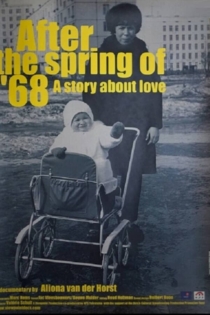
Na de lente van '68
Aliona van der Horst
Film about falling in love across a political, cultural and geographic divide. It tells of Simon, a Dutch communist student in Moscow, who meets and marries the Russian Zoya in the spring of 1968. Simon returns to the Netherlands, expecting his wife to follow shortly afterwards when her exit visa is granted. Her application however is refused over and over again. Months pass and then years. A child is born to Zoya in Moscow: director Aliona van der Horst relates her parents' struggle in this tender account of family history caught up in international politics. In the numerous love-letters he wrote to his beloved Zoya feelings of helplessness are expressed: 'Our happiness depends on how the political wind blows'. Van der Horst uses these letters as a guideline through the film. To tell her parents' story, Van der Horst weaves together archival footage, home movies and photographs with contemporary interviews.
After the Spring of '68