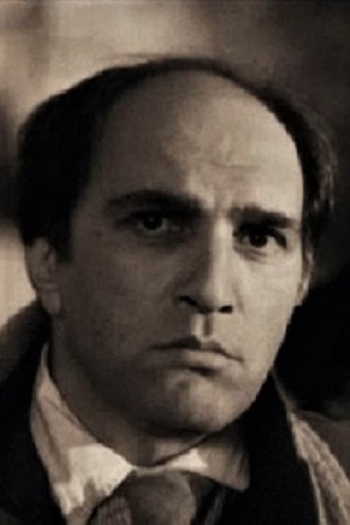
Janri Lolashvili
1942 (83 года)
გზა შინისაკენ
Aleqsandre Rekhviashvili
Vakhtang Panchulidze, Ramaz Chkhikvadze
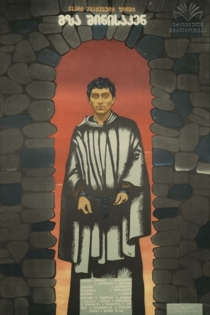
The way home for Aleksandr Rekhviashvili is not charted in the conventional sense. It takes the viewer along some peculiar roads and across a unique landscape: Georgian history and legend, politics and social stratification, religion and ethics. Allusive, stylized and allegorical from beginning to end, his long-banned The Way Home is in part a tribute to Rekhviashvili’s favorite director, Pasolini, especially to The Hawks and the Sparrows (1966). Together with the short film Nutsa (1971) and the widely acclaimed Georgian Chronicle of the 19th Century (1979; SFIFF 1983), The Way Home closes a triptych of films that represent Rekhviashvili’s poetic contemplation of Georgia’s past. It makes extensive use of poems by Bella Akhmadulina (the major female poet of the cultural ‘thaw’ of the ’50s and ’60s and a Georgian by descent), and of sets by Amir Kakabadze. Like other films in the trilogy, The Way Home is stunningly photographed in black-and-white.--Oxymoron
The Way Home
The Step
Aleqsandre Rekhviashvili
Merab Ninidze, Irina Chichinadze
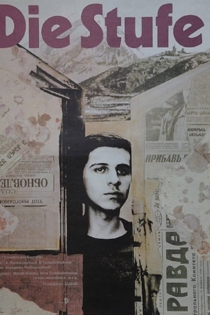
Alexi leaves the house of his father and stepmother and rents an apartment. He wants to be independent and find his place in the world. But no basic changes ensue – he has the same friends, with the same trivial conversations and the same inactivity. Only the death of his favorite teacher, to whom the young man felt very close, really changes his habitual way of life. Alexi makes a decision: he refuses a place at a research institute and leaves for a teaching job at a village school, the same school his mentor used to work at.
The Step
Miakhloeba
Aleqsandre Rekhviashvili
Ana Nijaradze, Janri Lolashvili
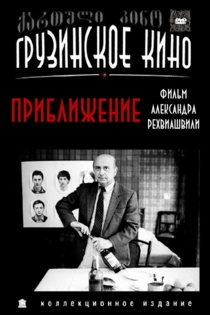
A full-blooded, interesting life has long eluded the house where a mother, father, son and daughter live. Trivial household matters, conversation at dinner about duty — that's all that connects them. The situation changes when it becomes known that the family inherited the village house, and that it will probably be necessary to enter into a struggle with the joint heirs. From the bottom of chests, old albums and documents confirming the priority of the family are extracted, and intrigues begin ...
Coming Closer
Some Interviews on Personal Matters
Lana Gogoberidze
Janri Lolashvili
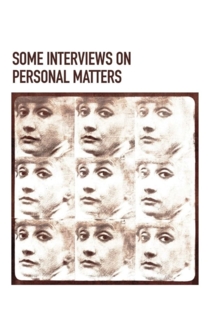
Sophiko, a well-known journalist, seems to be more close to many of her respondents when they need her advice than to his family members. All engrossed in her work, she suddenly finds out that she is losing her husband who has started a love affair with another woman. Of course, it strikes her badly but life never lets her to concentrate on her personal problems.
Some Interviews on Personal Matters
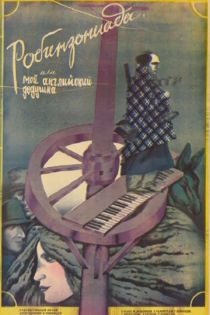
Robinsonade, or My English Grandfather
Nana Dzhordzhadze
Janri Lolashvili, Nineli Chankvetadze
The film tells a strange story, in flashback, about a British Telegraph Company’s engineer named Hughes appearing in a distant Guria village. Falling in love with the beautiful Anna, the Englishman became the enemy of her brother, Bolshevik Nestor. Both Hughes and Nestor were shot dead by Lavrenty Mgeladze, who had once had everything, but later was dispossessed and driven out of the village. The old Anna told that story to a young composer who recorded the music: “My dear homeland, why are you weeping?…”
Robinsonade, or My English Grandfather