Frida Liappa
2021She studied Philosophy at the University of Athens and cinematography at the London Film School. She was involved in poetry (initially) and directing. A member of the "democratic youth of Lambrakis", she was arrested and imprisoned. She also developed anti-dictatorial action. After some short films, such as Meta forty days (1972), A life in Thymaai na feigeis (1977), which was honored with the 2nd prize at the Thessaloniki Festival and was awarded by the Panhellenic Union of Cinema Critics), Apetaxamin (1980) , presented her first feature film The roads of love are nightly, which won the 1st prize for first-time director at the Thessaloniki Festival. Her works It Was a Quiet Death (1986) and The Years of Great Heat (1992) followed. In January of the same year, the then advisor to the Ministry of Culture, Apostolos Doxiadis, accused her of child abuse during the filming of one of her films, however, the director was acquitted by resolution number 2826/1993 of the Athens Criminal Council. Around the same time, Liappa was diagnosed with a malignant brain tumor, a disease from which she died on November 28, 1994, aged just 46.
Μια Ζωή Σε Θυμάμαι Να Φεύγεις
Frieda Liappa
Nena Mendi, Dimitris Poulikakos
A love story, set in Athens of 1977, between a young woman, who works as a journalist, and a stage actor, who has decided to abandoned theatre. The film borrows its title from a hit by singer Mitropanos, “I remember you leaving, all my life”. Politics, the Left, artistic impasses of a creator, theatre, the relationships between men and women; with the man always abandoning the girl, as the title of the film (and the song) suggests.
I Remember You Leaving All the Time

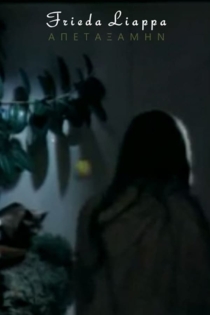
Απεταξάμην
Frieda Liappa
Maritina Passari, Tzoulieta Karori
Frieda Liappa in this short film casts an alternative gaze on the notion of historicity. Loukia is a teenager currently staying at her cousin’s house in Athens. Unlike her cousin she is timid and quite stressed for the school exam. She studies history. Between the lines of her book the historical events sprung up in a multidimensional way. Liappa transverses the dimensions of the real the imaginary and the symbolic. She invites the viewer to consider the construction of the filmic as well as the historical text. She succeeds in making a film with an open end and to leave room for our own contingent constructions.
Refused
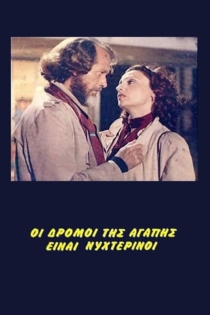
Οι δρόμοι της αγάπης είναι νυχτερινοί
Frieda Liappa
Maria Skountzou, Mirka Papakonstantinou
Eirini and Stella are two old maids and sisters who have grown up in the provinces and now live in Athens, in an apartment that looks out onto an open-air cinema. They are almost forty, still virgins and dependent on each other. Their only relative is their cousin Stefanos, with whom they were both in love, but who has been away in Paris for years. When he comes back and visits them, the balance between the two women is upset.
Love Wanders in the Night

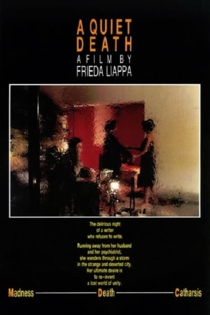
Ήταν ένας ήσυχος θάνατος
Frieda Liappa
Eleonora Stathopoulou, Pemi Zouni
Martha is unhappy with her life as it is at the moment, and among other issues, she has decided to give up her writing career. Along with that decision comes a need to get away from her husband and from her psychiatrist, with whom she has had more than just a doctor-patient relationship. As Martha travels through a deserted city landscape in a storm, the external world reflects something of her inner turmoil. Flashbacks are interspersed throughout the film to enhance the suspense of Martha's inner and outer journey.
A Quiet Death
Chrissomaloussa
Adonis Lykouresis, Tony Lycouressis
Vera Krouska, Adonis Katsaris
Antonis Katsaris stars as a teacher in the small village of Zante who fights the growing desire of many locals to abandon the village for the big city or other countries. He works hard to organize traditional cultural events, such as outdoor performances of the traditional play I Chrissomalloussa, in order to solidify local values and a sense of identity. The teacher is aided by a young woman, a widow who has just returned from Germany and lives with her father-in-law. Kazan walks away with the film, as his sinister desires for his daughter-in-law are inflamed when he sees that she has fallen in love with the teacher. These developments lead him to whip up protests against the play by conservative locals, claiming that the teacher has changed the traditional story by adding elements of propaganda with the potential of causing peasant uprisings. The result is an unexpectedly violent example of social censorship.
The Girl with Golden Hair