Piri Peéry
1904 - 1962Körhinta
Zoltán Fábri
Mari Törőcsik, Imre Soós
In a rural scenery in the throes of difficult changes lives a humble but promising young farmer girl called Mari Pataki. Her father forbids her from seeing the man she loves. The father, above all preoccupied by work on the fields and prospective wealth, decides to give his daughter in marriage to an old but rich man with whom he does business. Land marries land, he says. This seems to be the unyielding rule of the Hungarian peasantry. But the young lover is ready to stand up to any challenge to keep Maris love.
Merry-Go-Round

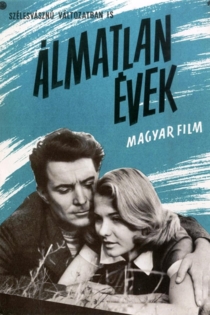
Álmatlan évek
Félix Máriássy
Éva Ruttkai, Géza Tordy
The "sleepless years" in this propaganda piece by director Felix Marlassy occur on Csepel Island, an island south of Budapest that is home to an armaments factory. The factory workers are shown being exploited by imperialists, capitalists gone berserk, and fascists, more or less in that exact chronological sequence. The heavy-handed approach does much to undercut the belief that when socialism finally takes over, the lives of the workers are brought up to a human level. In this instance, audiences might prefer a more nuanced and subtle statement, no matter what the message.
Sleepless Years
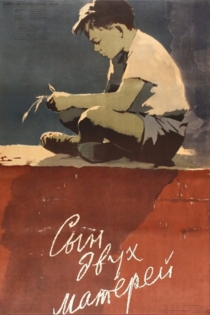
Dani
Mihály Szemes
Klári Tolnay, Margit Bara
Dani, the few-month-old little boy born outside marriage is left by Eszter in the lap of her companion on the train. The widowed Aranka takes him willingly to her. The child is already ten years old and has a good life with Aranka. Then Géza enters their life and he does not welcome the child of someone else.
Dani
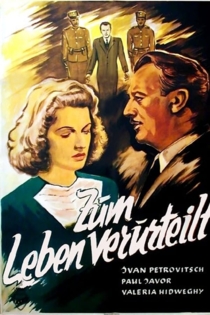
Életre ítéltek!
Endre Rodriguez
Pál Jávor, Valéria Hidvéghy
In an outbreak of a rightful anger, Péter Keresztessy kills Ágota, his deceased wife's cousin, who, in an attempt to become her successor, speaks ill of her thus trying to malign her character. Péter is prepared for capital punishment but is sentenced for life. 15 years later he is pardoned.
Sentenced to Life
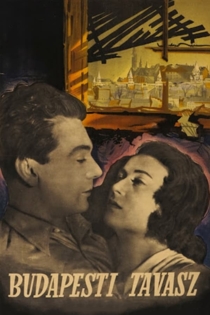
Budapesti tavasz
Félix Máriássy
Miklós Gábor, Tibor Molnár
At Christmas Eve in 1944 the runaway Pintér and Gozsó get through the Soviet blockade around Budapest. Pintér intends to hide in a flat abandoned by his own relatives, but he finds his relatives called the Turnovszkys, who are hiding the Jewish Jutka as well. Love unfolds between Zoltán and Jutka.
Springtime in Budapest
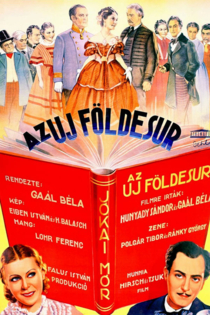
Az új földesúr
Béla Gaál
Artúr Somlay, Mária Egry
Az Uj Foldesur (The New Squire) was based on a novel by popular Hungarian author Maurice Jokal, whose many works had previously been largely ignored. After the wars of 1848, a retired Austrian army officer "returns to the soil" as a gentleman farmer in Hungary in the 1850s. The old campaigner is the father of two daughters: One of the girls comes to a sad end thanks to the malfeasances of a handsome spy, but the other has a happier fate when she falls in love with a Hungarian POW. The underlying theme is brotherhood, as the formerly warring Austrians and Hungarians at last find a common ground. Az Uj Foldesur was nearly twice as expensive as the average Hungarian film -- but at $40,000, its budget was a drop in the bucket compared to a typical Hollywood production.
The New Landlord
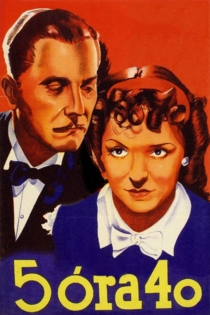
Öt óra 40
André De Toth
Margit Makay, Ferenc Kiss
Set in Paris (which looks more like Budapest), the story concerns a murder investigation conducted by one Judge Henri Tessier. The audience is led to believe that Robert Petrovich, estranged husband of Tessier's sweetheart Marion, is responsible for the murder.
The Five-Forty
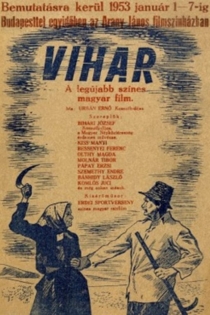
Vihar
Zoltán Fábri
Ferenc Bessenyei, Tibor Molnár
Vörös Hajnal (Red Dawn), a co-operative is the venue of skylarking, while the storm destroys the wheat which is to be harvested soon. Árendás, a middle-peasant, voices severe accusations against members of the co-operative: out of negligence, they failed to keep the ditches clean. It is always the soft option they seem to favour, while the necessity of properly taking care of the farmlands is long-forgotten. Members of the co-operative and the village people are deeply divided.
The Storm