Joan Jonas
1936 (90 лет)Vertical Roll
Joan Jonas
Joan Jonas
Cast as an “electronic erotic seductress,” the multiple costumes and roles performed by Jonas critically examine the ever-changing, but consistently unequal roles of women. The camera gazes at Jonas, implicating the viewer in the work and further, with her body. Her intentional de-synchronization of the monitor's receiving and transmitting frequencies results in the on-screen image's repeated vertical descent. Creating a sense of fragmentation, the vertical roll relentlessly pounds at the images of the artist as she moves through a series of performed identities. Characterized a "disjunctive self portrait" by the Electronic Arts Intermix, the image content of the work is strongly mediated by the mirror-like function of the camera, scrutinized by the lens and subjected to violence by the vertical roll.
Vertical Roll
Strong Medicine
Richard Foreman
Bill Raymond, Kate Manheim
Adaptation of an avant-garde play about Rhoda, a hysterical heroine who feels oppressed by the people around her. She suffers through her birthday party, goes to see a doctor, plans a vacation, argues a lot and even breaks the fourth wall.
Strong Medicine

Keep Busy
Robert Frank
Joanne Akolitis, Joan Jonas
The protagonists’ astounding verbal gymnastics and often incomprehensible interactions tend to descend into nonsense, and with the syncopated rhythm of its action and dialogue, this film is reminiscent of the playful and parodying elements of the Beat fantasy Pull My Daisy. The interweaving of documentary and fiction with the syncopated rhythm of its action and dialogue presents an absurd buzz of activity reminiscent of Beckett’s abstract comic grotesque.
Keep Busy

Double Lunar Dogs
Joan Jonas
Joan Jonas, Spalding Gray
Based on Robert Heinlein’s 1941 story “Universe,” Double Lunar Dogs presents a vision of post-apocalyptic survival aboard a “spacecraft,” travelling aimlessly through the universe, whose passengers have forgotten the purpose of their mission. As a metaphor for the nature and purpose of memory, the two main characters (portrayed by Jonas and Spalding Gray) play games with images of their past; but their efforts to restore their collective memories are futile, and they are reprimanded by the “Authority” for their attempts to recapture their past on a now-destroyed planet Earth.
Double Lunar Dogs
Disturbances
Joan Jonas
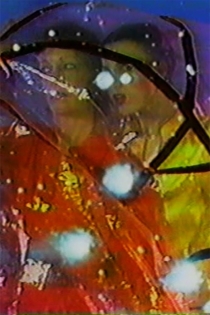
Disturbances extends Jonas' investigation of mirrored surfaces and spaces, as she explores reflections of movement and images in water. The tape begins with Jonas, like Narcissus, leaning over a reflecting pool. Throughout this lyrical exercise, the viewer sees only reflected images and inversions, disturbances of the water's surface. Figures walking at the edge of the pool are seen as abstracted shimmers, upside down and backwards; shadowy figures move underwater and swim through the pool as in a choreographed dance. This simply rendered, evocative work is a phenomenological study of reflection, as Jonas draws a parallel between the spatial and mirroring effects of water and video.
Disturbances
Songdelay
Joan Jonas
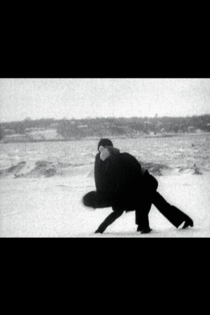
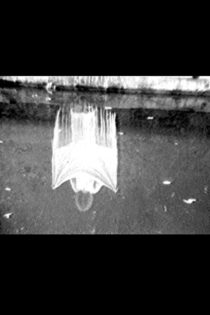
Wind and Songdelay are two of Joan Jonas’s early performances filmed in the open air, in either natural or industrial environments. Wind, made on a snowy beach on Long Island in 1968, is one of her first performances incorporating the use of mirrors. Various figures perform enigmatic actions fighting against the wind: covered in masks, they walk back to back or take their coats on and off. Filmed with long shots, Jonas allows the wind to dictate the movements of the performers.
Songdelay
I Want to Live in the Country (And Other Romances)
Joan Jonas
Joan Jonas, Ellen McElduff
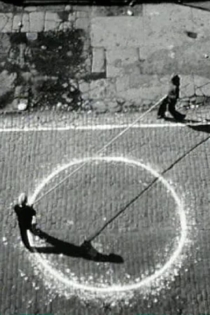
Jonas intercuts scenes of the Nova Scotia countryside with images of a studio set-up reminiscent of a di Chirico painting. The soundtrack includes both music and spoken excerpts from a journal Jonas kept while travelling in Nova Scotia. I Want to Live in the Country ultimately deals with observation and fantasy, living in the country, and the stifling aspects of the city and one's art.
I Want to Live in the Country (And Other Romances)
Left Side, Right Side
Joan Jonas
Joan Jonas
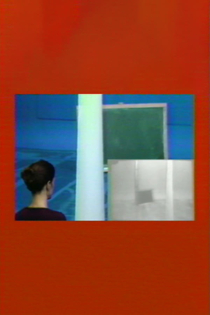
In this early work, Jonas translates her performance strategies to video, applying the inherent properties of the medium to her investigations of the self and the body. Jonas performs in a direct, one-on-one confrontation with the viewer, using the immediacy and intimacy of video as conceptual constructs. Exploring video as both a mirror and a masking device, and using her body as an art object, she undertakes an examination of self and identity, subjectivity and objectivity. Creating a series of inversions, she splits her image, splits the video screen, and splits her identification within the video space, playing with the spatial ambiguity of non-reversed images (video) and reversed images (mirrors). Though Jonas' approach is formalist and reductive, her performance reveals an ironic theatricality. Illustrating the phenomenology of video as a mirror, Left Side Right Side is a classic of early performance-based, conceptual video.
Left Side, Right Side
Ice Drawing
Joan Jonas
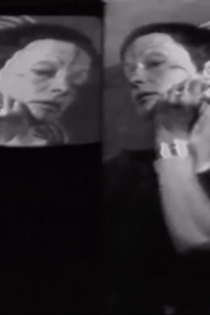
The video and sculptural installation Ice Drawing (2012) is one component of Jonas’s masterwork installation, Reanimation (2013). It features footage of Jonas creating an abstract drawing using ink and ice (a gesture that she carries out live during the performance). In the installation at the MFA, the projector’s light is refracted through a set of hanging crystals, spilling throughout the gallery and onto our bodies. Each fragment reveals all the spectral components of light, including colors that are imperceptible to the human eye. Implicated in the moment, and connected by the refracted constellation, we watch as the ink spills onto a pristine surface, and ice melts.
Ice Drawing
Glass Puzzle
Joan Jonas
This complex and enigmatic work, which is performed by Jonas and Lois Lane, explores female gestures, poses, the body and narcissism. Mirroring each other with synchronized movements as they perform as alter-egos, Jonas and Lane reference archetypal female gestures and poses from popular and traditional cultures. Throughout the performance, space is dislocated and altered as a formal device — segmented by a swinging bar, superimposed in layers, transformed by subtle changes in light and shadow, or flattened by the video screen. With its evocative personal theater and idiosyncratic vocabulary of gestures, ritual and symbolism, Glass Puzzle is a quintessential Jonas work.
Glass Puzzle
Mirror Imrprovisation
Joan Jonas
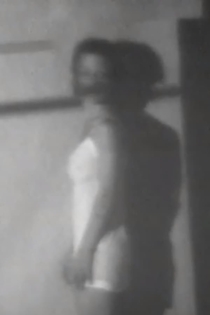
This piece includes many iconographical elements that have evolved in Jonas’s practice since the early 1970s, including the mirror, the hoop and the dog. It epitomises her inventive approach to editing and an illusionistic style characterised by a wry humour. She has described the work as follows:
Mirror Imrprovisation
Organic Honey's Visual Telepathy
Joan Jonas
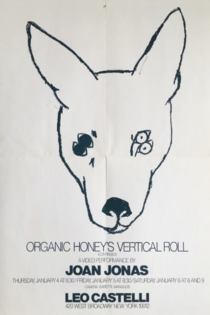
Organic Honey's Visual Telepathy is based on Jonas' 1972 performance of the same name, the first in which she used video. In an enigmatic ritual of identity, Jonas performs as herself and as her masked double, Organic Honey. Dressed in a feathered headdress and costumes, Organic Honey is the embodiment of artifice, masquerade and narcissism — a female alter-ego whose guise is a frozen doll's face. This elliptical, nonlinear narrative performance explores themes that are emblematic of Jonas' early video work: The study of female gestures and archetypes, both personal and cultural; the use of disguise and masquerade, ritual objects and ritualized self-examination; and an inquiry into subjectivity and objectivity. The work's formal elements — the layering of mirrors and mirrored images, manipulations of reflective space and spatial ambiguity, and the use of drawing to add a further layering of meaning — are also Jonas' signatures.
Organic Honey's Visual Telepathy
Wind
Joan Jonas
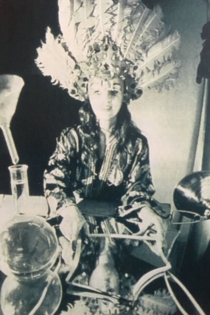
Cutting between snowy fields and a raw seashore, Jonas focuses on a group of performers moving through a stark, windswept landscape. The 16mm film — silent, black and white, jerky and sped-up — evokes early cinema, while its content locates it in the spare minimalism of the late 1960s.
Wind