Scott Barley
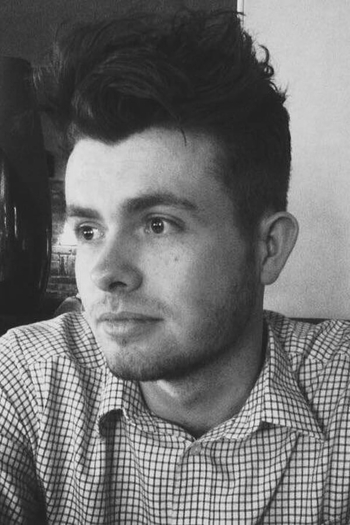
1992 (34 года)Prior to filmmaking, Barley focused on painting, creating large-scale, densely textured sculptural works on canvas and board. Working without any utensils but his hands, his paintings utilised earth, cement, plants, ash, oil, snake skin, insects, spiders and spider silk. His transition from painting to filmmaking began in 2012. He has stated that part of his sustained attraction to digital filmmaking is in “seeking the texture and tactility of painting, but in a flat and facsimiled medium where such qualities are either avoided by convention, or simply do not exist.” His third film, Nightwalk, released in early 2013, was described by influential avant-garde filmmaker, Phil Solomon as “L’Avventura for the Starless”.
Since early 2015, Barley has exclusively shot his films on iPhone. His short film, Hinterlands was voted one of the best films of 2016 in Sight & Sound’s yearly film poll. His first feature-length work, Sleep Has Her House was released in early 2017, garnering universal acclaim, and winning the Jury Award for Best Film at Fronteira International Documentary & Experimental Film Festival, in Goiânia, Brazil. It later received nominations in Sight & Sound’s 2017 and 2018 film polls, as well as in Sight & Sound’s ‘The best video essays of 2018’. The film also received nominations in Senses of Cinema’s 2017 poll, and The Village Voice 2017 film poll for Best Film, Best First Feature, and Best Director. In early 2020, film historian and theoretician, Nicole Brenez cited Sleep Has Her House as one of the ten best films of the decade, after previously writing that “[Barley’s works] renew our conception of visuality”, and describing him as, “one of the most gifted visual poets of his generation.” In the same year, academic and film critic, Borja Castillejo Calvo cited Sleep Has Her House as the second best film of the 2010’s, and Womb (2017) as the best short film of the decade. Danish film critic, and former director of the European Documentary Network, Tue Steen Müller has described him as the “Anselm Kiefer of cinema”.
Womb
Scott Barley
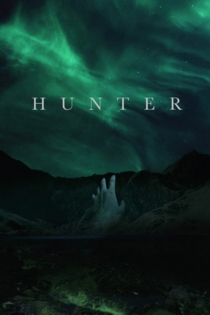
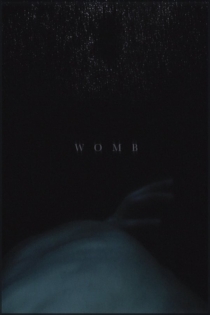
The Mouth screams. It swells, hunting the night like a snake in the dark. The laceration tears through the stars, devouring its meal. In an infinite womb, limbs drift suspended, like flies in a giant spider web. An infinite sea of pale flesh. Death’s renewal awaits, as the bodies pass into the void.
Womb
Sleep Has Her House
Scott Barley
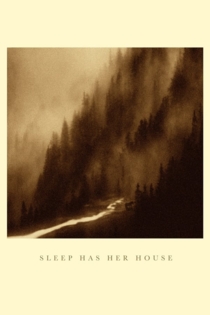
The shadows of screams climb beyond the hills. It has happened before. But this will be the last time. The last few sense it, withdrawing deep into the forest. They cry out into the black, as the shadows pass away, into the ground.
Sleep Has Her House
Hinterlands
Scott Barley
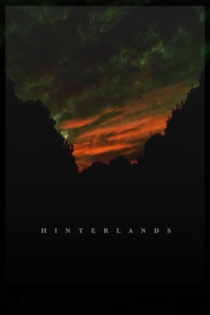
Through a structuralist and simultaneously ambiguous form, the image's reality treads closer to the abstract, leaving the sunset and trees behind. As we enter the image's gloaming, it reveals its true eye: reality's pure haptic energy, where there is nothing but sonorous light, and the dregs of the Unknown.
Hinterlands
Polytechnique
Scott Barley
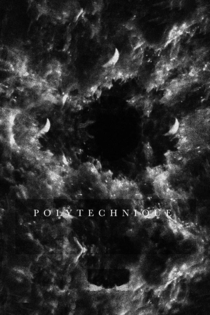
An audio-visual collaboration between Italian ambient/drone musician, Easychord and UK filmmaker, Scott Barley. Guided by Easychord's haunting, bodily piece, the Scott Barley's visuals explore and invoke the concepts of prisoner's cinema, stream of consciousness, repetition, the primordial body, fundamental entities, and astral planes.
Polytechnique
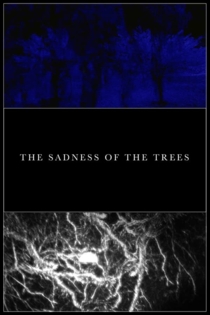
The Sadness of the Trees
Mikel Guillen, Scott Barley
Two separate, yet poetically connected films that act as a threnody on nature; with the trees as silent observers to Man's insidious desolation. Mikel Guillen's film is dedicated to the artist, Hiroshi Sugimoto. Scott Barley's film is dedicated to the artist, Vija Celmins.
The Sadness of the Trees
Nightwalk
Scott Barley
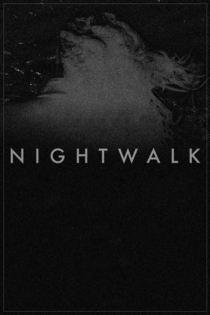
Several figures move through the darkness on a cliff-edge. An inaudible conversation near the brow of the cliff may be the cause for the group to disband. The rest of the film follows the solitary journey of the youngest member of the group, until she rests; where land meets the sea.
Nightwalk
Blue Permanence / Swan Blood
Scott Barley
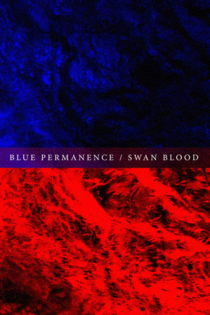
Above all, an experiment. Two identical films mirror each other. The only thing that differentiates between them is colour and sound, which is simply reversed. Through the use of just colour and sound, each part invokes unique sensations in the viewer; one of sorrow, and one of fear. Not a single identifiable object features. Instead, the films focus on repetition, texture, movement and light.
Blue Permanence / Swan Blood
Irresolute
Scott Barley
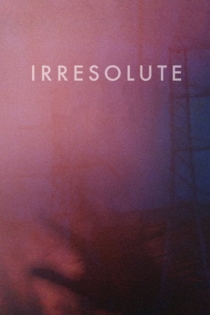
"[...] Looking back, I now feel that I understand that the film was my response to the two entities, Man and Nature competing for space in the local vicinity where I lived, ergo layers of images and sounds compete for attention in the film. Where fields used to be, they were being replaced with factories, power stations, and wind farms. My film is an irresolution. Are any of these things beneficial enough to be warranted? Isn't it all a folly? I don't know. It is not a negative film, nor a positive one. Just a comment. A comment that my subconscious commanded me to make; inspired by the locations that I passed... and the locations that have passed. At the end of the film, a human hand reaches out, as if trying to find a resolution, a reason for anything and everything - but everything, even the nature seems so fake now, like trying to feel the flesh of a mere projection..." - Scott Barley
Irresolute
Ille Lacrimas
Scott Barley
Ross Shaddick, Nerys Rees
Waves run across the surface of the sea. A blanket of fog has descended, shrouding the far side of the water in dark mist. We hear a disturbance in the sea's surface, out of our line of sight. A man staggers into view. He is stranded. Alone. He searches for answers; in the water, in the woodland, in the hills. He finds none. As he wanders deeper into the darkness of the forest, questioning his fate and destiny, he thinks back and reminisces over fragments of his life, and what has been lost. As time passes, the man finds a cabin. He feels uplifted at the thought of shelter from exposure to the elements that he has endured. Inside the shack he encounters a book that he had lost days before. He attempts to find solace in the book's pages; memories of days passed by. It consumes him. He accepts his spiritual end. It comes full circle.
Ille Lacrimas
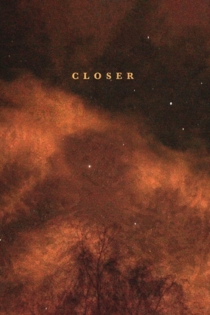
Closer
Scott Barley
Upon liminal spheres where dreams are woven, Adrift between stars and the trees, I pass closer to the golden dawn. There’s a warmth beyond the shadow. I feel the aurum under my eyelids, And I hope the birds will sing. Oh, I hope I will hear the birds sing... Perhaps a knowledge that never comes. for David Robert Jones (8th January 1947 - January 10th 2016)
Closer
The Green Ray
Scott Barley
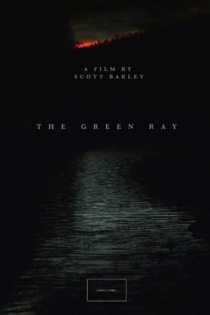
A Green Ray that never features. Instead, we sense it, seeing beyond our own eyes, beyond the hills, we sense it for an instant. We are plunged into the unknowable, beyond the horizon, beyond seeing altogether. In a single, virtuoso 11 minute take, Barley takes us from lush sunsets. to beyond the green ray, and into the gloaming, into the heavy night's darkness, where we, transfixed, can do nothing but await the impending storm.
The Green Ray