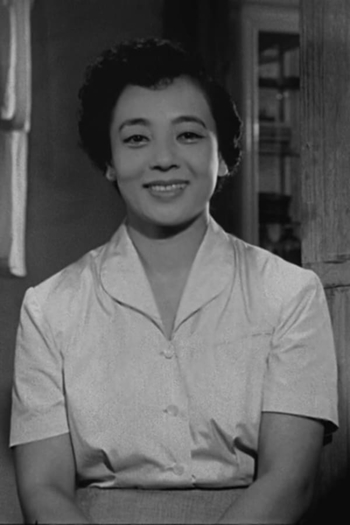
Kuniko Miyake
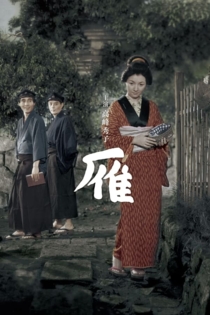
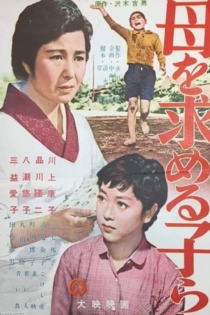
1916 - 1992ひばりの佐渡情話
Kunio Watanabe
Hibari Misora, Toshiaki Amada
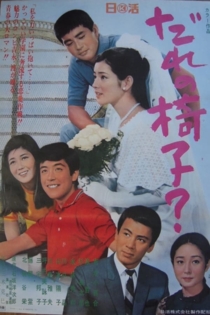
Hibari Misora plays a singing guide, who is secretly in love, her fortunes turn for the worse when a gangster’s henchman hears her singing and takes a liking to her beautiful voice. The trouble starts when her family borrows money from the gangsters, setting off a series of incidents which lead to tragedy.
Hibari's Tale of Pathos


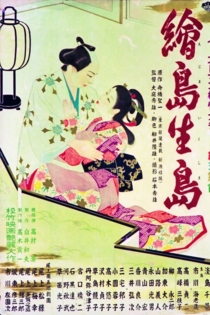
絵島生島
Hideo Oba
Chikage Awashima, Ichikawa Danjūrō XI
This period film is inspired by one of the most notorious scandals to have taken place in Edo-period Japan. The heroine, Ejima, was a lady of the Ooku, the harem of Edo Castle in which the Shogun’s mother, wife and concubines resided, forbidden from contact with any other man except in the presence of the Shogun. The institution played a key role in the Byzantine world of Japanese court politics during the Edo era. In 1714, Lady Ejima was sent to pay her respects at a Buddhist temple in the city, and chose to pay an unauthorised visit to the kabuki theatre – a violation of protocol that was to have tragic consequences.
Ejima and Ikushima
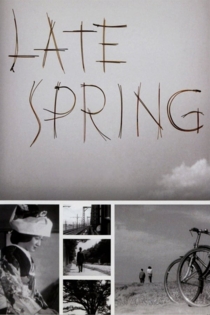
晩春
Yasujirō Ozu
Chishū Ryū, Setsuko Hara
Noriko is perfectly happy living at home with her widowed father, Shukichi, and has no plans to marry -- that is, until her aunt Masa convinces Shukichi that unless he marries off his 27-year-old daughter soon, she will likely remain alone for the rest of her life. When Noriko resists Masa's matchmaking, Shukichi is forced to deceive his daughter and sacrifice his own happiness to do what he believes is right.
Late Spring
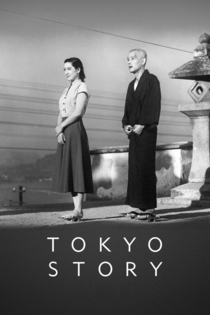
東京物語
Yasujirō Ozu
Chishū Ryū, Chieko Higashiyama
The elderly Shukishi and his wife, Tomi, take the long journey from their small seaside village to visit their adult children in Tokyo. Their elder son, Koichi, a doctor, and their daughter, Shige, a hairdresser, don't have much time to spend with their aged parents, and so it falls to Noriko, the widow of their younger son who was killed in the war, to keep her in-laws company.
Tokyo Story
お早よう
Yasujirō Ozu
Keiji Sada, Yoshiko Kuga
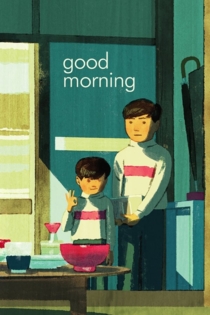
A lighthearted take on director Yasujiro Ozu’s perennial theme of the challenges of intergenerational relationships, Good Morning tells the story of two young boys who stop speaking in protest after their parents refuse to buy a television set. Ozu weaves a wealth of subtle gags through a family portrait as rich as those of his dramatic films, mocking the foibles of the adult world through the eyes of his child protagonists. Shot in stunning color and set in a suburb of Tokyo where housewives gossip about the neighbors’ new washing machine and unemployed husbands look for work as door-to-door salesmen, this charming comedy refashions Ozu’s own silent classic I Was Born, But . . . to gently satirize consumerism in postwar Japan.
Good Morning
お茶漬けの味
Yasujirō Ozu
Shin Saburi, Michiyo Kogure
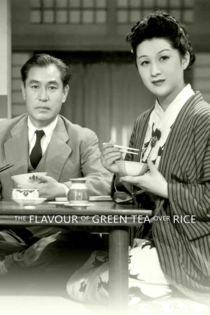
Takeo, a capricious wife from Tokyo high society, is bored by her dull husband, a quiet and reliable company executive raised in the country. After a crisis, she understands better his true value. A parallel sub-plot shows her niece rebelling against the tradition of arranged marriages.
The Flavor of Green Tea Over Rice