Ping Wang
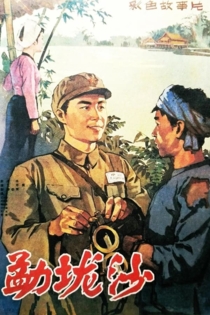
1916 - 1990勐垅沙
Xian Yuan, Ping Wang
Wang Xingang, Meiping He
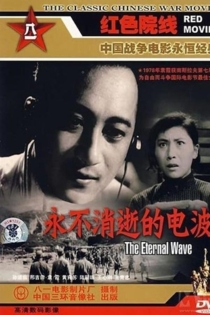
По повести «В далёком Мынлунша» о событиях, происходивших в 1950 году на южной границе Китайской Народной Республики, где живёт народность таи. О борьбе за установление народной власти в этом далёком уголке, о сопротивлении врагов и диверсантов, пытавшихся восстановить население против рабочей группы Народно-освободительной армии, приехавшей в деревню для оказания помощи этому забитому и угнетённому ранее народу.
The Area of Menglongsha
我们是八路军
Ping Wang
Gao Baocheng, Qianlong Zheng
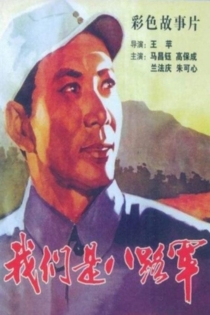
During the most difficult years of the Anti-Japanese War in 1941, the Japanese invaders and the Kuomintang's forces colluded with each other harassing the Shaanxi-Gansu-Ningxia border area. Because of this, people faced many difficulties. A charcoal burning team of Eighth Route Army in Yan'an responded to the call of the Party Central Committee and Chairman Mao to "do it yourself, get enough food and clothing". Under the leadership of the captain Zhao Changlong, they rush to the deep mountains and old forests to cut through thorns, camp, and dig kilns to burn charcoal.
We are the 8th Route Army Battalion
枫林渡
Ping Wang
Paul Chang Chung, Melinda Chen
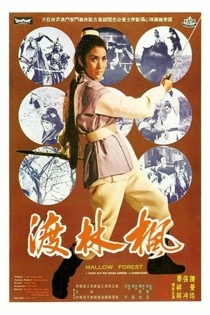
At the end of the Ming Dynasty, the bandit Zhang Xianzhong, fearing that his treasures may be seized by the Manchurians, entrusts his henchman Yun to escort it to Mount Mei for safekeeping. However, Yun has made arrangements with the Manchurian spy Jin to ambush the treasure on the way to Mount Mei.
Mallow Forest
萬家燈火
Shen Fu
Shang-Guan Yun-Zhu, Ma Lan
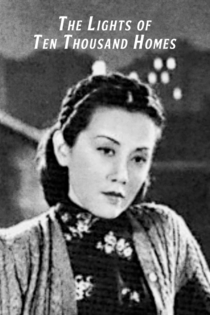
This tale of familial warfare and sacrifice takes place in hard-pressed Shanghai at the end of the 1940s. Hu Zhiqing can barely support his wife and children, and his situation is worsened by the unexpected arrival of his mother, brother and sister-in-law. When he is fired by his unscrupulous boss, the whole family becomes embroiled in one emotional/economic struggle after another.
The Lights of Ten Thousand Homes
东方红
Ping Wang
Wang Kun, Tseten Dolma
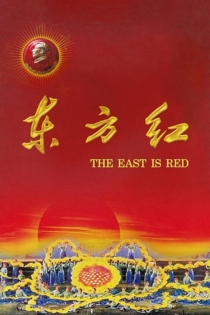
Pre-Cultural Revolution propaganda at its most lavish, this model opera depicts the history and evolution of the Communist Party of China under Mao Zedong from its founding in July 1921 to the establishment of "New China" in 1949. Detailed in the musical are several key events in CPC history such as the Northern Expedition, the KMT-led Shanghai massacre of 1927, the Nanchang Uprising and formation of the People's Liberation Army, the Long March and the founding of the PRC on October 1, 1949.
The East Is Red
柳堡的故事
Ping Wang
Youliang Liao, Linge Xu
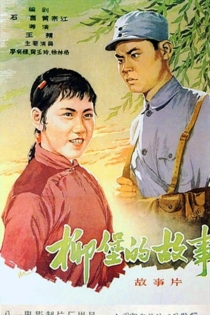
Lin Jin, a solider of the New Fourth Army, stayed in Liubao village with his Army. During Lin Jin's stay, he fell in love with a local girl, Ermeizi. However, he had to leave Liubao with his troops for several years. Lin Jin and Ermeizi lost contact during the war after Lin Jin had left Liubao. Years later, Jin returns to Liubao where he finds Ermeizi again.
The Story of Liubao
槐树庄
Ping Wang
Peng Hu, Peng Hu
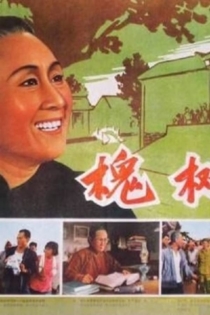
The story of a village amidst the winds of change, with Aunt Guo a female member of the Communist Party as the center. This multi-level display of Chinese farmers of different thinking style and perplexing relationships, reflects some of the major changes in China's rural areas from land reform to the people's commune being established in this historical stage.
Locust Tree Village
江山多娇
Ping Wang
Hua Tian, Lei Liu
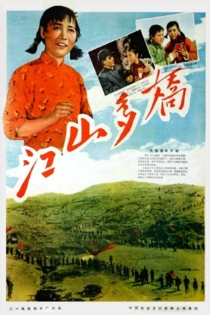
In the mid-1950s Henan countryside, communist youth league member Xian Yue responds to the call of the county committee, signing up to participate in the youth commando team, as do the little sisters. Laoxin Yue and other elders firmly oppose the women going up the mountain, think it it is nonsense, unlucky and so on. In response to the feudal remnants of the discussion, Xian Yue does not compromise, carrying out a face-to-face struggle and eventually leading the commando members up the mountain.
Beautiful Homeland