Brian L. Frye
2021Across the Rappahannock
Brian L. Frye
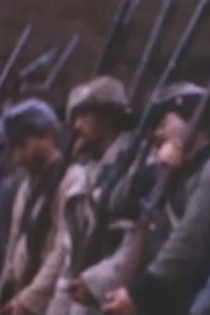
On December 12, 1863, General Ambrose Burnside's Army of the Potomac engaged General Robert E. Lee's Army of Northern Virginia in the town of Fredericksburg, Virginia... Close combat through the streets of Fredericksburg and multiple assaults on the Confederate army entrenched in the heights behind the town resulted in heavy Federal casualties, which forced an eventual withdrawal. In November, 2001, I attended a small and relatively informal reenactment of the battle of Fredericksburg. About a hundred men and women did their best to illustrate the actions of the thousands of young men who offered their lives a century earlier. An air of absurd theater suffused the entire event, which provided the ground for its peculiar truth. Everyone played their part exceedingly honestly and well, and left something on the film I was myself surprised to find there.
Across the Rappahannock
Nadja
Brian L. Frye
Brakhage has called her the muse, perhaps because she appears only to those who hold a strip of film in their own hands. But here she appears – if only for a moment – to all those who care to look for her. "Let us speak plainly: The marvelous is always beautiful, anything marvelous is beautiful; indeed, nothing but the marvelous is beautiful." – Andre Breton
Nadja
The Anatomy of Melancholy
Brian L. Frye
Sometime in the 1960s, a chiropractor from Kansas City made a short film called "A Portrait of Fear." The film consisted of several tableau shots of amateur actors standing in a field at night reciting painfully overwrought dialogue, apparently lit by the headlights of a car. I assume the cinematographer used an Auricon, as the sound was recorded directly on the B&W reversal original. In 1998, he sold me the outtakes, strung together just like you see them.
The Anatomy of Melancholy
Wormwood's Dog and Monkey Show
Brian L. Frye
Wormwood’s Dog and Monkey Show was obviously compiled from a lot more material, which I found over at least a year and a half of hunting about. I spend a good deal of my free time hunting out films. It’s not just any sort of material. I wanted to find films that weren’t totally naïve. None of this stuff is home movies, though some of it almost is. And it’s not professional either. Nor is it newsreel quality. It’s a sort of studied, non-professional filmmaking. It’s by different people, obviously, but they all have a similar position in relation to the camera. To me there’s a sort of beautiful openness to that kind of filmmaking.
Wormwood's Dog and Monkey Show
Robert Beck is Alive and Well and Living in NYC
Brian L. Frye
Robert Beck was an American soldier from Chicago, who served in the First World War. Struck deaf and dumb by shellshock, Beck was sent to an English sanitarium to convalesce. At some point, the patients attended a movie. Beck began to laugh, and was suddenly cured of his affliction. He became the patron saint of New York's Robert Beck Memorial Cinema, dedicated to films which touch the marvelous. On September 26, 2000, Stuart Sherman, the great performance artist and filmmaker, presented several of his films, interspersed with "perfilmances," in which he re-enacted the passion of Robert Beck. This film is a record of that "spectacle," shot by Lee Ellickson. Stuart Sherman died on September 14, 2001 in San Francisco. This may have been his last New York performance.
Robert Beck is Alive and Well and Living in NYC
The Silent Majority
Penny Lane, Brian L. Frye
This short documentary suggests a direct connection between two of Nixon’s greatest triumphs as president: his landmark 1969 "Silent Majority" speech (in which he argued that street protesters did not represent the views of most Americans, despite their increasing visibility) and his historic landslide re-election in 1972 (in which George S. McGovern won only one state and the District of Columbia, losing even his home state of South Dakota).
The Silent Majority