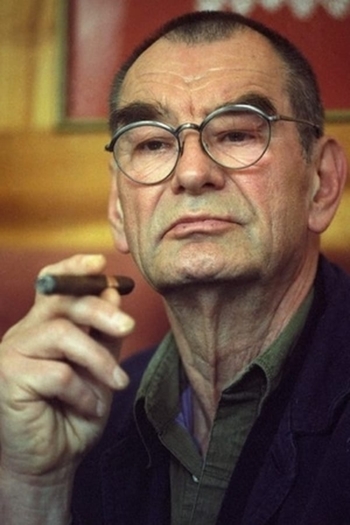
Otto Muehl
1925 - 2013Meine Keine Familie
Paul-Julien Robert
Otto Muehl, Claudia Muehl
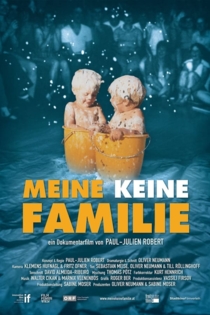
Communal property, free sexuality, dissolution of the nuclear family - these were the basic principles of the Friedrichshof, the largest commune in Europe founded by the Viennese Actionist Otto Muehl in the 1970's. Because of these principles Paul-Julien Robert, who was born into this commune, for a long time didn't know who was his biological father.
My Fathers, My Mother and Me
Slaves in Paradise
Madonna Benjamin
Otto Muehl, Claudia Muehl
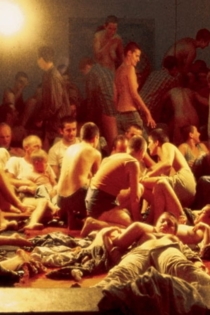
A close look at the Austrian far-left Friedrichshof Commune which was set up in 1972 by artist Otto Muehl. It was dissolved in 1990 when Muehl was convicted of the abuse of teenagers who lived in the commune.
Slaves in Paradise
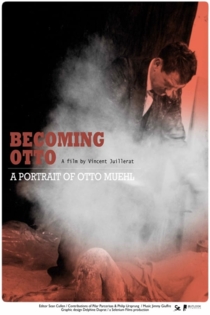
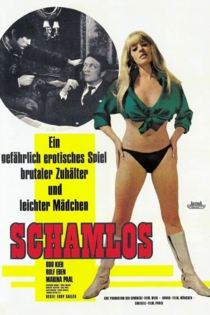
Wienfilm 1896-1976
Ernst Schmidt Jr.
Friedrich Achleitner, Marc Adrian
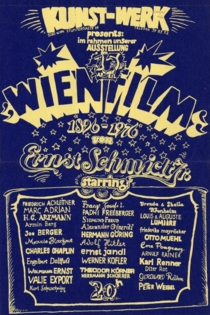
This film is a kind of anthology about Vienna, from the invention of film to the present day. The aim is to break down the usual clichéd "image of Vienna" such as that found in the traditional "Vienna Film" by juxtaposing documentary footage, newly shot material and subjective sequences created by various artists. Individual, self-contained sections of the film gain new meaning within the context of historical material. Familiar sites appear estranged when edited together with historical scenes. Other scenes appear like a persiflage or satirical. The film does not incorporate any commentary whatsoever. It is a collage of diverse materials aimed at conveying a distanced image of Vienna to the viewer
ViennaFilm 1896-1976
Die Kinder vom Friedrichshof
Juliane Grossheim
Nina Schlothauer, Nico Aimar
In the commune of the Viennese action-ism-artist Otto Muehl the children should remain 'unspoilt from the nuclear family', in order to be brought up to a completely new human being. Setting out as a free collective in the early 70ies, soon the social experiment emerged as a totalitarian system, which, 20 years later, ended in a dramatic failure. Through the eyes of these children, the film looks back at the community and examines what has become of the children of this utopia.
The Children of the Commune

Bodybuilding
Ernst Schmidt Jr.
Otto Muehl
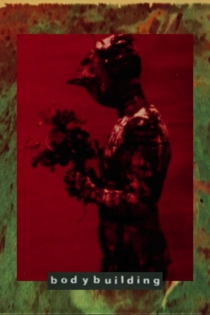
In May 1965, Ernst Schmidt Jr. films the Otto Muehl performances Rumpsti Pumsti and Body Building. In this period Muehl conceives his actionist works almost exclusively for photographic and film documentation. The necessity of a spontaneous confrontation with the public, which plays a major role in Muehl's later actions, does not apply to these works.
Bodybuilding
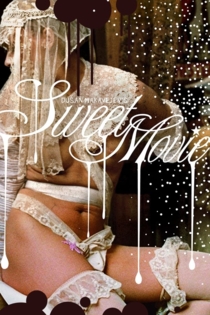
7/64: Leda mit dem Schwan
Kurt Kren
Otto Muehl
Based on a Muehl Happening. The almost convulsive use of juxtaposition reappears here, but the captured gesture assumes a more erotic sensitivity, though the "action" itself was primarily a gradual destruction of the erotic.
7/64: Leda and the Swan
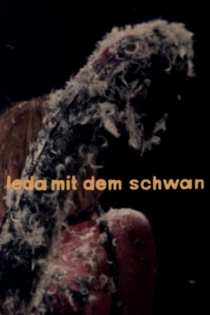
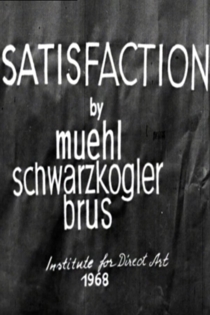
10c/65: Brus wünscht euch seine Weihnachten
Kurt Kren
Günter Brus, Diana Brus
A kind of home movie made in Brus' apartment. Brus' Christmas wishes can be seen on a poster which he painted and which he holds for a short time in front of the camera.
10c/65: Brus wishes his Christmas on you
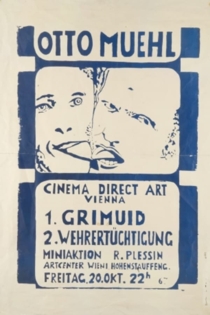
Back to Fucking Cambridge
Terese Panoutsopoulos
Theo Altenberg, Otto Muehl
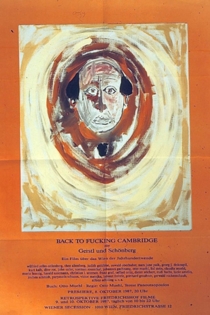
About a group of graduates from Cambridge University who go back to their college to visit a friend who has stayed on there. Otto Muehl founded a community of artists in Vienna in 1970 with the aim of exploring a completely free life practice. Since 1972, this society experiment at the Friedrichshof in Burgenland, 60 kilometers from Vienna, further developed. From the mid-1970s, other municipalities were founded in 30 European cities. At Friedrichshof itself lived at times up to 240 members and visitors.
Back to Fucking Cambridge
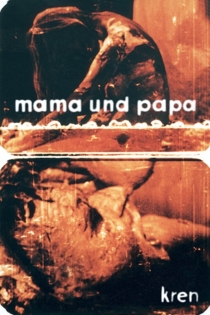
6/64: Mama und Papa (Materialaktion Otto Mühl)
Kurt Kren
Otto Muehl
In the first action he filmed, 6/64 Mama und Papa, Kren’s editing leads to many interlocking continuous shots; central takes recur like a leitmotif, circular motion and networking can be observed throughout the film. Kren painstakingly weaves the fury in front of his camera lens into dense geometrical figures. Shot/countershot sequences alternate, lumping back and forth between single (!) frames, they turn the Actionist turmoil into ornaments, rigid geometrical patterns, the equivalent in time to what Mondrian used to distill on canvas in space. (Peter Tscherkassky)
6/64: Mom and Dad (An Otto Mühl Happening)