
Henri Gouget
2021Les gaîtés de l'escadron
Maurice Tourneur, Joseph Faivre
Edmond Duquesne, Henry Roussel
The Twins, regular bad men of the regiment, have been condemned to the military prison, and it goes much against the grain of the kind-hearted Captain Hurluret to see these poor fellows confined to their cells. His leniency toward them, however, is speedily taken advantage of with most amusing results.
The Funny Regiment
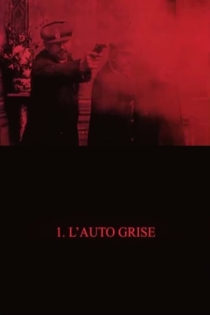
Bandits en automobile - Épisode 1: La bande de l'auto grise
Victorin-Hippolyte Jasset
Josette Andriot, Henri Gouget
In 1913 early French film pioneer Victorin-Hippolyte Jasset died abruptly at the age of 51. His filmography of about 60 titles includes all film genres but is today mostly lost. He was particularly interested in detective or crime genres and with series like Nick Carter and Zigomar he is considered as one of the creators of the serial. The spectacular siege of Jules Bonnot's Gang at Choisy-le-Roi near Paris on April 28th 1912 inspired Jasset to make this 'Bandits en automobile'. French audiences recognized immediately the resemblances with the actual Bonnot Gang, a reason for which the film was prohibited in many cities.
Bandits en automobile - Épisode 1: La bande de l'auto grise
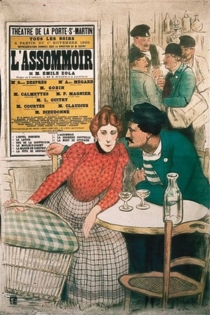
L'Assommoir
Albert Capellani
Alexandre Arquillière, Jacques Grétillat
Everyman Coupeau's attempts to stop drinking are routinely thwarted by the wicked and vengeful Virginie. Based on Zola's novel, Capellani's film is about the free fall of a group of working-class French folk into degradation and tragedy due to carelessness, jealousy, and alcohol abuse. At the time of its release, L'Assommoir was hugely successful.
L'Assommoir

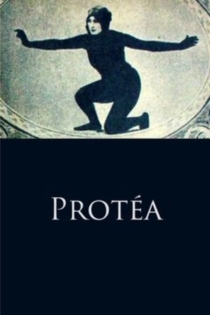
Protéa
Victorin-Hippolyte Jasset
Josette Andriot, Lucien Bataille
Protéa is the last film directed by Victorin-Hippolyte Jasset, one of the early film pioneers in France. The hero of this film is a female spy, an acrobatic Mata-Hari, played by his favorite actress, Josette Andriot, who wore a characteristic costume of a close-fitting black jersey, two years before Musidora achieved cult status with her similar appearance as Irma Vep. This final masterpiece reflects Jasset's popular style: rhythmic action, fantastic realism, rich visuals, an anarchistic philosophy, a disdain for psychology, and an attention to lighting that earned him the nickname “the Rembrandt of the cinema". Although Jasset died shortly after completion, the film had considerable success and Andriot went on to make four more films in the series with other directors.
Protéa
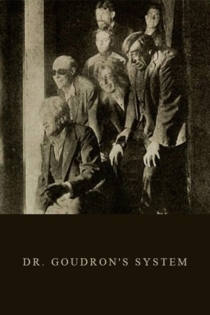
Balaoo
Victorin-Hippolyte Jasset
Lucien Bataille, Camille Bardou
An ape, turned near human by Dr. Coriolis and given the name 'Balaoo', is smitten by the beauty of Coriolis' niece, Madeleine. Being inquisitive, though, he runs off, getting into mischief, and falls in with a poacher who saves his life. Acting now as his slave Balaoo kills a man for the poacher, but balks on his orders to kidnap Madeleine, deciding instead to set a trap for the poacher.
Balaoo the Demon Baboon
L'enfant prodigue
Michel Carré
Georges Wague, Henri Gouget
The first feature-length motion picture produced in Europe, running 90 minutes. Directed by Michel Carré, from his own three-act stage pantomime, The Prodigal Son. The film was basically an unmodified filmed record of his play. Filmed at the Gaumont Film Company studios in May 1907.
The Prodigal Son