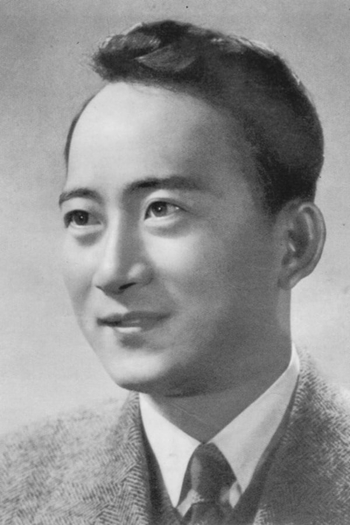
Daolin Sun
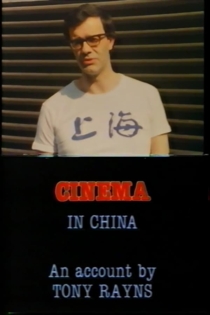
1921 - 2007Visions Cinema: Cinema in China - An Account by Tony Rayns
Ron Orders
Tony Rayns, Sun Yu
History of filmmaking in China from its beginnings in the 1920s to 1982, featuring Shanghai cinema of 1930s; the progressive filmmakers; the organisation of filmmaking under the post-war communist government; the impact of the Cultural Revolution; the work of Xie Jin.
Visions Cinema: Cinema in China - An Account by Tony Rayns
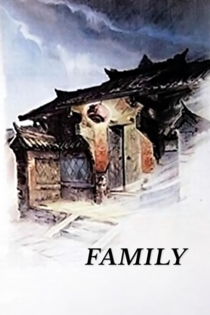
家
Ming Ye, Xihe Chen
Wei He-Ling, Rui Jiang
Based on the famous novel of the same name by well-known author Ba Jin, this movie traces the decline of a large, wealthy family in the early part of the twentieth century. The story focuses on three brothers and how they respond to the expectation that they will each marry women whom their grandfather has selected for them. The lure of family money on the one hand and modern individualism on the other plays out differently among the young men. Critics consider this movie an indictment against feudal ideas.
Family
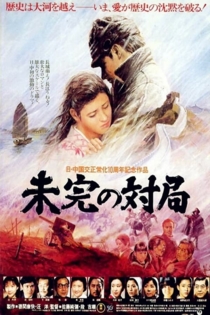
未完の対局
Jun'ya Satô, Ji-shun Duan
Rentaro Mikuni, Misako Konno
Ten years before the outbreak of the Second World War in Asia, a Japanese Go master and his Chinese rival meet in China to play a game of Go (loosely described as an Asian version of chess). It soon becomes evident that the Chinese master's son is the most talented player that the Japanese master has ever encountered, and he convinces the boy's father to let him bring the child back to Japan to train him as a professional Go player. Years pass, and as the young Chinese master grows to maturity in Japan, the Japanese invasion of China forces him to choose between his triumphant career and his loyalty to his native country. His decision is complicated by his marriage to the daughter of the Japanese master, with whom he has produced a child. His choice will profoundly alter the lives of two families. Their saga serves as a reflection of the tragic relations between their two great countries, and the possibility of reconciliation and healing.
The Go Masters
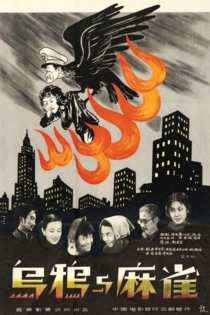
烏鴉與麻雀
Zheng Jun-Li
Zhao Dan, Wei He-Ling
At a Shanghai apartment, Mr Hou, a Nationalist official, gets ready to move to Taiwan upon the imminent defeat of the KMT during the Civil War. Mrs Hou gives an ultimatum to the rest of the tenants to move out on behalf of her husband, who is the "owner" of the flat and who is now planning to sell it. From the conversations with the rest, we find out that Hou has been a Hanjian during the Sino-Japanese War and that he has since taken over the apartment by force from the old landlord, Mr Kong. The tenants, including Mr Kong, Mrs Xiao, Little Broadcast (alias Mr Xiao, played by Zhao Dan) and a schoolteacher, Mr Hua, and his wife, initially plan to band together, but circumstances force them to find other ways out. Mr Hua tries to find a place to stay at the KMT-sponsored school he is teaching in. Little Broadcast and Mrs Xiao invest in black market gold. As the situation escalates, Mr Hua gets arrested by KMT agents and his young daughter falls desperately ill.
Crows and Sparrows
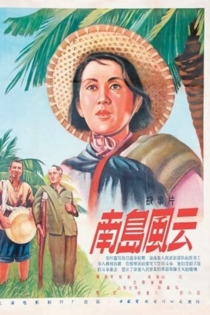
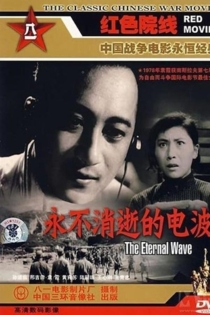
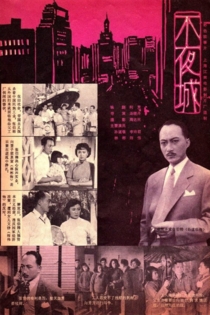
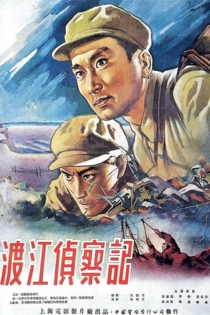
渡江侦察
Xiaodan Tang
Sun Dao-Lin, Heng Qi
In the spring of 1949, a war is about to happen between the Liberation Army and Kuomintang Army on the Yangtze River. The Liberation Army dispatches a reconnaissance to scout the southern parts of the River, whose work is actually full of hardships and dangers. However, with the help of the local crowd and the guerrillas, finally, the members of the reconnaissance succeed in the commission and offer valuable information to the Liberation Army, making great contributions in the war.
Reconnaissance Across The Yangtze
革命家庭
Choui Khoua
Xiaoman Shi, Liang Zhang
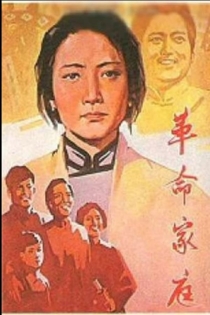
At the age of 16 Zhou Lian, who lost her parents at the age of two and was raised by a stepmother, marries Jiang Mei, a progressive young man from Changsha No. 1 Normal School. Jiang Meiqing has also lost both of his parents. The couple has two sons, Liqun, Xiaoqing and daughter Xiaolian. The film follows the family through turbulent times from 1924 to 1930.
A Revolutionary Family
民主青年進行曲
Yi Wang
Sun Dao-Lin, Xiangli Yao
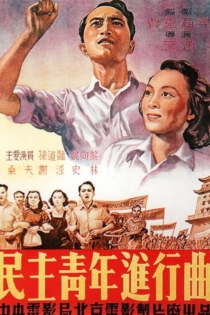
Этот фильм основан на одноименной пьесе. Во время освободительной войны молодые студенты боролись с гоминьдановскими реакционерами под руководством Коммунистической партии. Студент колледжа Фан Жерен занимался только учёбой, а не политикой. Но в силу сложившихся обстоятельств юноша всё же вовлекается в политическую борьбу. За участие в студенческом движении Фан Жерен был арестован, подвергался жестоким пыткам в тюрьме, но был твёрд в своей преданности делу демократического движения. Выйдя из тюрьмы Фан Жерен вместе с такими же как он молодыми студентами берётся за дело строительства нового Китая. Своими силами студенты сочинили «Марш демократической молодёжи».
Min zhu qing nian jin xing qu
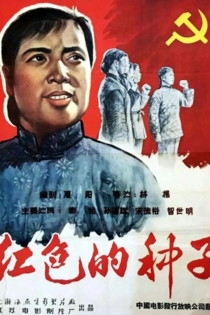
红色的种子
Yang Lin
Qin Yi, Sun Dao-Lin
По приказу командования жена командира 4-й армии Хуа Сяо-фэн проникает в тыл врага, чтобы установить связь с подпольной организацией и поднять народные массы на вооружённую борьбу с гоминьдановцами. В трудных условиях, рискуя жизнью, молодая женщина выполняет боевое задание. Посеянные ею в народе красные семена дают всходы — крестьяне помогают 4-й армии разгромить гоминьдановцев.
红色的种子