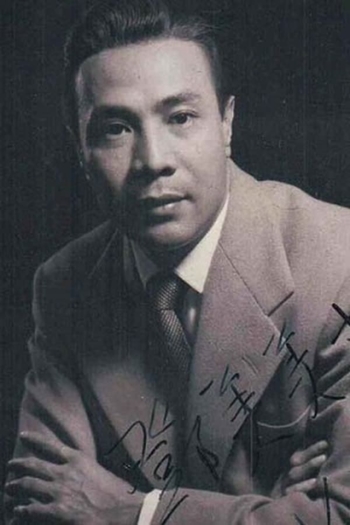
Ng Cho-Fan
1910 - 1993
Qian
Ng Wui
Cheung Wood-Yau, Cheung Ying
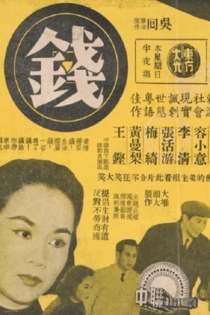
A delicious comedy from Union Film, Money, traces the journey of a bag of cash from a bank robbery. The humour switches between the witty and the absurd, offering a biting examination of human nature when men and women are confronted with the chance of unearned wealth.
Money
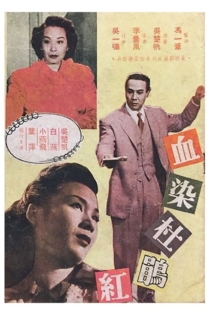
血染杜鵑紅
Lee Sun-Fung
Ng Cho-Fan, Pak Yin
Yung (Ng Cho-fan) is an upper-class kid who has fallen from grace. He forms a warped relationship with a rich widow (Pak Yin), only to meet again his wife (Siu Yin Fei) with whom he’s lost touch during the war. The fateful affair eventually opens up a Pandora’s box, turning jealousy, betrayal and selfishness into fatal outcomes.
Blood-Stained Azaleas
Fu yu zi
Ng Wui
Kwai-Lam Cheung, Heung Hoi
After seeing a friend of his boss' son adopted over his promised promotion with connections, Shrimp's father, a minor white-collar worker Ng Kwun-sing, vows to get Shrimp a place in a prestigious school and a chance to make friends with the rich. However, Shrimpy is constantly bullied and discriminated against by his classmates. Ng has not the means to be a social climber and finally realises his mistake. He sends his son to a voluntary school so that he may grow up happily. This poignant father-son drama shows a parents' willingness to carve out a good future for their children by any means necessary.
Father and Son

天长地久
Lee Tit
Hung Sin-Nui, Ng Cho-Fan
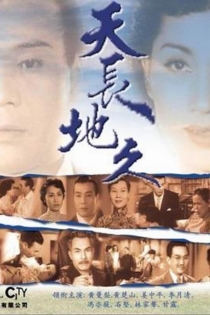
Chan Sai-wah abides by his late father's word and marries the wealthy Yam Suk-kuen. They have a son, Kwok-leung. Though Wah is manager of the hotel owned by his father-in-law, Kuen is not a good wife. For all the years of their marriage, Wah has never been happy. Attracted to the humble and honest Carrie Mui, Wah decides to leave his domineering wife Kuen, but is stopped by his father-in-law. The lovers set off to Macau for a new start. Their life has become increasingly miserable under the pressure from Yam's family. When Wah leaves to seek help from his son in Hong Kong, Carrie decides she should leave so that Wah can go without feeling any guilt or burden. On the other hand, Wah is too ashamed to face his son, and returns to Macau. He lives his life in misery. Years pass, the lovers meet again. Wah is reduced to begging in the streets while Carrie becomes an opera diva.
Eternal Love
Chun
Lee Sun-Fung
Chan Lap-Ban, Chow Chi-Sing
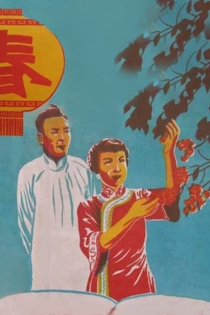
Ko Suk-ying is saddened over her arranged marriage as manipulated by her father Hak-ming. Ko Kok-sun's Cousin Chow Wai's spends the Mid-Autumn Festival before her marriage with the Kos. She has been in love with Sun. Sun finds out about her love for him when she is about to be married off, he is too weak to oppose to Wai's betrothal to another man. Sun's son, Hoi-sun, falls ill. Fearing the displeasure of his elders, Sun dares not consult a western doctor. Meanwhile, another dispute arises among members of the family over the ancestral land. When accused of being incompetent in his management, Sun takes the blame silently. Wai dies of grief while Hoi-sun becomes a victim of mistreatment. Sun is devastated at this double blow. Hak-ming instructs Sun to arrange for Ying's wedding. Knowing the kind of man Ying's fiancee is, Sun is reluctant. Not wanting to follow in Wai's footsteps, Ying fights for her own rights, and backed by an enlightened Sun, she leaves for a new start.
Spring
Qiu
Chun Kim
Chow Chi-Sing, Fung Yik-Mei
Hak-ming heads the Ko Family, but he and his brothers, Hak-ting and Hak-on, and the second wife of the late Master Ko quarrel. Young Cousin Mui, who has tuberculosis, is forced by to marry an older woman. Kok-sun is guilty of being unable to stop the marriage. Sun and maid Chui-wan are wary of their feelings for each other due to class difference. Cousin Mui dies of illness. Hak-ting has his eyes on Wan. His wife, Wong, complains to their daughter, Shuk-ching, who cannot take it and commits suicide. Wong blames herself for her death. Undergone these tragedies, Cousin Kam's mother let Kam have a modern wedding with Kok-man. When Ming is ill, Ting and On want to sell the ancestral home. Hak-ming dies of angst. When the fifth uncle of Sun forces Wan to be his concubine, Wan tries to kill herself but is intercepted by Sun. Pressurised by people of the house over the issue of inheritance, Sun protests by declaring his love for Wan and leaves the family, with his mother, brother Man and Wan.
Autumn
Jia
Ng Wui
Cheung Ying, Cheung Wood-Yau
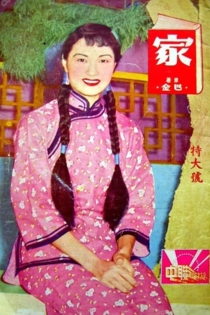
"Family" (1953), which launched the Union Film legacy, "Spring" (1953) and "Autumn" (1954) are adaptations of Ba Jin's highly regarded novel "Torrent Trilogy". In "Family", director Ng Wui skilfully condenses the voluminous first part of the novel into an emotionally powerful and intellectually focused story of youngsters struggling to survive oppression and repression in a feudalistic family. This well-received film quickly established the company's reputation.
Family
黛綠年華
Tso Kea
Ng Cho-Fan, Cheung Ying
Han Xiangying temporarily resides at her classmate Fan Daini's resplendent mansion. Mrs Fan eggs her on to attend a party at which she is raped by a rich businessman. It turns out that Mrs Fan is in fact a procuress exerting control over her three daughters of the ruined family. Han manages to escape the clutches of Mrs Fan with the assistance of the honest young man Gong Liqun.
The Tender Age

孤星血淚
Chu Kei
Cheung Wood-Yau, Yung Siu-yee
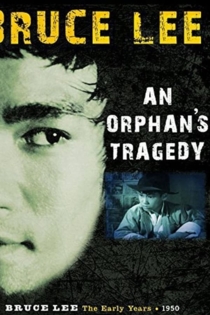
Rascal To Chai-yan brings a false charge of selling fake medicine against doctor Fan Tin-sang, who is sentented to a twenty-year imprisonment. Fan makes an escape after a decade, and secretly provides for the education of his son Fuk-kwan brought up by a poor blacksmith. Fuk-kwan grows up to be a doctor practising in the country. To again does harm to Fuk-kwan, only this time Fan intervenes. Both he and To die in the fight.
An Orphan's Tragedy
危樓春曉
Lee Tit
Bruce Lee, Ng Cho-Fan
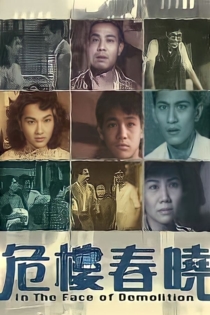
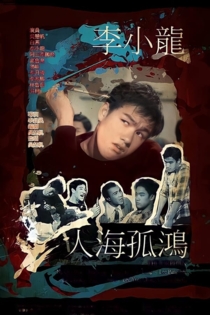
This early leftist social drama from Hong Kong offers a panoramic portrait of a crumbling apartment complex and its down-and-out denizens, including a taxi driver, an unemployed teacher, a professional reduced to selling his blood and, of course, a venal landlord. In addition to establishing an omnipresent theme in Hong Kong cinema – the plight of the urban poor – the film is also a prime example of the popular melodramas of the time, which featured displaced Mainland film stars.
In the Face of Demolition