Karel Doing
2021Meni
Karel Doing
Channa Wijmans
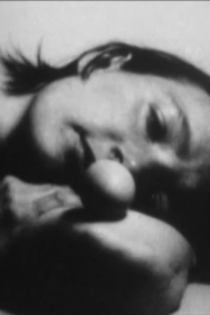
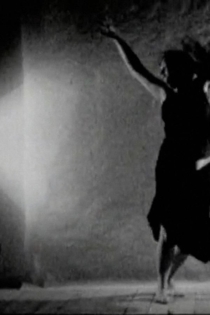
A girl dancing, repeated movements; Two layers of film superimposed and shifting in a complex rhythm, accompanied by an African drum. The making of MENI consisted of an obsessive unraveling of a series of dance movements. The movements were cut into very short fragments (0.5 to 1.5 seconds). These fragments are edited into repeating patterns. Through exchanging fragments and double exposure the film becomes an intriguing and complex rhythm.
Meni
Liquidator
Karel Doing
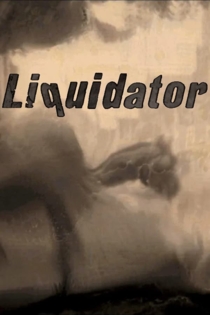
A project making innovative use of existing archive images of Willy Mullens’ silent film Haarlem (1922). The original film shows the city in straightforward shots and camera movements. Due to deterioration these images changed in a dramatic way. In the adaption Karel Doing zooms in on these effects with the aid of digital techniques like optical flow and morphing. Michal Osowski collaborated on the project with sound that is directely linked to the image, he used the changes in density of the film to control complex filters and distortion effects.
Liquidator
The Mulch Spider’s Dream
Karel Doing
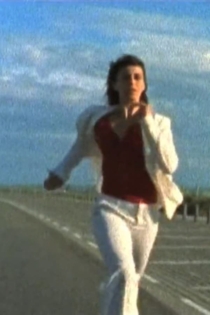
In 1974 Thomas Nagel published his famous essay "What is it like to be a bat?" arguing that there is a specific mental state to each organism. Besides his critique toward the materialist theory of mind, the paper also explores the differences between human consciousness and the awareness of bats. According to Nagel subjectivity can not be shared. However, cinema might be a tool to do exactly that; sharing a lived experience of another creature. This film attempts to kindle the vision of a spider by using experimental phytochemistry.
The Mulch Spider’s Dream
Getijden
Karel Doing
Joy MoryaYin
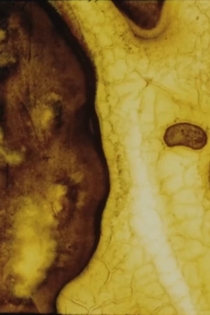
'Getijden' consists of 8 parts, a carousel of images and sounds revolving in a mysterious parallel world, and filled with different emotions and states-of-mind; longing, passion, liberation, drive, dedication, realisation, transformation and reflection. The making of this film was like weaving a Persian carpet. Spread out over a period of two years I lived with this project, the filming was done in different seasons on carefully chosen locations and days. The complete crew and cast consisted of two people, a performance in itself. The eight different parts are shot on a variety of film emulsions, each with a specific characteristic. The raw material is digitally mastered and manipulated. The film has a peculiar structure, no beginning-middle-end but, eight parts that form a cycle. A short film, an endless film. (Karel Doing)
Getijden
In Vivo
Karel Doing
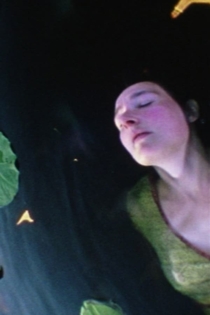
"In Vivo" is an assemblage of found footage. Doing doesn't provide much in the way of conventional context as to how these varied sources interrelate or how they should be read. But in editing them together at all, he asserts a radical subjectivity, an authorial presence that is autobiographical even when the images themselves are clearly borrowed from another vault. Doing positions himself, and the histories through which he has lived, within a much vaster narrative, implied through the other-realm textures of analogue footage as much as the actual content of his archival excerpts.
In Vivo
Phytography
Karel Doing
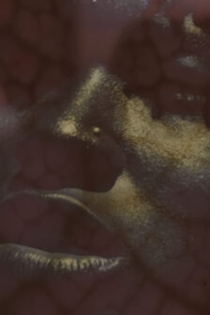
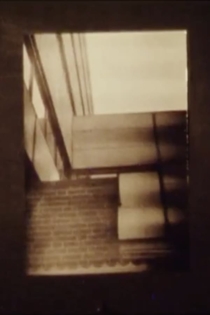
"Phytography" dives into the rich and varied world of plant chemistry. This collection of organic objets trouvés demonstrates how nature generates multiple creative solutions, each one structured intricately. Through the application of a simple chemical process, the selected leaves, petals and stems have imprinted their own images on the film's emulsion. Shapes, colours and rhythms whirl across the screen drawing the viewer into a world beyond language and speech.
Phytography
Rêve Rive
Karel Doing
Andrea Emonds
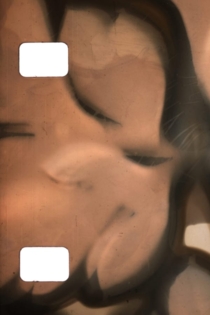
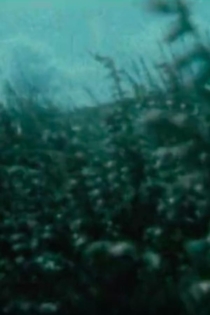
Dreamy images, often in slow motion, stirred or stirring, filmed along the banks of the Seine. Close-ups of water, blurred outdoor shots, shadows and silhouettes of people. A phenomenological portrait of the city, in a joint project with Andrea Emonds, whose voice enhances synesthetic experience.
Rêve Rive
Four Eyes
Pierre Bastien, Karel Doing
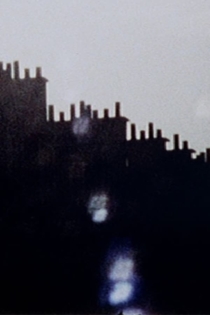
The 'four eyes' are playing with musical toys and the ABC of cinema. The music has references to western traditional music that is usually ignored, like the music you used to produce as a child when biking with a piece of cardboard in the rearwheel, or whizzing with the help of a fast turning button on a string. The images refer to different filmgenres stripped from their storylines, lost in a rhythmical evolving universe. A video-system is used to project films and music on the screen; sound and vision are playing together. Analogue and digital techniques are combined.
Four Eyes
Wilderness Series
Karel Doing
By using plants, mud and salt in conjunction with alternative photochemistry, images are 'grown' on motion picture film. What at first glance is perceived as abstract turns out to be a concrete precipitation from phenomena that surround us in everyday life. The 'aliveness' of the images is underlined by Andrea Szigetvári's evocative sound-design.
Wilderness Series
Dark Matter
Karel Doing
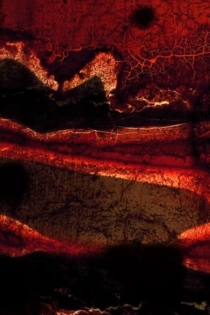
This personal film is made up of landscape photos from the archive of the director's father, through which he returns to his life while exploring the material possibilities for creating "landscapes": the film itself is exposed to the effects of yeast, salt, leaves and seaweed. By reacting with the film emulsion, each foreign element creates a new and different image quality, while the noise on the soundtrack underscores the fragility of incomplete memories.
Dark Matter
Ei
Karel Doing
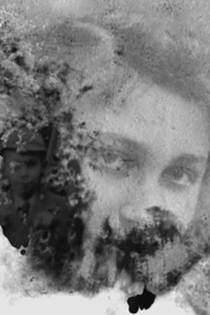
A dreamy document about finding a fragile treasure amongst a hasty crowd, the drinking of water, some wandering between stones, and the vulnerabilty of human life. The film was made as part of the project 'Het Beeld barst in de Tijd and the tenth anniversary of Dziga foundation.
Egg