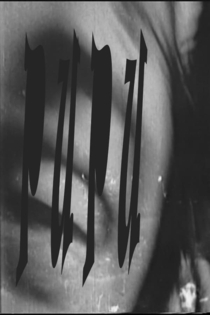
Motoharu Jônouchi
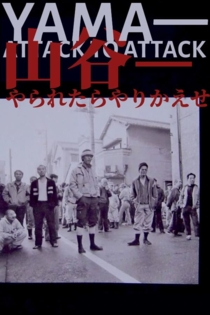
2021山谷─やられたらやりかえせ
Mitsuo Sato, Kyoichi Yamaoka
Motoharu Jônouchi
This extraordinary documentary is an unflinching record of the workers’ struggle during Japan’s economic rebirth in the 1980s, centered on Tokyo’s Sanya “yoseba”—a slum community dating from the 19th century where day laborers lived in terrible conditions while they sought work.
Yama – Attack to Attack
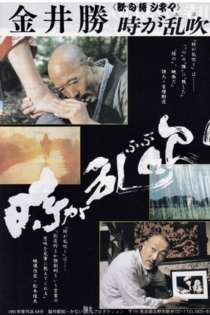
時が乱吹く
Katsu Kanai
Motoharu Jônouchi, Katsu Kanai
The Stormy Times is a collection of three short films created as a series of visual poems (Dream Running, Grasshopper’s One-Game Match, andWe Can Hear Joe’s Poem). Katsu Kanai screened this films together, along with extra documentary footage, as a memorial to his friend Jônouchi Motoharu.
The Stormy Times
The Mass Collective Bargaining at Nihon University
Motoharu Jônouchi
The late 1960s saw Japan in a fever pitch of political agitation where student protests were a frequent occurrence. A somewhat timely insight into radical protest and mass meetings from almost half a century ago, the film reveals the aftermath of protests and shares extremely rare footage of mass meetings that were held at universities.
The Mass Collective Bargaining at Nihon University
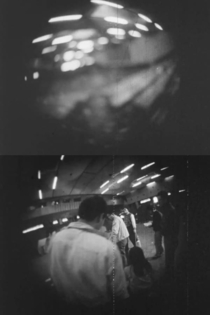
Shinjuku Station
Motoharu Jônouchi
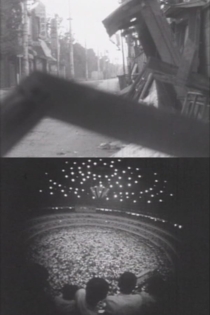
The Shinjuku district was the epicentre of Tokyo's art scene and the political fever pitch where protests took place on a regular basis during the 1960s. Jonouchi's compilation footage of the area defies documentary imagery and transforms itself into something altogether more poetically subjective, attempting to capture the chaos of the location through his camerawork and editing. In 1974, Jonouchi projected images of the past onto himself whilst reciting Dada-influenced and virtually inaudible poetry generating a cacophony of images and sounds, drawing from and participating in the maelstrom of political and artistic expression during the era.
Shinjuku Station
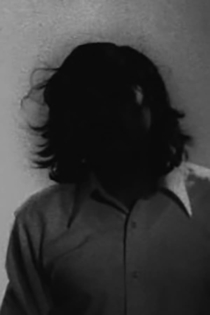
Gewaltopia Trailer
Motoharu Jônouchi
The title Gewaltopia Trailer has a dual meaning in the Japanese language; one meaning for the word yokoku (trailer) could mean a compilation of extracts to promote a film, but it can also mean a prediction, a prophecy for the future as a Gewaltopia. The film accumulates footage from his earlier films and arranges them in different contexts, a characteristic style of Jonouchi's who often re-edited his films for each screening and provided different soundtracks.
Gewaltopia Trailer
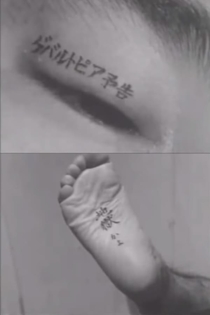
Nichidai Hakusan-dori
Motoharu Jônouchi
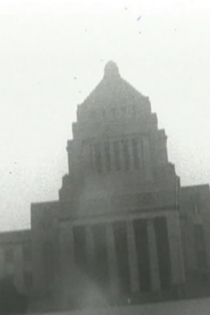
Documents the first demonstration that took place in front of the Nihon University in May of 1968. This is the first work in the "Gewaltpia" series centered around the new student movement that emerged around 1968 in Japan.
Nihon University Hakusan Street
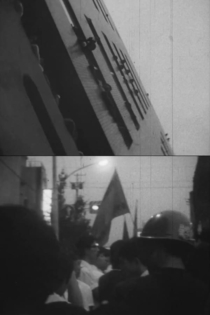
Wols
Motoharu Jônouchi
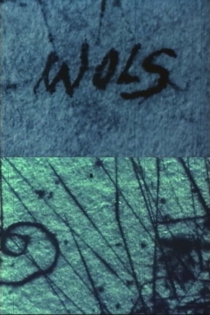
Wols is the pseudonym for a German artist active in the early 20th century, Alfred Otto Wolfgang Schulze, and Jonouchi meticulously filmed nearly fifty of his paintings to construct this cine-collage. The result is reminiscent of Alain Resnais’ rendition of Pablo Picasso’s Guernica, as both filmed interpretations refuse to provide the viewer with a full picture of the paintings, instead fragmenting and splintering the frame.
Wols
Hi-Red Centre Shelter Plan
Motoharu Jônouchi
Genpei Akasegawa, Natsuyuki Nakanishi
Hi-Red Centre were comprised of Genpei Akasegawa, Natsuyuki Nakanishi and Jiro Takamatsu, who enacted ‘happening’-style performance art in unusual spaces during the early 1960s in Japan. The film is an extremely rare document of one of their early events, where they hired out a room in the Imperial Hotel and invited many friends and professionals in the art scene to participate in the occasion. The performance parodies Cold War fears and the construction of private bomb-shelters, as they diligently measure each guest’s weight and proportions in pretence that they are to build human-size shelters for each individual. Key figures of the art scene make an appearance, including Yoko Ono, video-artist Nam June Paik, noise artist Yasunao Tone, filmmaker Masao Adachi and graphic designer Tadanori Yokoo. A rarely seen and exceptional insight into the Japanese art scene of the era, Jonouchi records the event in his characteristically erratic style.
Hi-Red Centre Shelter Plan
Pû Pû
Motoharu Jônouchi
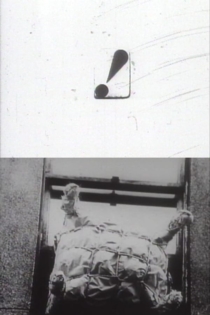
"A film describing some unusual acts by youths attempting to break out of the stifling patterns of culture... daydreaming that yields them nothing. A mob of children enact a burial rite; the place of the 'corpse' is taken by one of the rebellious youths... Beautiful and rare images... one of the best Japanese films." --Iimura
Pû Pû