Nacer Khemir
1948 (77 лет)Biography
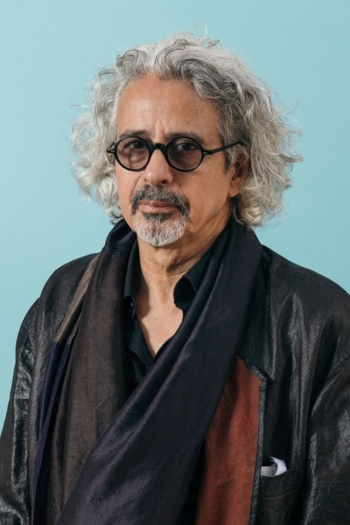
From an early age, Khemir was fascinated by classical Arabic culture and by storytelling. He has cited the One Thousand and One Nights as a particular influence, saying, "I am a child of these stories." However, in spite of this interest and a similar, lasting passion for film, Khemir initially planned a career as a painter and sculptor - a path he has, throughout his life, continued to pursue; his art has been exhibited at, among other institutions, the Centre Pompidou and the Museum of Modern Art in Paris.
In 1966, at the age of eighteen, he was awarded a UNESCO fellowship to study film in Paris. In 1975, he completed his first film, L’Histoire du pays du Bon Dieu (The History of God's Country), shot in his hometown of Korba and featuring the desert setting and spiritual overtones that would figure prominently in his later work.
Released in 1984, his first feature film, Les baliseurs du désert (Wanderers of the Desert), garnered international acclaim. The film, which tells the story of a schoolteacher's arrival in a strange and haunting desert town, was awarded the Grand Prix at the Festival des Trois Continents.
Khemir's second feature, Le collier perdu de la colombe (The Dove's Lost Necklace), was released in 1991. The dialogue of the film is in Classical Arabic.[4] Its narrative, reminiscent of a fairy tale, concerns a young calligrapher in Al-Andalus who embarks on a quest to find the missing fragments of a manuscript that he believes will reveal to him the secrets of love. Le collier perdu de la colombe was the recipient of several awards, including a Special Jury Prize at the Locarno International Film Festival.
Les baliseurs du désert and Le collier perdu de la colombe are considered to form the first two parts of a "Desert Trilogy." The third part, Bab'Aziz: le prince qui contemplait son âme (Bab'Aziz: The Prince Who Contemplated His Soul) was released in 2005. Bab'Aziz tells the story of an elderly dervish who, accompanied by his young granddaughter, encounters several mysterious strangers as he journeys to a large and joyful Sufi gathering in the desert. Khemir has described Bab'Aziz as "a highly political film, and deliberately so," saying:
"I would explain it with this allegory: if you are walking alongside your father and he suddenly falls down, his face in the mud, what would you do? You would help him stand up, and wipe his face with your shirt. My father’s face stands for Islam, and I tried to wipe Islam’s face clean with my movie, by showing an open, tolerant and friendly Islamic culture, full of love and wisdom . . . an Islam that is different from the one depicted by the media in the aftermath of 9/11."
The film was co-produced by eight countries, including Germany, France, Switzerland, and Iran. It was the recipient of a Golden Dagger at the Muscat Film Festival.
In addition to his work as an artist and filmmaker, Khemir has performed as a storyteller at the Théâtre national de Chaillot, and has produced work for Swiss, French, and Tunisian television. He is the author of a number of books, including several for children
Sheherazade: Words Against Death
Nacer Khemir
The collected work known as "One Thousand and One Nights" survived for centuries through generations of Arab storytellers, and is now recognized as an integral part of world literature. In this filmed performance, storyteller/filmmaker Nacer Khemir sits on chair in the middle of a dimly lit stage and deploys the magic of words to take us on a journey of the imagination. This simple set-up may not seem like much, but it offers the listener an extraordinarily colorful experience and brilliantly emphasizes the oral nature of the work. As we listen to the expertly told stories, we are equally charmed by their intricacies and entranced by their interconnectedness. Even though Khemir illustrates some of the stories with beautifully filmed sequences, the audience's ability to listen is paramount here. Sheherazade used words to avoid impending death, Khemir uses the art of storytelling to breathe a new life into this ancient masterwork.
Sheherazade: Words Against Death

Whispering Sands
Nacer Khemir
Hichem Rostom, Dorra
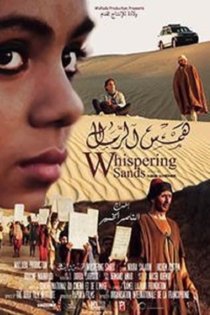
A Canadian woman of Arab descent undertakes a trip and hires a guide to help her find a specific place in the Tunisian desert. To encourage her to reveal her secret, the guide tells her Sufi stories inspired by his childhood.
Whispering Sands
Bab'Aziz
Nacer Khemir
Parviz Shahinkhou, Maryam Hamid
The story of a blind dervish named Bab'Aziz and his spirited granddaughter, Ishtar. Together they wander the desert in search of a great reunion of dervishes that takes place just once every thirty years. With faith as their only guide, the two journey for days through the expansive, barren landscape.
Bab'Aziz

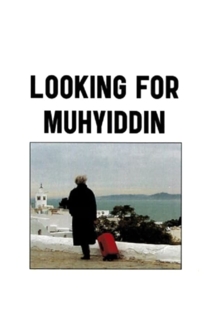
Looking for Muhyiddin
Nacer Khemir
A man (played by the filmmaker Nacer Khemir) returns home to Tunis to bury his mother. After the burial, his father gives him an "amana" to be handed to a certain Sheikh named Muhyiddin. Taken by his father's request, the man immediately sets out on an epic journey to find the long lost Sheikh and deliver the "amana."
Looking for Muhyiddin
طوق الحمامة المفقود
Nacer Khemir
Navin Chowdhry, Walid Arakji
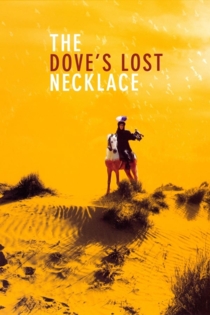
This second feature in Nacer Khemir's Desert Trilogy is a visually ravishing folktale reminiscent of "The Thousand and One Nights." The story revolves around Hassan, who is studying Arabic calligraphy from a grand master. Coming across a fragment of manuscript, Hassan goes in search of the missing pieces, believing that once he finds them, he will learn the secrets of love. With the help of Zin, a lovers’ go-between, he meets the beautiful Aziz, Princess of Samarkand. After encountering wars, a battle between false prophets and an ancient curse, he learns that an entire lifetime would not suffice for him to learn the many dimensions of love.
The Dove's Lost Necklace
الهائمون
Nacer Khemir
Nacer Khemir, Soufiane Makni
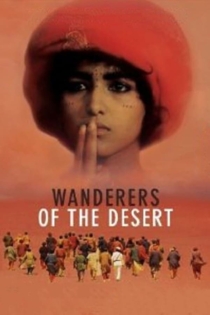
The first of Nacer Khemir's highly-regarded Desert Trilogy that includes The Dove's Lost Necklace and Bab'Aziz - The Prince Who Contemplated His Soul. Khemir creates an exotic world with Wanderers of the Desert when a young teacher arrives to take over a village school isolated in the shimmering desert. Legendary figures materialize out of wells and the desert itself, groups of children hurry through a labyrinth of underground corridors, the teacher is whisked away to a mysterious rendezvous and never returns.
Wanderers of the Desert
L'Alphabet de Ma Mère
Nacer Khemir
Nacer Khemir, Oum El Khir Yedes
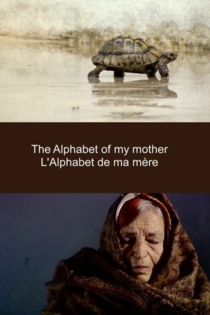
An old woman is sitting with motionless and two eyes closed. Suddenly, a visitor shows up in the courtyard of the house while she is looking at the sunlight through a window. The turtle and a door open onto her memories and it makes her think of a memory about a rosary. The images of an unforgettable past remain in her mind with longing about her missing son.
L'Alphabet de Ma Mère