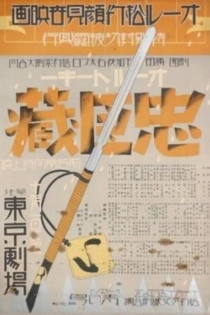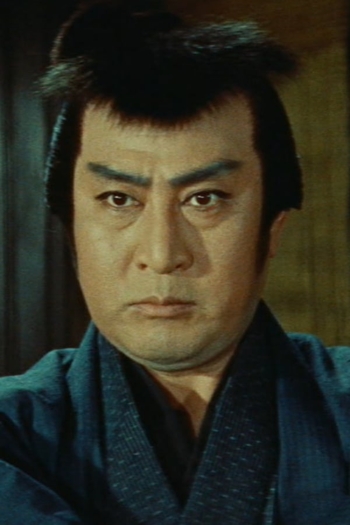
Utaemon Ichikawa
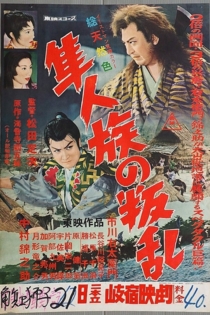
1904 - 1999旗本喧嘩鷹
Nobuo Nakagawa
Utaemon Ichikawa, Yumiko Hasegawa
1716, Yoshimune becomes the 8th Shogun as high Shogunate officials are attacked. While the government tries to keep these incidents under wraps, they must take any means possible to get to the bottom of this mystery and find out who is behind them.
Samurai Hawk

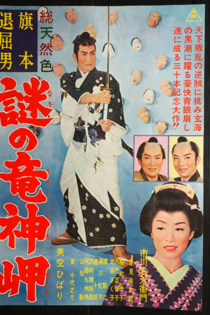
旗本退屈男 謎の竜神岬
Yasushi Sasaki
Utaemon Ichikawa, Kotaro Satomi
Ryujin Misaki, located at the edge of the Genkai Sea, is known as an isolation ward for leprosy patients. When Saotome, a sword master and guard of the Shogun, hears news of a doctor gone missing, he begins to suspect that things are not what they seem at Ryujin Misaki. Intent on discovering the truth, Saotome launches a private investigation.
The Mysterious Cape
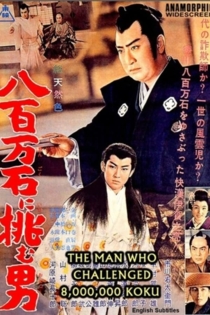
八百万石に挑む男
Nobuo Nakagawa
Utaemon Ichikawa, Sō Yamamura
A story of an orphan boy who wanted the love of parents so badly, another orphan sincerely pitied him to the point he gives his secret birthright as an illegitimate son to a Shogun as a "gift of hope" to the sad boy. As the orphan boy grew up, his loving heart became bitter and he saw the opportunity to take advantage of this birthright with the help of a man who wanted to use this orphan's desire to be loved, for seizing power in the shogunate by using the imposter. Many obstacles to hurdle along the way of deception, however, will they succeed or will he be exposed?
The Man Who Challenged 8,000,000-Koku

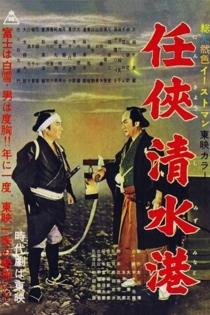
任侠清水港
Sadatsugu Matsuda
Kinnosuke Nakamura, Chiyonosuke Azuma
An all-star cast highlights this Jidai-Geki classic. Set in the samurai era, this is the tale of period Yakuza. One of the real classics in this genre. In this dramatic portrayal of the real-life gambling boss Jirocho, a good-hearted and honest boss sets out to take revenge for a fellow boss. At the same time, the other local bosses, in a bid to increase their own power, plot to dispose of Jirocho. Starring Kataoka Chiezo in one of his signature roles, this is an excellent portrayal of a figure who is not well known outside of Japan. Co-starring Nakamura Kinnosuke, this exciting tale of period yakuza brings history to life.
Shimizu Port of Chivalry
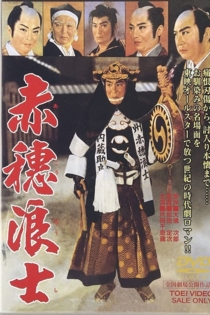
赤穂浪士
Sadatsugu Matsuda
Chiezō Kataoka, Kinnosuke Nakamura
Toei’s 10th anniversary film, featuring an all-star cast from the golden movie era of the 1960s. A famous story of the 47 loyal samurai. When Lord Asano is unjustly executed, his loyal retainers strike back for revenge.
The Ako Retainers
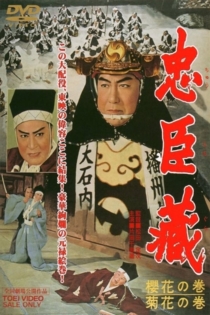
忠臣蔵 桜花の巻 菊花の巻
Sadatsugu Matsuda
Utaemon Ichikawa, Chiezō Kataoka
While the story of the Ako Clan's vendetta has been told countless times, never before has there been an array of major motion picture stars to bring new life to this timeless tale. Starting with the corrup practices of Lord Kira and Yanagi-sawa, the Shogun's Secretary, which in essence led to the incident of Lord Asano's attacking Kira in the Pine Corridor of the Shogun's Palace, this is the definitive version. Asano Takumi no kami was a young lord with high scruples, who refused to join in the general corruption and bribery which ran rampant in the capital at that time. By not giving bribes, he angered Kira Kozuke no suke the elder lord in charge of protocol at the Palace. Refusing to teach the younger man, and giving him false instructions was only the beginning. Insults followed, and a man of honor had no choice but to draw his sword in anger. Forty seven masterless samurai are willing to give their lives to avenge their lord.
The 47 Masterless Samurai
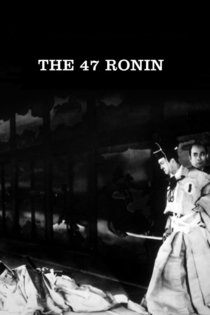
元禄 忠臣蔵
Kenji Mizoguchi
Yoshizaburo Arashi, Utaemon Ichikawa
In 1701, Lord Takuminokami Asano has a feud with Lord Kira and he tries to kill Kira in the corridors of the Shogun's palace. The Shogun sentences Lord Asano to commit suppuku and deprives the palace and lands from his clan, but does not punish Lord Kira. Lord Asano's vassals leave the land and his samurais become ronin and want to seek revenge against the dishonor of their Lord. But their leader Kuranosuke Oishi asks the Shogun to restore the Asano clan with his brother Daigaku Asano. One year later, the Shogun refuses his request and Oishi and forty-six ronin revenge their Lord.
The 47 Ronin
錦絵江戸姿 旗本と街奴
Kazuo Mori
Utaemon Ichikawa, Junzaburō Ban
The Color Print of Edo is a 1939 black and white Japanese silent film with benshi accompaniment directed by Kazuo Mori. It is a cheerful period drama, sprinkled with comical scenes and tells the story of a loyal and handsome Edo period servant who fights to help his older brother marry the woman he loves. The star of this film Utaemono Ichikawa gained enormous popularity for his portrayal of a cheerful and chivalrous man.
A Color Print of Edo
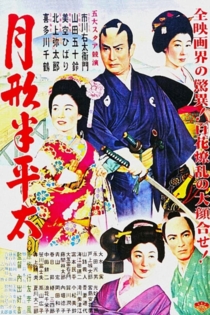
月形半平太
Kokichi Uchide
Utaemon Ichikawa, Isuzu Yamada
During the ultra-violent era of the downfall of the Tokugawa Shogunate one man rose above the rest with his ideas of how to overthrow the corrupt government and end the bloodshed between the Choshu and Satsuma clans which would ultimately lead to the alliance of these 2 clans and restoration of the emperor to full power. Based on the play that made Sawada Shojiro famous, this is the story of Tsukigata Hanpeita, a forward looking samurai from Choshu, who along with Katsura Kogoro and Sakamoto Ryoma of Tosa worked to bring their dream of a new era in Japan.
Tsukigata Hanpeita
東映オールスター映画 水戸黄門
Sadatsugu Matsuda
Chiyonosuke Azuma, Minoru Chiaki
In 1691 a terrible fire broke out in Denmacho, Yotsuya, burning down the towns around it, up to the shores of Shibaura. A month and a half later, another fire broke out, this time in Komagome, burning down the two gates of Asakusa and Sujikai, and continuing on into the night. As the government Elders consider evidence that these fires were arson, a fire breaks out in Hirakawa-cho, outside of Hanzo Gate. Nishonmaru catches on fire and burns down completely. When this rash of fires even strikes Kyoto, the task of finding who’s behind the arson, and stopping them falls to the Shogun’s uncle, the Elder Lord of Mito. Together with his trusted bodyguards, Kaku and Suke, the trio set of to save Japan from this scourge of evil. Featuring virtually all of their most famous stars, this is the best film in the Toei series about Mito Komon, one of Japan’s most popular historical figures who traveled through the country incognito to check on the people and fight injustice.
Lord Mito 3: All Star Version
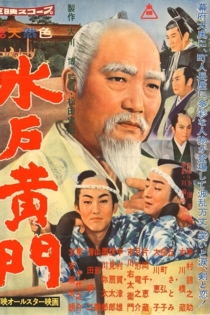
Chushingura
Teinosuke Kinugasa
Jusaburo Bando, Kazuo Hasegawa
This 1932 adaptation is the earliest sound version of the ever-popular and much-filmed Chushingura story of the loyal 47 retainers who avenged their feudal lord after he was obliged to commit hara-kiri due to the machinations of a villainous courtier. As the first sound version of the classic narrative, the film was something of an event, and employed a stellar cast, who give a roster of memorable performances. Director Teinosuke Kinugasa was primarily a specialist in jidai-geki (period films), such as the internationally celebrated Gate of Hell (Jigokumon, 1953), and although he is now most famous as the maker of the avant-garde silent films A Page of Madness (Kurutta ichipeji, 1926) and Crossroads (Jujiro, 1928), Chushingura is in fact more typical of his output than those experimental works. The film ranked third in that year’s Kinema Junpo critics’ poll, and Joseph Anderson and Donald Richie noted that 'not only the sound but the quick cutting was admired by many critics.
The Loyal 47 Ronin