
Janis Crystal Lipzin
2021Naval Compression
Janis Crystal Lipzin
A condensation of light, sound and time originally projected as a twenty-foot high video onto the ruins of the Hunters Point Naval Shipyard in San Francisco, encircled by echoes of historical and contemporaneous human activities associated with its dramatic setting and history. The Shipyard was established in 1869 as the first dry dock on the Pacific Coast where the Navy operated it until 1976. It was closed in 1991 and was the site of major toxic cleanup efforts.
Naval Compression
Luminous Greenhouse
Janis Crystal Lipzin
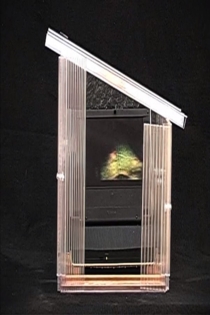
Documentation of a digital video sculpture from the artist's "De Luce [On Light]" series. materials: digital video of indeterminate duration, a 7-inch video screen, re-purposed plastic, 12" x 12" x 12." Light-struck film emulsion and unruly forces of nature intermingle in a diminutive replica of a greenhouse reminiscent of a child's dollhouse. Unfamiliar color and light sweep into and literally illuminate vegetative subjects to supply visible evidence of a surreptitious conspiracy between the artist, her materials, and photochemical occurrences. The digital video loops endlessly like events in the natural world even while they are contained in a structure designed for human dominance over Mother Nature.
Luminous Greenhouse
Visible Inventory 6: Motel Dissolve
Janis Crystal Lipzin
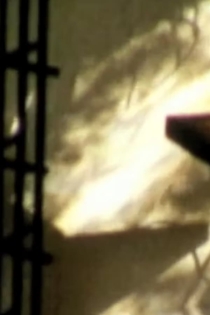
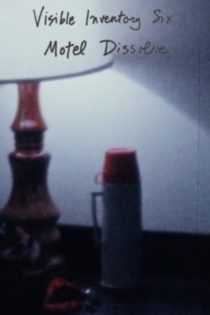
The sixth in a group of eight “Visible Inventories” in various media (2 films, 2 photo grids, 1 videotape, and 2 natural light installations) which list or catalogue my personal fascinations with natural phenomena. (1974-9) A space filled with moving…a series of panning shots of motel rooms in which the film-maker stayed during semi-annual transcontinental auto trips – homogenous accommodations lacking locational cues. Superimposed over the screen image are the names of the towns in which the rooms are located and the car’s odometer reading at each location. The sound track consists of two Gertrude Stein texts: “America I Came and Here I Am” and “American Food and American Houses” both from 1935. The film counterpoints printed word, spoken text, and photographs giving the viewer the alternate options of reading, viewing, and listening. Funded in part by a grant from the Ohio Arts Council. – J.C.L.
Visible Inventory 6: Motel Dissolve
Cracks Between the Stones
Janis Crystal Lipzin
The recurring tone of an old filmstrip signals to the viewer the outmoded nature of the educational narration we hear about the native peoples of North America in this Janis Crystal Lipzin creation. It is just one authoritative voice in a collage soundtrack juxtaposed to Super-8mm footage that maps tourist images of the Southwest, Stonehenge and other candid "evidence" of civilizations present and past. Taking the smug yet also quaint manner of such instructional material as a starting point, American filmmaker Lipzin's 2004 film-on-video collage sets up a series of shrewd oppositions regarding our own understanding of ourselves. - Robert Avila
Cracks Between the Stones
L.A. Carwash
Janis Crystal Lipzin
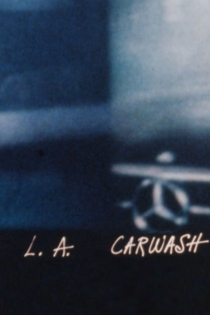
A film evolving out of the artist's experiments with dual screen projection and concerned with conjunctive and disjunctive coupling suggested by the qualities of light and sounds at the Village Carwash in Los Angeles. The sound and picture exist as complete and separate entities coinciding only for four seconds.
L.A. Carwash
Seasonal Forces
Janis Crystal Lipzin
Seasonal Forces reveals the dissonance of human and natural conjunctions unfolding in rural areas everywhere. I have drawn on footage shot over the past 25 years - some appropriated from commercial resources, some hand-processed - an accumulation of textures which illuminate the film's fabric of memory. A wisteria arbor in bloom collapses under the weight of a late Spring rain, is rebuilt and repeats its cycle. In between occur an arson, flood, earthquake, planting and the harvest. Part 2 reflects on animals' roles in our lives as providers of food, companionship, clothing and sport. I observe the changes around me as I attempt to understand what it means to cultivate a sense of place in time.
Seasonal Forces
De Luce 2: Architectura
Janis Crystal Lipzin
Light & photo-chemistry collide and conspire against 12 different architectural backdrops suspending and dissolving celluloid matter into a luminosity reminiscent of Mark Rothko’s radiant field paintings. De Luce 2: Architectura is the second film in the artist’s “De Luce” (On Light) series that was inspired by this medieval text: “In the beginning of time, light drew out matter, along with itself, into a mass as great as the fabric of the world.” – Robert Grosseteste (1170-1253)
De Luce 2: Architectura
The Bladderwort Document
Janis Crystal Lipzin
THE BLADDERWORT DOCUMENT is a diary film made when the filmmaker lived in southwestern Ohio at Bladderwort Farm (named for the only insectivorous plant native to North America). Here she plays with light: picks it up and embraces it, throws it around, pierces it and wiggles it. Artists Joyce Wieland, Carolee Schneemann, Beverly Conrad, Nancy Rexroth and Tony Dallas appear.
The Bladderwort Document
Government Property
Janis Crystal Lipzin
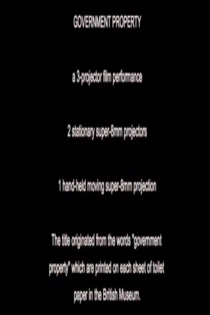
Documentation of a 3-projector super-8 film performance. (one projector is hand-held by the filmmaker and moves during performance) Government Property acknowledges a film's familiar function to present the illusion of another time and space while, at the same time, presenting elements which allow the viewer to also experience an event in the present tense. The latter is suggested by including elements of the projection experience such as interchanging images amongst the projectors, shadows, and varying the size and position of the hand-held projected image. The title originated from the words "government property" which are printed on each sheet of toilet paper in the British Museum. The film images, shot between 1978 and 1981, include British newspaper accounts of the Queen of England, media news coverage of the attempted assassination of Ronald Reagan, and other cultural and political monuments such as Stonehenge, the Salisbury (England) train station; the Trans-Canadian Railroad,
Government Property
De Luce 1: Vegetare
Janis Crystal Lipzin
This work delves deeply into experiments similar to the filmmaker's parallel work in color photography. In this film, Janis Lipzin blends her enduring interest in nature's volatile events with her sympathy with film's unpredictable response to light. She made a conscious decision to begin with film based on that medium's unduplicable and capricious reaction to photo-chemical stimuli. She used darkroom processes to produce outcomes that allude to (but don't truly describe) color in the natural world. Lipzin then interweaved the results with the more controllable properties of digital technology. By using both digital and analog tools, she was able to achieve results unattainable by either medium alone. The filmmaker's methods allow her to avoid many conventional industrial processes and vastly expand the boundaries of common color palettes.
De Luce 1: Vegetare