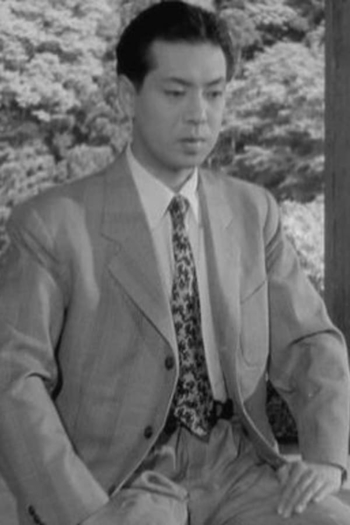
Yūji Hori
1922 - 1979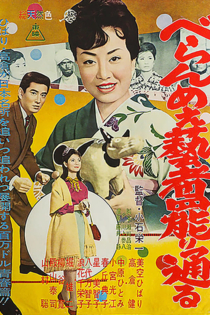
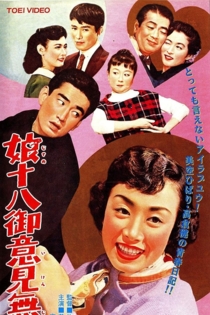
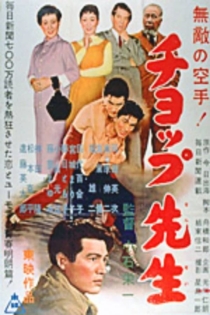
チョップ先生
Eiichi Koishi
Eiji Okada, Yuriko Tashiro
Junpei Kihara, a young president of the University's wrestling club, is nicknamed "Mr. Chop". One day, on the way back from visiting the hospital after being thrown by Nobuyoshi Shinohara during practice and injured, he met Asako, the sister of Arisawa's mother, Katsuko. When they entering a coffee shop run by Asako's best friend Hisako, Hisako misunderstood them as lovers...
The Chop Professor
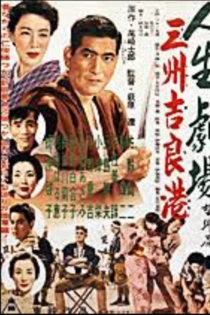
宗方姉妹
Yasujirō Ozu
Kinuyo Tanaka, Hideko Takamine
Setsuko is unhappily to Mimura, an engineer with no job and a bad drinking habit. She had always been in love with Hiroshi but both of them failed to propose when Hiroshi left for France a few years ago. Now he is back and Mariko (Setsuko's sister) tries to reunite them. She too is secretly in love with Hiroshi.
The Munekata Sisters

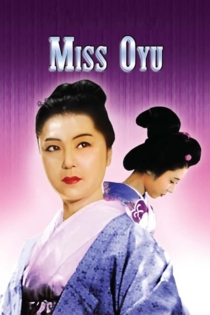
お遊さま
Kenji Mizoguchi
Kinuyo Tanaka, Nobuko Otowa
Shinnosuke is introduced to Shizu as a prospective marriage partner, but he falls in love with her widowed sister Oyu. Convention forbids Oyu to marry because she has to raise her son as the head of her husband's family. Oyu convinces Shinnosuke and Shizu to marry so that she can remain close to Shinnosuke.
Miss Oyu
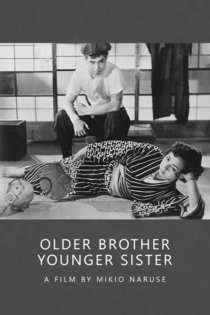
あにいもうと
Mikio Naruse
Machiko Kyō, Masayuki Mori
The eldest daughter of a rural family Mon returns home from Tokyo pregnant after an affair with a college student Kobata, which causes a scandal that will threaten the marriage prospects of the younger sister San, in her cash-strapped family. The ill-tempered eldest brother Inokichi decides to take on the role of disciplinarian, with harrowing results.
Brother and Sister
姿三四郎
Kunio Watanabe
Muga Takewaki, Nana Ozaki
The story of Sanshiro Sugata, a young man who wants to learn the new art of judo. A wise teacher reveals to Sanshiro that judo is not merely a means of combat nor a demonstration of physical skill, but an art which reveals the artist to himself.
Dawn of Judo

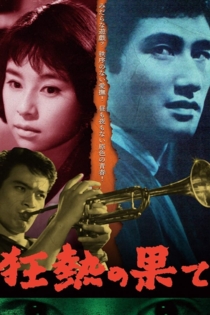
狂熱の果て
Eizō Yamagiwa
Kōji Matsubara, Mitsuko Sawamura
A leading postwar Japanese film critic and theorist who co-founded the seminal film magazine Eiga Hihyo (Film Criticism) in 1957, Eizo Yamagiwa made his directorial debut with this independent feature—long thought lost until a negative was recently discovered—about a group of idle bourgeois students known as the “Roppongi Tribe” (Roppongi zoku). Depicting the resignation and nihilism of the postwar generation in the years following the Anpo Treaty conflicts through a coming-of-age narrative, Yamagiwa offers sharp criticism of the prevalent characterizations of Japan's new youth offered by Nikkatsu's taiyozoku (“Sun Tribe”) films and the New Wave at large.
The End of Love
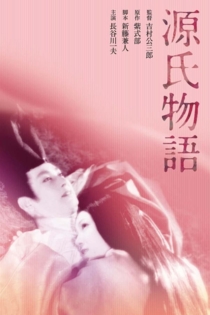
源氏物語
Kōzaburō Yoshimura
Kazuo Hasegawa, Denjirō Ōkōchi
Genji, the illegitimate offspring of a Japanese potentate, goes by the philosophy of "love 'em and leave 'em" as a matter of course. Only when his heart is broken by Awaji does Genji realizes how much pain he himself has caused.
The Tale of Genji