Marilù Parolini
2021Chronique d'un été (Paris 1960)
Jean Rouch, Edgar Morin
Edgar Morin, Jean Rouch
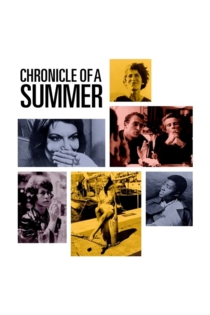
Paris, summer of 1960. Anthropologist and filmmaker Jean Rouch, along with sociologist and film critic Edgar Morin, both assisted by Marceline and Nadine, roam the crowded streets asking ordinary people how they deal with the misfortunes of life. Are you happy? But their real purpose is to find out if people can speak sincerely in front of a camera and how they react when they are later invited to analyze the meaning of their answers.
Chronicle of a Summer
Les yeux ne veulent pas en tout temps se fermer, ou Peut-être qu'un jour Rome se permettra de choisir à son tour
Jean-Marie Straub, Danièle Huillet
Adriano Aprà, Anne Brumagne
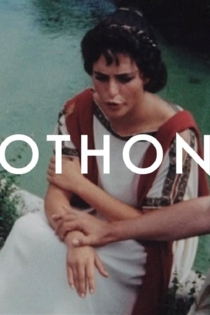
Straub-Huillet’s first color film, adapts a lesser-known Corneille tragedy from 1664, which in turn was based on an episode of imperial court intrigue chronicled in Tacitus’s Histories. The costuming is classical, and the toga-clad, nonprofessional cast performs the drama’s original French text amid the ruins of Rome’s Palatine Hill while the noise of contemporary urban life hums in the background. Their lines are executed with a terrific flatness and frequently through heavy accents; the language in Othon becomes not merely an expression but a thing itself, an element whose plainness here alerts us to qualities of the work that might otherwise be subordinated.
Othon
Toute révolution est un coup de dés
Jean-Marie Straub, Danièle Huillet
Helmut Färber, Michel Delahaye
A tribute to Mallarmé that not only asserts the continuing relevance of his work but also confronts its literary ambiguities with political and cinematic ambiguities of its own. In outline, the film could not be more straightforward: it offers a recitation of one of Mallarmé’s most celebrated and complex poems (it was his last published work in his own lifetime, appearing in 1897, a year before his death) and proposes a cinematic equivalent for the author’s original experiment with typography and layout by assigning the words to nine different speakers, separating each speaker from the other as she or he speaks, and using slight pauses to correspond with white spaces on the original page.
Every Revolution Is a Throw of the Dice