Tomonari Nishikawa
2021Ten Mornings Ten Evenings and One Horizon
Tomonari Nishikawa
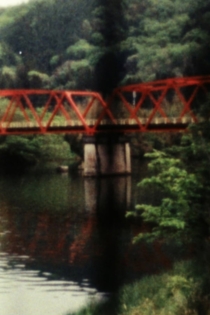
Shot using a masking technique and several exposures which collapse temporalities, Tomonari Nishikawa’s Ten Mornings Ten Evenings and One Horizon is an intimate and clever 16mm portrait of bridges on the Yahagi River.
Ten Mornings Ten Evenings and One Horizon
Market Street
Tomonari Nishikawa
All images were filmed on Market Street, one of the main streets in San Francisco. The visual was carefully composed frame by frame, while shooting on the street. This project was commissioned by Exploratorium and San Francisco Arts Commission for the outdoor screening event, A Trip Down Market Street 1905/2005: An Outdoor Centennial Celebration.
Market Street

Sketch Film #1
Tomonari Nishikawa
Sketch Film #1 (Tomonari Nishikawa, 2005, 3 min., super 8, silent, 18/24fps, b&w, USA) As a painter carries a sketchbook and practices drawing, I carried a Super 8 camera and shot frame by frame, as an everyday exercise to make animations of lines and shapes found in the public space. The entire film was edited in camera and hand-processed afterwards.
Sketch Film #1
Sketch Film #5
Tomonari Nishikawa
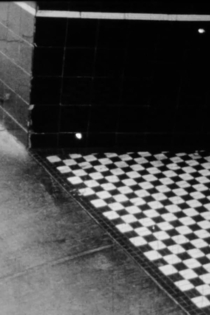
Sketch Film #5 (Tomonari Nishikawa, 2007, 3 min., super 8, silent, 18/24fps, b&w, USA) This is the last film in the series. I shot at the site of Marin Headlands County in California when I was an artist in residence at the Headlands Center for the Art. The footage shows the nature in the area, as well as the historic buildings originally built for the US Army, including batteries and the Nike Missile Site. It was all edited in camera and hand-processed afterwards.
Sketch Film #5
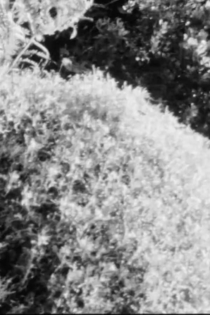
Sketch Film #3
Tomonari Nishikawa
Sketch Film #3 (Tomonari Nishikawa, 2006, 3 min., super 8, silent, 18/24fps, b&w, USA/Japan) The third film in the series, which starts with a sequence of paired images: a focused image and a blurred image of the same subject, which was caused by a diagonal camera movement. Later, it shows an experiment to produce an apparent depth by rotating an apparent shape. It was edited in camera and hand-processed afterwards.
Sketch Film #3
Sketch Film #2
Tomonari Nishikawa
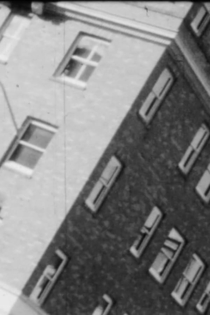
Sketch Film #2 (Tomonari Nishikawa, 2005, 3 min., super 8, silent, 18/24fps, b&w, USA) The second film in the series, showing my study especially in apparent shapes – a shape that cannot be seen in a single frame but only through a series of consecutive frames when projected. It was edited in camera and hand-processed afterwards.
Sketch Film #2
Shibuya - Tokyo
Tomonari Nishikawa
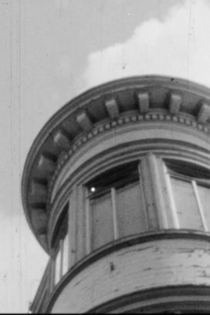
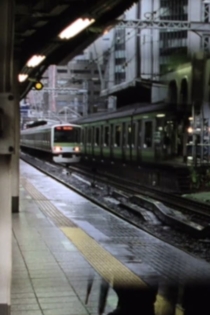
"JR (Japan Railway Company) Yamanote Line is one of the Japan's busiest lines, consisting of 29 stations and running as a loop. The film shows scenes around the entrances of 20 stations, from Shibuya Station to Tokyo Station clockwise. The in-camera visual effects and the layered soundtrack would exaggerate the noises and movements at the senses."
Shibuya - Tokyo
Sound of a Million Insects, Light of a Thousand Stars
Tomonari Nishikawa
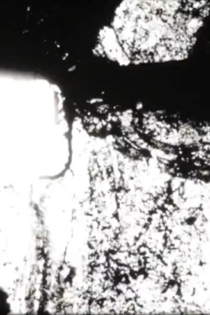
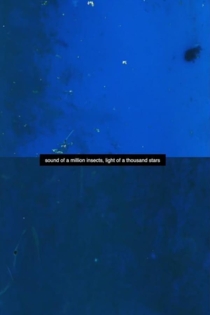
35mm negative film stock was buried under leaves near the Fukushima Daiichi Nuclear Power Station. The abstract flurry of activity on the surface of the filmstrip translates the energies of the radioactive site. Disordered marks and traces, representing the imprint of time between sunset and sunrise on the night of June 24th 2014, blend into the green and blue tones of the light-exposed emulsion.
Sound of a Million Insects, Light of a Thousand Stars
Into the Mass
Tomonari Nishikawa
Images are originally shot by two super 8 cameras, capturing the side views of me riding a bicycle, from Marin County to San Francisco. The dual projection shows new landscape of photogenic city. The ride ended after joining "Critical Mass," an event occurs every last Friday of a month in San Francisco.
Into the Mass
16-18-4
Tomonari Nishikawa
This film was shot with a still camera with 16 lenses, which takes a series of 16 pictures within 1.5 seconds, fitting onto two normal frame areas. The film shows the sense of the event at Tokyo Racecourse, when it was holding the biggest race of the year, Japanese Derby (Tokyo Yushun). The excitement of each race lasts 2 minutes and 30 seconds.
16-18-4
Lumphini 2552
Tomonari Nishikawa
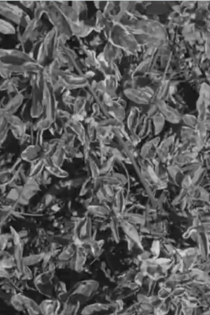
Lumphini 2552 (Tomonari Nishikawa, 2009, 3 min., 35mm, 1.37:1, sound, b&w, Thailand) It was shot through a still camera at Lumphini Park in Bangkok, Thailand. The hand-processed visual shows the organic patterns found in this monumental park, constructing the systematic yet emotional rhythm and pace on the screen, accompanied by the sound from the visual also captured through the still camera on the optical soundtrack. Lumphini is named for Lumbini, a Sanskrit word of the birthplace of the Buddha in Nepal, and 2552 is the year on the Buddhist calendar for 2009.
Lumphini 2552
Apollo
Tomonari Nishikawa
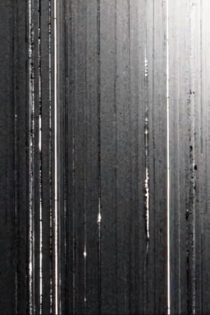
The sound will be produced from the visual on the optical soundtrack – for some parts, I used a 35mm still camera to expose the soundtrack area, and I scratched off the film emulsion directly for other parts. This is my senior thesis project at Binghamton University, and Julie Murray was my advisor.
Apollo