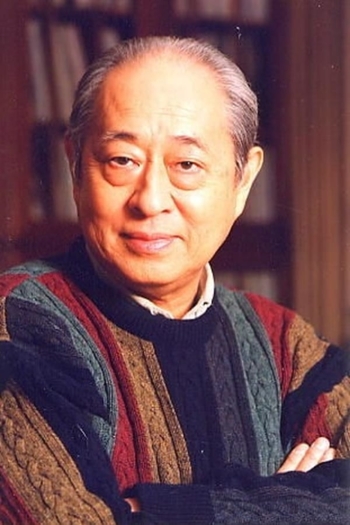
Hiroyuki Nagato
1934 - 2011Hiroyuki Nagato (January 10, 1934 – May 21, 2011) was a Japanese actor.
Nagato was born in Kyoto. He starred in Season of the Sun, Endless Desire, My Second Brother, Stolen Desire, and Sukeban Deka, and Yo-Yo Girl Cop. He died in Tokyo on May 21, 2011.
Description above from the Wikipedia article Hiroyuki Nagato, licensed under CC-BY-SA, full list of contributors on Wikipedia.
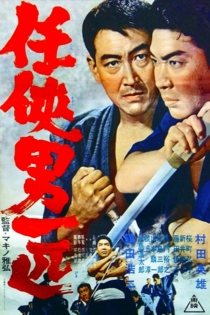
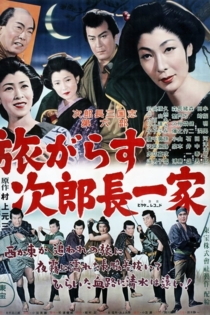
任侠男一匹
Masahiro Makino
Koji Tsuruta, Hideo Murata
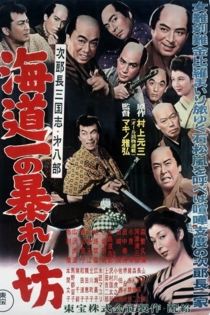
Tokizо, the boss of the Tenmaru-gumi group, assists Kikujiro, a traveler on the run. At this time, a tender is being held to conclude a contract for the construction of the railway. Tokizo, who made the highest bid, was bought by the head of the Wakatsuki section of the Kansai Railroad, who was thinking about the country, and won by suppressing Takebe-gumi, who used bribes. However, not everything went as smoothly as planned...
One Man's Chivalry

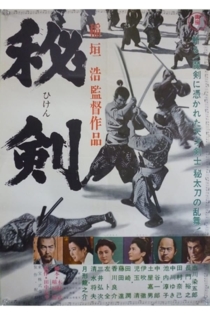
秘剣
Hiroshi Inagaki
Kōshirō Matsumoto, Hiroyuki Nagato
This Japanese action-adventure is set in the 17th century when all forms of swordplay were banned. One fighter, an excellent swordsman believes the law is unfair. His brother keeps his opinions about the law to himself. The swordsman vents his frustration by cutting off the thumbs of an enemy. The fighter is then banished. To live, he becomes a thief. To restore the family's lost honor, the other brother is forced to challenge the fighter to a duel.
Young Swordsman
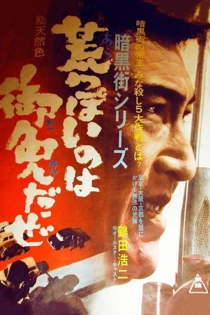
暗黒街シリーズ 荒っぽいのは御免だぜ
Masaharu Segawa
Koji Tsuruta, Naoko Kubo
Toru Sagara, a lone wolf assassin, is imprisoned for betraying his employer, Hanawa. After completing his sentence, he immediately takes revenge on Hanawa, but as he leaves, he is unaware that a boy is watching him. Toru's new employer asks him to kill a competitor in drug sales, but...
Underworld series - Pardon My Violent Ways
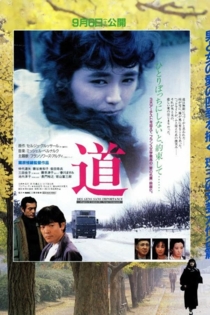
夢のまにまに
Takeo Kimura
Hiroyuki Nagato, Ineko Arima
Recently appointed dean at a film school, Kimuro Hajime develops a special concern for one of his students, Daisuke. The brash, headstrong young man is fixated on with the Second World War. He feels a sense of frustration at the irrational sacrifice of young people's lives during the war six decades earlier. Daisuke finds that he can vent his frustrations to Kimuro, who experienced the war firsthand. Kimuro's wife, Emiko, is also troubled by memories of the war. She lost a loved one in the war and has never gotten over it. And Kimuro himself also has something from the past that he has yet to face. He believes that the burden of his unresolved past will eventually be the death of him. When Daisuke's neurosis causes him to quit school, life changes for all three of them.
Dreaming Awake

ふるさと
Seijiro Koyama
Yoshi Katō, Hiroyuki Nagato
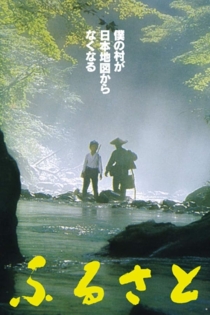
Deep in the mountains of Japan a dam is scheduled to be built, thus forcing a relocation of the farmers. One of them is 78-year-old Denzo, whose son and his wife consider him senile. Left alone, he befriends a young boy, Sentaro, who has heard that the old man was once a great angler. The unlikely pair spend lots of happy time together, until Denzo has a heart attack and dies far upstream. The dam is completed and the entire area is inundated. Everyone will move away, except Denzo.
Hometown

The Insect Woman
Shōhei Imamura
Emiko Aizawa, Masumi Harukawa
A woman, Tome, is born to a lower class family in Japan in 1918. The title refers to an insect, repeating its mistakes, as in an infinite circle. Imamura, with this metaphor, introduces the life of Tome, who keeps trying to change her poor life.
The Insect Woman

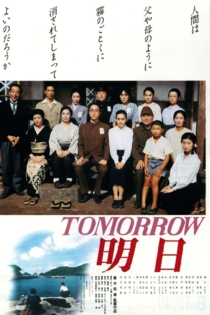
Tomorrow
Kazuo Kuroki
Kaori Momoi, Kaho Minami
On August 9, 1945, the Americans dropped an atomic bomb on Nagasaki. This film, based on a story by Mitsukaru Inoue, describes the daily life of people in Nagasaki the day before that fateful event. It presents the human drama of people's lives, and their feelings of joy and sadness. These include a newlywed couple, an expectant mother, and lovers who must say farewell because the boy is called to serve in the army. Each of these people, like others in the city, hoped to live with their dreams for ‘tomorrow’. But tomorrow never comes for them, as their lives are brought to an abrupt and unexpected end. Knowing how the story ends, in this case, doesn't detract from it at all; rather, it enhances the emotional impact, which is further heightened by the poignant musical score from Teizo Matsumura. 'Ashita' is the first film in Kazuo Kuroki's 'War Requiem Trilogy,' which also includes 'Utsukushii Natsu Kirishima' (2002) and 'Chichi to Kuraseba' (2004).
Tomorrow