Dirk de Bruyn
2021The Death of Place
Dirk de Bruyn
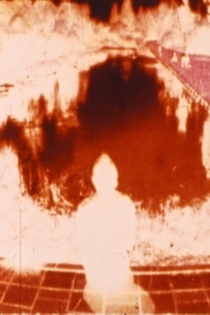
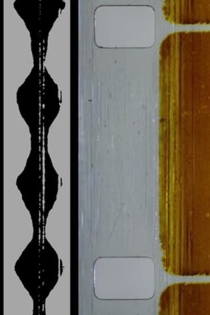
The subject of Death of Place is 16mm film's direct on film techniques, migrated into the digital realm. Its story catches half articulated childhood memories of reading and writing, the visceral material traces and gestures of a lost practice and life.
The Death of Place
Rote Movie
Dirk de Bruyn
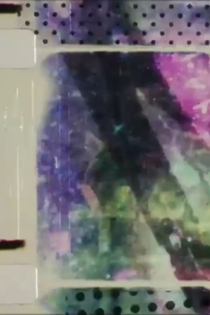
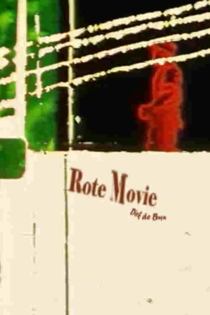
"'Rote Movie' is part of a series of works examining aspects of the traumatic experience. It is an examination of decay and forgetting, where what both distance and time can bring to one's private feelings of belonging and home. Highly immersed in a fragmented and disjointed haptic space of its own materiality, this film stutters out its thoughts frame by frame" - Steven Ball, 'Mesh' 3, Autumn 1994.
Rote Movie
Experiments
Dirk de Bruyn
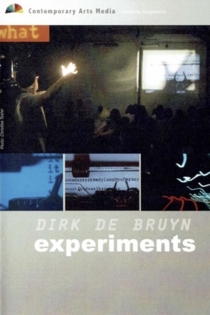
de Bruyn uses animation, optical illusions, time lapse, solarization, hand tinting, flash frames, refilming and flicker effects, accompanied by a dense atmosphere of word puns, dialogue, primal screams, music and even recycled and letraseted soundtracks. By setting experiments entirely within his Moonee Ponds house, de Bruyn creates such a complex sense of claustrophobia, the spectator, while recognising the staid, conservative trappings of urban Melbourne, is present with the sort of art neurosis more commonly found in megacities like New York. The principal actor in Experiments is the narrator, whose anarchistic mind ruminates, struggles and screams from relief from the ravages of suburban Moonee Ponds, and the psychological suburbia of his mind... Experiments, its cacophony of images flickering on two screens, throws up everything from schizophrenic madness to baby nappies, inviting you to participate in the cathartic recesses of a personal nightmare. (Steven McIntyre)
Experiments
Running
Dirk de Bruyn
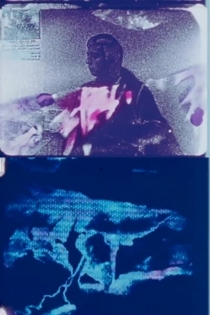
The film tries to 'destroy time' by the cyclical reworking of a short period of time. Gradually the image becomes less discernible and the flashing positive and negative images force the viewer to stare rather than looking at the film. As the film progresses the viewer becomes trapped in a short period of time.
Running
Vision
Dirk de Bruyn
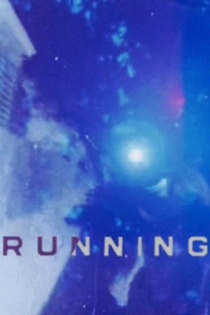
"...No photographed images. All handmade. It's all these squares, lines. The main techniques were bleaching and dyeing and sticking letraset material to the film strip. The images don't rush: they much more fold over the top of one another. Palimpsest. Using the pos/neg flickering helps to sustain the images..." – D.B. from "Where's Our Satellite," Melbourne, Australia (1985)
Vision
H2
Dirk de Bruyn
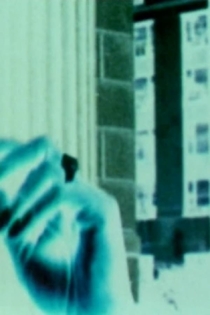
Cut down to 16mm from a 35mm trailer for the movie Shaft, the slowed down voice, gunshot explosions and lsaac Hayes' iconic music become barely recognisable and monstrous. The arbitrary framing provides glimpses of the edges of faces, fleeting urban scenes, partial text, all rendered in cyan negative in a kind of psycho-dramatic abstraction, all the more unsettling than Gordon Parks's originating gangster populated dystopia. It is a reminder of how, by simply repositioning the frame, extant material can be transformed.
H2
The House That Eye Live In
Steven McIntyre
Dirk de Bruyn
Migrating by sea from Holland as an eight-year-old, Dirk de Bruyn went on to be a doyen of Australian experimental cinema. But as this intimate film reveals, his work is suffused with the trauma of migration, and the struggle to recognise himself as a ‘new Australian'. In conversation with documentarian Steven McIntyre, Dirk guides us through more than 40 years of his filmmaking: the early years exploring technique and technology, a subsequent phase of unflinching self-examination brought on by upheaval and overseas travel, and more recent projects where he attempts a fusion of personal, cultural, and historical identity. What emerges is an inspiring, rugged, and at times poignant portrait of an artist committed to self-expression and self-discovery through the medium of film.
The House That Eye Live In
Traum A Dream
Dirk de Bruyn
By Traum a Dream (2002) the unintelligent memories have become distinctly more sinister. Samples of found footage suggesting memory and repression vie chaotically for attention with Dirk’s voice reciting repeated words and phrases, punctuated by splutters and coughs, as though attempting to wrest some meaning. This meaning comes at last with the final sentence dragged out phrase by phrase in the third person: “he began to remember what he didn’t want to remember, what had been taken from when before he knew a secret of before he knew himself”. Steven Ball
Traum A Dream
223
Dirk de Bruyn
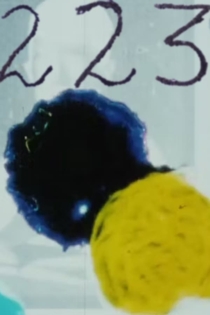
"With 223 I used Photographs from my past as a base. It gives the eyes something to come back to from the faster abstract shapes. The Pos/Neg flickering gives a feeling of depth. Its called 223 because I had some letterset of the numbers 223. There is a layering of images and techniques." – D. bB. from "Where's Our Satellite," Melbourne, Australia (1985)
223
East Meets West
Dirk de Bruyn
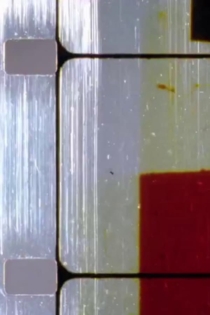
East Meets West is an abstract flickering animation that sits precariously between the digital and the analog. The film highlights the luminous scratches, dust and Letraset materially present and placed on the original film, all to the layered beat of Viola Smith's drumming.
East Meets West
Homecomings
Dirk de Bruyn
De Bruyn combines his particular filmic effect/interest (rhythm) with the tangible reality around him. In Homecomings there is an incredible sense of the filmmaker living and breathing his practice. In what is essentially a diary film of a man going back to his homeland, strange things start to happen: photos are animated too quick to catch, actions are sped up through timelapse, and, most profoundly of all, certain shots get transformed into their drawn-on-film equivalents. When we see (from behind) Dirk's son Kees sitting at a table drawing and then the same scene/action but obviously hand-drawn onto the film, it speaks volumes about the filmmaker and his interaction with the world, and is also a sublimely new configuration (in cinema's history) of sight and sound, of signification if you like. Homecomings is a long auto-biographical/diary film that combines the filmmaker's life with the filmmaker's practice. -Bill Mousoulis
Homecomings