Neelon Crawford
2021Mobius
Neelon Crawford
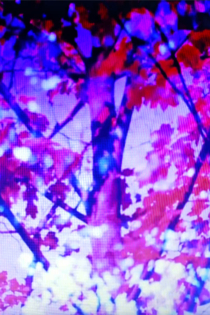
The material…was shot primarily on the West Coast, some in New York, during 1969–71. Divided into eight sections, Mobius defines a motion from downtown San Francisco through a forest in Los Padres National Forest, a student (Michael Anton) practicing Tai Chi Chuan, to the southern Big Sur coast. It pertains to sensing the intensity of the energy that surrounds one.
Mobius
Needle at Sea Bottom
Neelon Crawford
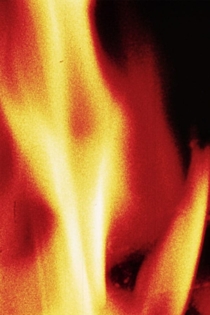
Influenced by the early theories of Sergei Eisenstein (1898–1948), in Needle at Sea Bottom I sought to create and implied time and space not found in either of the component images…the power of still awareness is literally depicted…. The film’s title is taken from the name of a specific named movement in the Tai Chi Chuan.
Needle at Sea Bottom
Freakquently
Neelon Crawford
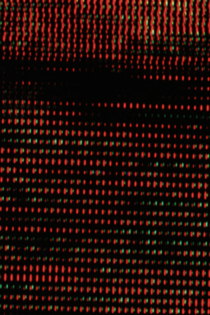
I shot my first film on 16 millimeter inside the eight-foot mirrored cube “optical sculpture” I had built in 1966, and on exterior locations, as a blissful celebration of the visual tools and techniques I found at my disposal. Bruce Baillie’s Castro Street (1966) confirmed my intuition that making visually defined films was the direction I wanted to pursue.
Freakquently
Window Dance
Neelon Crawford
Ishi Kamamoto
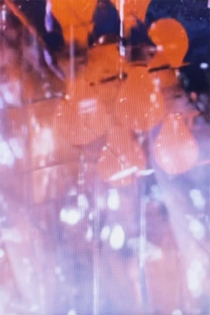
A chance meeting with contemporary dancer Ishi Kamamoto during a visit to London led to the filmmaker shooting the performer’s improvised dance in natural light alongside a canal which Crawford later edited when he returned to San Francisco. “With Window Dance I explored how any image contains aspects of a “surface” to look at and a “window” to look through.”
Window Dance
La Selva
Neelon Crawford
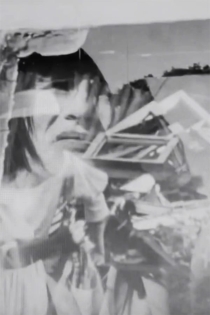
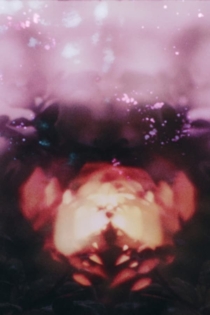
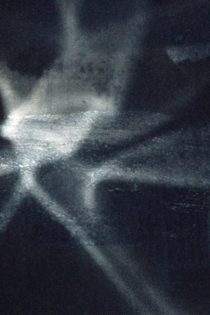
The films shot during 1973–74 in Ecuador, Peru, and Bolivia span a range of interests. Some, like Ship Side Steel Plate Lights and Laredo Sugar Mill, are examinations of visual details. Others, like La Selva, which I completed using a number of complicated yellow and green filters, are portraits of places and their energies.
La Selva
Prison 1
Neelon Crawford
During the winter of 1968–69, I saw that much of the footage I was shooting was filled with a tension reflecting my own anxieties. Rather than terminate my filmmaking, I chose to shoot a film about self-generating depression. Prison I is about the frustration and fear reaching out to others and risking the revelation of one’s self.
Prison 1
Paths of Fire II
Neelon Crawford, Michael Mideke
From two color camera rolls filmmaker Michael Mideke and I shot on July 4, 1969, we began editing many versions, independently and together. I worked running a 16mm Bell & Howell “J” contact printer in San Francisco, which allowed me to make many generations of printing elements not normally available to customers.
Paths of Fire II
Skyjacker
Neelon Crawford
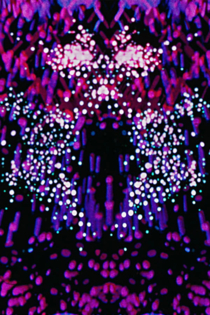
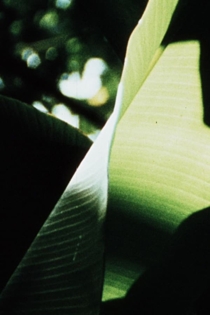
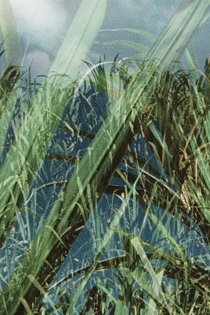
Mostly animated from 35mm slides, Skyjacker slips to a dream world of Ohio woods, British Columbia winter, and New York. A critical aspect to film work that interested me was the second phase effort found in the editing choices. While placing two still photographs next to each other creates a combined effect that neither image transmits alone, the editorial options in cinema are considerably more complicated.
Skyjacker