Rebecca Baron
2021okay bye-bye
Rebecca Baron
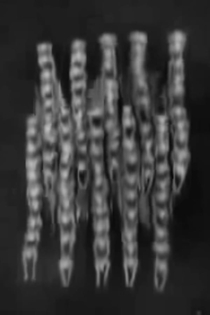
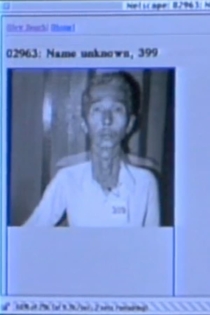
In okay bye-bye, so named for what Cambodian children shouted to the U.S. ambassador in 1975 as he took the last helicopter out of Phnom Phenh in advance of the Khmer Rouge, Rebecca Baron explores the relationship of history to memory. She questions whether, "image and memory can occupy the same space." Building on excerpts from letters, found super-8 footage of an unidentified Cambodian man, iconographic photographs from the Vietnam War and other partial images, Baron combines epistolary narrative, memoir, journalism, and official histories to question whether something as monumental as the genocidal slaughter of Cambodians during the Pol Pot regime can be examined effectively with traditional methodologies.
okay bye-bye
Lossless #4
Rebecca Baron, Douglas Goodwin
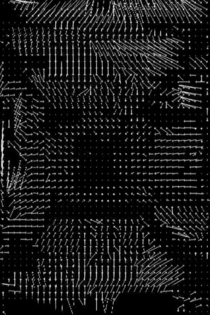
The picture has been removed from Ernie Gehr's Serene Velocity, leaving only the vectors that describe apparent movement within the frame. Here, a black void is filled with a grid of white dots from which white lines are anchored and shift about hypnotically. This is the digital medium, stripped down to its skeleton and exposing the formal qualities of the film. It is much like encountering not a foreign language, but an inhuman language; a language meant for machines, though created by humans.
Lossless #4
Lossless #2
Rebecca Baron, Douglas Goodwin
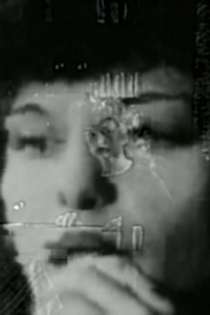
Lossless #2 is a mesmerizing assemblage of compressed digital images of Maya Deren and Alexander Hammid’s 1943 masterpiece Meshes of the Afternoon. Baron and Goodwin play heavily with Teiji Ito’s 1959 soundtrack, making the film’s lyrical ambience feel more astonishing than ever before
Lossless #2
Lossless #1
Rebecca Baron, Douglas Goodwin
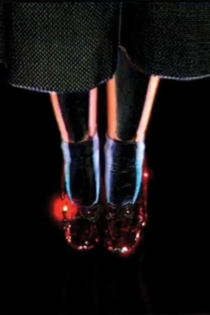
In "Lossless No. 1," Baron and Goodwin attempt to visualize the difference between film and digital video by isolating a particularly powerful sequence of 48 frames from "The Wizard of Oz," scanned from a 35mm film print, but also extracted from a DVD release of the film. The artists then digitally subtracted the DVD frames from the scanned film frames, leaving an image that reveals the difference between the analog and digital formats. The result is 31 seconds of Dorothy's ruby slippers clicking together, over and over, the shoes, her legs, and her dress a shimmering beacon, an immortal moment of intense wishing.
Lossless #1
The Idea of North
Rebecca Baron
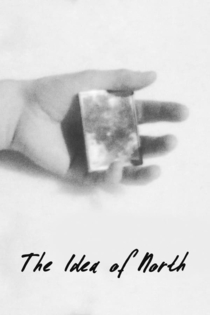
In the guise of chronicling the final moments of three polar explorers marooned on an ice floe a century ago, Baron's film investigates the limitations of images and other forms of record as a means of knowing the past and the paradoxical interplay of film time, historical time, real time and the fixed moment of the photograph. Marrying matter-of-fact voiceover and allusive sound fragments, evidence and illustration, in Baron’s words, "meaning is set adrift".
The Idea of North
Lossless #3
Rebecca Baron, Douglas Goodwin
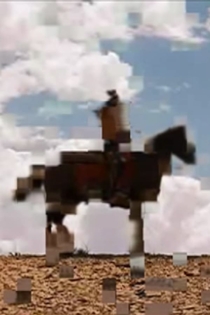
The keyframes — reference frames that define the starting and ending points of smooth transitions — from a digital version of John Ford's 1956 Western "The Searchers" have been removed, resulting in a fluid movement, "unanchored from the original photographic print," per provided information. Horseback riders slide along the landscape, trailing pixilated fragments of themselves, as if leaving traces of their presence on the scene. A man turns his head and his lips run along his face as if smeared with make-up, blocky clouds slide across the sky, and splashy cubes are kicked up when the riders cross a river.
Lossless #3
How Little We Know of Our Neighbours
Rebecca Baron
Rebecca Baron
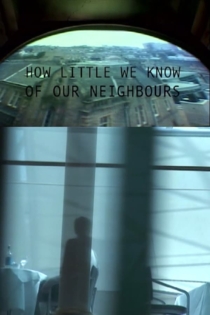
How Little We Know of Our Neighbours is an experimental documentary about Britain's Mass Observation Movement. At its centre is a look at the multiple roles cameras have played in public space, starting in the 1880s when the first hand-held camera brought photography out of the studio and onto the street. The film looks at Mass Observation and its relationship to contemporary phenomena, from police surveillance to webcams to reality television, pointing to ways in which our notions of privacy and self-definition have changed.
How Little We Know of Our Neighbours
Lossless #5
Rebecca Baron, Douglas Goodwin
A three-minute digital video of a water ballet film by Busby Berkeley. Bodies become flowering abstractions, blooming and undulating forms slowly twirl and revolve. One scene resembles a chain of duplicating bacteria, snaking around each time it doubles its numbers. The watery, almost kaleidoscopic effect is ethereal and mysterious, slow flowing movements giving the sense of a sacred ritual.
Lossless #5