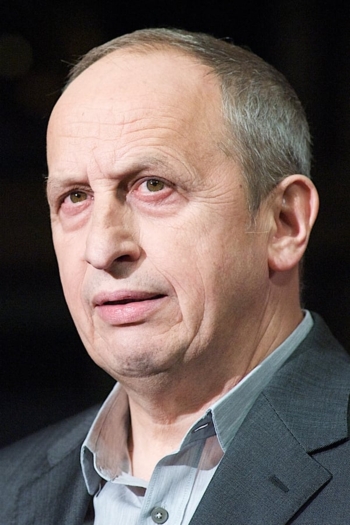
Jan Kraus
1953 (72 года)
Jídlo
Jan Švankmajer
Ludvík Sváb, Bedrich Glaser
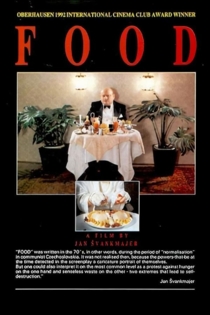
BREAKFAST: After eating breakfast, a man is transformed into an elaborate dumb-waiter-style breakfast dispenser - and the same fate befalls the man who obtains breakfast from him. LUNCH: After failing to catch the waiter's eye, two would-be diners end up eating everything within reach. DINNER: Portraits of various meals made up of human organs.
Food
Happy end
Oldřich Lipský
Vladimír Menšík, Josef Abrhám
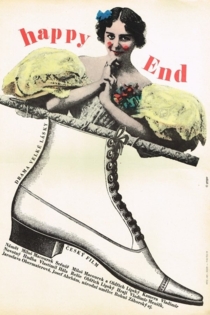
A dark comedy about a murder and its consequences presented in a backwards manner, where death is actually a rebirth. The film starts with an "execution" of the main protagonist and goes back to explore his previous actions and motivations.
Happy End
At' žije republika
Karel Kachyňa
Zdeněk Lstibůrek, Naděžda Gajerová
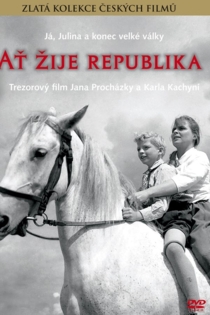
Oldrich is the runt of his village, beaten by his father, bullied by the other boys. But he has imagination of his side, and a wiry toughness they can’t defeat. The village is in turmoil, because the Nazi occupiers have just retreated and the Red Army is advancing. Oldrich dodges amid the mayhem and panic, taking his share of blows but always managing to stay one step ahead. Beautifully shot and darkly ironic, Karel Kachyna’s forgotten masterpiece jumbles reality, memory and fantasy to capture the intensity and confusion of childhood in a war zone.
Long Live the Republic
Cerni baroni
Zdeněk Sirový
Ondřej Vetchý, Pavel Landovský
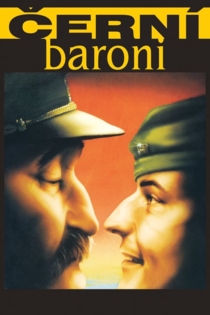
Life of Czechoslovak soldiers in a military unit for the so called "politically unreliable" - the Technical auxiliary battalions, aka "the black barons". Although it might seem like a political satire and it's mostly funny, it shows the reality and the absurdity of military service under the communist regime. Based on a novel by Miloslav Svandrlik.
Cerni baroni
Faust
Jan Švankmajer
Petr Čepek, Jan Kraus
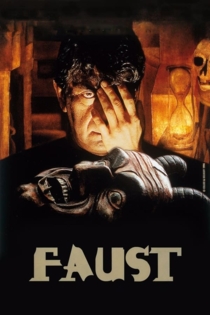
A very free adaptation of Marlowe's 'Doctor Faustus', Goethe's 'Faust' and various other treatments of the old legend of the man who sold his soul to the devil. A nondescript man is lured by a strange map into a sinister puppet theatre, where he finds himself immersed in an indescribably weird version of the play, blending live actors, clay animation and giant puppets.
Faust
Fantaghirò
Lamberto Bava
Alessandra Martines, Mario Adorf
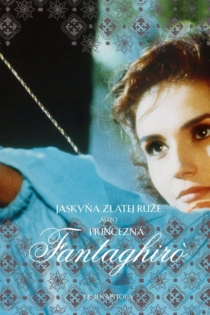
In the middle of a war between two kingdoms queen died tragically while giving birth to her third daughter. The king wanted a male heir to his throne and torn by the death of his wife, decides to sacrifice the girl and leads to the Cave of the Golden Rose to give her to the monster. The child is saved by the White Witch who promises her a wonderful future. With a rebellious temperament, the princess, named by his father Fantaghiro behaves like a tomboy. But one day she must confront the enemy, the king Romualdo, which is in love with her.
The Cave of the Golden Rose
The Stolen Airship
Karel Zeman
Michal Pospíšil, Hanuš Bor
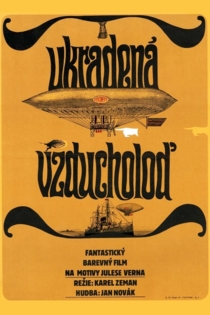
The Stolen Airship (Czech: Ukradená vzducholod) is a 1967 live-action/animated film by Czech filmmaker Karel Zeman. The story is based loosely on Jules Verne's novels Two Years' Vacation and The Mysterious Island. The film in Art Nouveau style consists of live-action scenes, generally shot in black and white, as well as hand-drawn, stop motion, and cutout animation. Various live-action and animated elements are often composited into the same scene.
The Stolen Airship
Why?
Karel Smyczek
Jiří Langmajer, Jan Potměšil
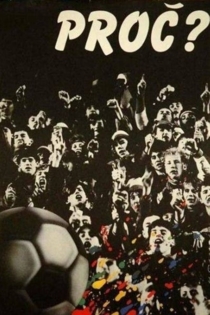
Why? (Czech: Proč?) is a 1987 Czechoslovak drama film directed by Karel Smyczek. It was screened in the Un Certain Regard section at the 1988 Cannes Film Festival. The film deals with the hooliganism in Czechoslovakia, particularly with the fans of football club Sparta from Prague, whose supporters were the pioneers of the football fan riots in Czechoslovakia, starting with hooligan actions already in the 1960s, like breaking the trains in which they travelled when they went on Sparta's away games. The film deals with one of such episodes
Why?
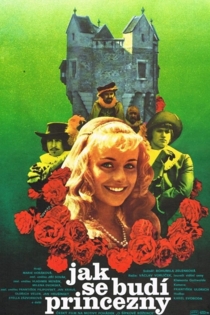
Jak se budí princezny
Václav Vorlíček
Marie Horáková, Jan Hrušínský
At long last, King Dalimil and Queen Eliška have produced an heir, Princess Růženka. Consumed with envy, Eliška’s sister Melánie casts a curse: On the day Růženka turns seventeen, she will prick her finger and fall into a deep sleep together with the entire kingdom.
How to Wake a Princess