Mikhail Klimov
1880 - 1942Праздник святого Йоргена
Yakov Protazanov, Porfiri Podobed
Igor Ilyinsky, Anatoli Ktorov
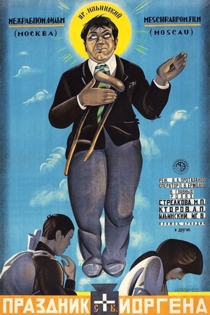
The priests, stock market officials, and police conspire to squeeze income out of pilgrims come to see relics of a Christ like figure. A pair of con men try to pass of a resurrected saint.
St. Jorgen's Day
Человек из ресторана
Yakov Protazanov
Michael Chekhov, Mikhail Klimov
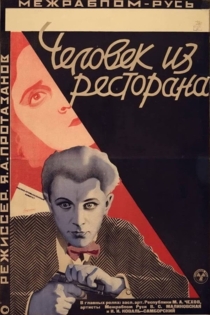
During the good old days of the Russian aristocracy, that is to say, before the October Revolution, in the city of Moscow there was a fancy restaurant which catered to the appetites and egos of the rich. In one such establishment works a middle-aged waiter who is devoted to serving his bourgeoisie clients correctly. However, his life outside his job is very different: His son was killed during the Russian civil war and the waiter's wife died of grief as a result....
The Man from the Restaurant
Остров сокровищ
Vladimir Vaynshtok, David Bradley
Klavdiya Pugachyova, Mikhail Klimov
An adaptation of Robert Louis Stevenson's "Treasure Island" with drastic changes to the plot. A group of English rebels searches for pirate's treasures to buy weapons for the civil war.
Treasure Island
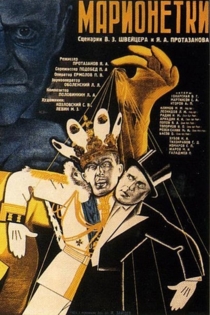
Марионетки
Yakov Protazanov, Porfiri Podobed
Anatoli Ktorov, Nikolai Radin
The Soviet Union wants more influence in Europe and decides to get more power by giving the nation of Boufferia a new king, an easy to handle drunkard, because they don't have enough power over the current king.
Marionettes
Рваные башмаки
Margarita Barskaya
Mikhail Klimov, Klavdiya Polovikova
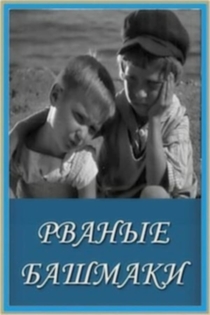
Working with children led Barskaya to create superb direct sound and an inspired style of shooting. Don’t look for conventional cinematic syntax here. The film is chaotic in the way that Soviet films still knew how to be, and Langlois couldn’t help but be seduced by its rebellious spirit, its anarchy and love of children, comparable to Vigo’s Zero de conduite. As well as being a film made with and for children, it offers a complex take on Western society. Pre-Nazi Germany is not named as such but is carefully reconstructed, possibly under advice from Karl Radek, and children offer a playful reflection of class struggle – doubly excluded, as proletarians and as minors. “They play in the same way that they live”, one intertitle says. The interaction between their comical games and the yet more ludicrous ones played by adults is developed on several levels.
Torn Boots