Jean-Pierre Grenier
1914 - 2000In 1946, Jean-Pierre Grenier, in association with Olivier Hussenot, established "La Compagnie Grenier-Hussenot" which was disbanded in 1957. In 1974, he became director of the théâtre de Boulogne-Billancourt until 1984.
He was the companion of Janine d'Almeida, impresario and producer.
Source: Article "Jean-Pierre Grenier" from Wikipedia in English, licensed under CC-BY-SA 3.0.
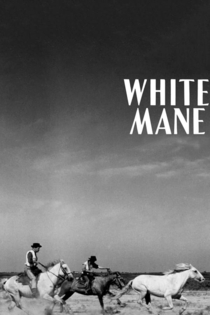
Crin blanc: Le cheval sauvage
Albert Lamorisse
Alain Emery, Laurent Roche
In the south of France, in a vast plain region called the Camargue, lives White Mane, a magnificent stallion and the leader of a herd of wild horses too proud to let themselves be broken by humans. Only Folco, a young fisherman, manages to tame him. A strong friendship grows between the boy and the horse, as the two go looking for the freedom that the world of men won’t allow them.
White Mane
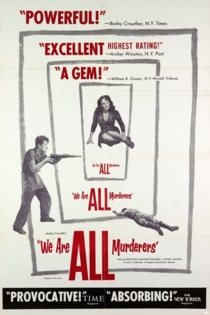
Nous sommes tous des assassins
André Cayatte
Marcel Mouloudji, Raymond Pellegrin
Originally titled Nous Sommes Tout des Assassins, We Are All Murderers was directed by Andre Cayette, a former lawyer who detested France's execution system. Charles Spaak's screenplay makes no attempt to launder the four principal characters (Marcel Mouloudji, Raymond Pellegrin, Antoinine Balpetre, Julien Verdeir): never mind the motivations, these are all hardened murderers. Still, the film condemns the sadistic ritual through which these four men are brought to the guillotine. In France, the policy is to never tell the condemned man when the execution will occur--and then to show up without warning and drag the victim kicking and screaming to his doom, without any opportunity to make peace with himself or his Maker. By the end of this harrowing film, the audience feels as dehumanized as the four "protagonists." We Are All Murderers was roundly roasted by the French law enforcement establishment, but it won a special jury prize at the 1952 Cannes Film Festival.
We Are All Murderers
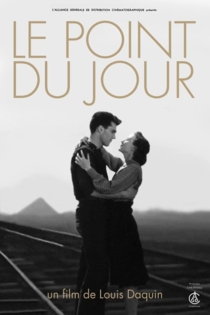
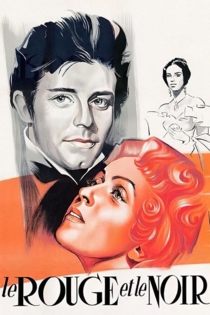
Le Rouge et le Noir
Claude Autant-Lara
Gérard Philipe, Danielle Darrieux
It's no holds barred for Julian in pursuit of upward mobility. Although expected to channel career aspirations into the Church of the post-Napoleonic era, his intensely romantic liaisons propel him forward at a pace he cannot control.
Le Rouge et le Noir
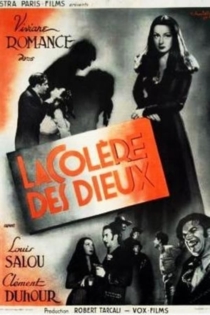
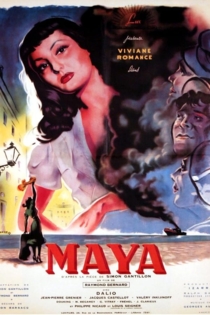
Maya
Raymond Bernard
Viviane Romance, Jean-Pierre Grenier
Based on a venerable Legend of the Sea, the story concerns a pliable prostitute named Bella (Romance) who is all things to all men. No matter what sort of woman her client wants, she will become that woman -- at least for the night. When a middle-aged man named Jean insists that Bella is his long-lost sweetheart, she plays along, hoping to escape her sordid lifestyle. The emotional tragedy that follows is meant to explain how Bella became "Maya," the living embodiment of Lost Souls.
Maya
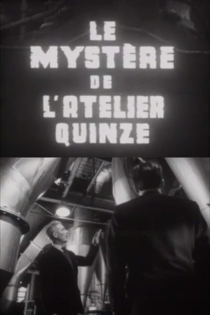
Le mystère de l'atelier quinze
Alain Resnais, André Heinrich
Jean Burgot, Yves Peneau
A documentary film about occupational diseases shot in 1957 at the Francolor factory in Oissel. It takes the form of a scientific investigation to discover the origin of a mysterious illness that has infected a worker at the factory.
The Mystery of Workshop 15
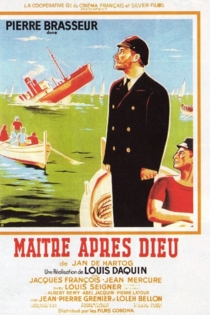
Maître après Dieu
Louis Daquin
Pierre Brasseur, Jacques François
Captain Joris Kniper believes so strongly that he is "skipper next to God" that he is used to playing God on his ship. Tough and bossy, he gives orders which are not to be discussed. But, some day, he is driven to accept on board several German Jews fleeing the nazis and who are refused asylum everywhere. He gradually realizes that skipper he is, but next to God only.The Bible will help him to find the way to self-questioning, awareness and charity.
Skipper Next to God