Grażyna Szapołowska
1953 (72 года)After passing the baccalauréat she joined at Wroclaw Theatre of Pantomime. In 1977 she graduated from The Theatre Art School in Warsaw. From 1977 until 1984 she was in the theatrical company of the National Theatre, Warsaw.
She is best known for starring in A Short Film About Love (1988) by Polish film director Krzysztof Kieślowski, and in its earlier and shorter form the sixth episode of Dekalog. It was she who suggested to Kieslowski the different ending of the full-length version. She had previously starred in another Kieslowski film, Bez końca.
Dekalog, sześć
Krzysztof Kieślowski
Olaf Lubaszenko, Grażyna Szapołowska
A teenage postal worker, Tomek, routinely spies on his older neighbor Magda, a sexually liberated artist who lives in the apartment across the courtyard from his. As their private worlds merge, fascination turns to obsession, and the line between love and curiosity becomes violently blurred.
Decalogue VI

A Short Film About Love
Krzysztof Kieślowski
Grażyna Szapołowska, Olaf Lubaszenko
19-year-old Tomek whiles away his lonely life by spying on his opposite neighbour Magda through binoculars. She's an artist in her mid-thirties, and appears to have everything - not least a constant stream of men at her beck and call. But when the two finally meet, they discover that they have a lot more in common than appeared at first sight...
A Short Film About Love

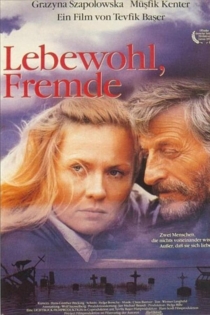
Lebewohl, Fremde
Tevfik Başer
Grażyna Szapołowska, Müşfik Kenter
Set on the deserted North Sea island of Langeness, a lonely woman begins an affair with a stranger; only after he is identified as a political fugitive and deported does she begin to learn about his true identity and his past.
Lebewohl, Fremde
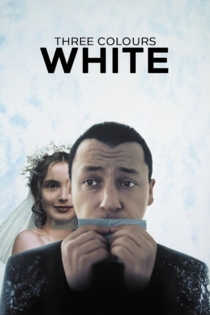
Three Colors: White
Krzysztof Kieślowski
Zbigniew Zamachowski, Julie Delpy
Polish immigrant Karol Karol finds himself out of a marriage, a job and a country when his French wife, Dominique, divorces him after six months due to his impotence. Forced to leave France after losing the business they jointly owned, Karol enlists fellow Polish expatriate Mikołaj to smuggle him back to their homeland.
Three Colors: White
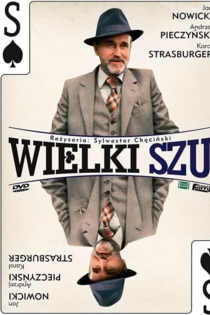
Wielki Szu
Sylwester Chęciński
Jan Nowicki, Andrzej Pieczyński
Released from prison after five years, con-artist Szu is sent packing by his young wife; he heads for the town of Lutyn where he runs a con and attracts the interest of Jurek, a young cab driver who imagines himself a great grifter. Szu ("Sharp") teaches Jurek a few tricks enabling the young man to win some money in Wroclaw, then Sharp departs with Jola, a prostitute who offers him a mark. How that plays out, Jurek's determination to win big, Sharp's cold calculations, and the wages of sin await.
Big Shar
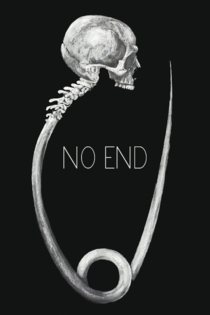
No End
Krzysztof Kieślowski
Grażyna Szapołowska, Maria Pakulnis
1982, Poland. A translator loses her husband and becomes a victim of her own sorrow. She looks to sex, to her son, to law, and to hypnotism when she has nothing else in this time of martial law when Solidarity was banned.
No End
Pervaya vstrecha - poslednyaya vstrecha
Vitali Melnikov
Mikhail Morozov, Oleg Efremov
История о событиях в Петербурге в канун первой мировой войны, событиях странных, драматических, развернувшихся в течение одной недели Рождества перед Новым 1914 годом. Герой фильма - частный детектив Петя Чухонцев, не окончивший курса студент-юрист, - расследует дело изобретателя Куклина, который был убит. Убит именно так, как предсказывал во время странного, почти сумасшедшего, новогоднего визита к Чухонцеву. Расследуя дело Куклина, Петя очень быстро сообразит, что в этом деле центральной фигурой является немец Шольц, владелец , по дешевке скупающий изобретения русских умельцев и передающий их шпиону Зигфреду Гею, советнику германского посольства. Однако также скоро Петя поймет и то, что он влез явно не в свое дело...
First Encounter - Last Encounter
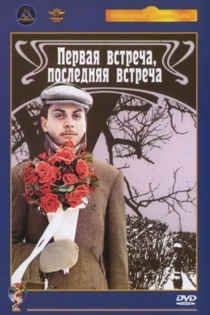
Run Boy Run
Pepe Danquart
Kamil Tkacz, Elisabeth Duda
Run Boy Run is the true story of Jurek, an eight-year-old boy, who escapes from the Warsaw ghetto, then manages to survive in the woods and working as a farmhand, disguising himself as a Polish orphan. He encounters people who will betray him for a reward, who will beat him up or try to kill him, and he meets those, who will do and risk almost everything to help him. Jurek’s resilience is put to the ultimate test, when an accident cripples him, making it harder to find work. But he struggles on against all odds. Eventually the Russians reach his area and Jurek even finds a family where he could stay. Yet he is betrayed again, and a young man from a Jewish orphanage forcefully tries to bring Jurek back to his people and his faith.
Run Boy Run
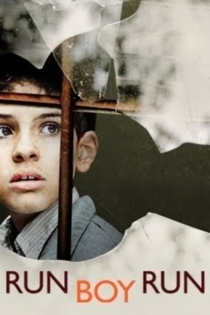
Hanussen
István Szabó
Klaus Maria Brandauer, Erland Josephson
A man's story parallels Hitler's rise. Austrian Klaus Schneider, wounded in World War I, recovers in the care of Dr. Emil Bettleheim. Bettleheim discovers that Schneider possesses powers of empathy and of clairvoyance, such that could aid suicidal patients. After the war, with one friend as his manager and another as his lover, Schneider changes his name to Eric Jan Hanussen and goes to Berlin, as a hypnotist and clairvoyant performing in halls and theaters. He always speaks the truth, which brings him to the attention of powerful Nazis. He predicts their rise (good propaganda for them) and their violence (not so good). He's in pain and at risk. What is Hanussen's future?
Hanussen
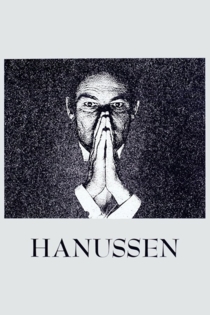
Little Rose
Jan Kidawa-Blonski
Andrzej Seweryn, Magdalena Boczarska
Pressured by his superiors to disgrace public intellectual Warczewski, a professor and respected writer whom they believe to be a "camouflaged Zionist," rough security-services colonel Rozek enlists his sexy but naive girlfriend, Kamila, to insinuate herself into the distinguished older man's life and report on his every move. Not particularly interested in serving communism but eager to please her domineering lover, Kamila accepts the mission, reporting under the code name "Little Rose." As quick scenes contrast Kamila's crude pleasures with Rozek and her more refined experiences with Warczewski, it becomes clear that the more time the unschooled young woman spends with the professor, the more she comes to have true feelings for him.
Little Rose

Nadzór
Wiesław Saniewski
Ewa Błaszczyk, Teresa Sawicka
A story of a young woman arrested by police on the day of her wedding for embezzlement, and promptly sentenced to life. She is already pregnant and has her baby in prison. Immediately after birth they are separated and only later Klara finds out that the child had a spine injury in an orphanage. After the years her sentence is shortened and she is released from prison on parole after 12 years.
Custody

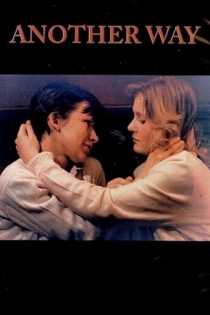
Another Way
Károly Makk
Grażyna Szapołowska, Jadwiga Jankowska-Cieślak
Political and sexual repression in Hungary, just after the revolution of 1956. In 1958, the body of Eva Szalanczky, a political journalist, is discovered near the border. Her friend Livia is in hospital with a broken neck; Livia's husband, Donci, is under arrest. In a flashback to the year before, we see what leads up to the tragedy. Eva gets a job as a writer. She meets Livia and is attracted to her. Livia feels much the same, but as a married woman, has doubts and hesitations. In their work, they (and Eva in particular) bang up against the limits of telling political truths; in private, they confront the limits of living out sexual and emotional truth.
Another Way

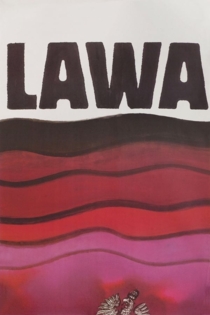
Lawa. Opowieść o "Dziadach" Adama Mickiewicza
Tadeusz Konwicki
Gustaw Holoubek, Jolanta Piętek-Górecka
In the eve of the Day of the Dead, among mysterious old rituals of the Vilnius region, ghosts of the past and present start to appear.
A Tale of Adam Mickiewicz's 'Forefathers' Eve'
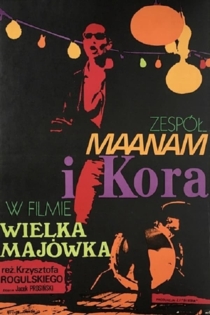
Wielka majówka
Krzysztof Rogulski
Zbigniew Zamachowski, Jan Piechociński
Rysiek is an escapee from a reform school. Julek escapes the anger of a voluntarily fire brigade in a small town from which he embezzled. In search for food Rysiek breaks into a villa and discovers a bundle of cash in the freezer. They team together in Warsaw and decide to go on a rampage through the city.
The Big Picnic