Amie Siegel
1974 (52 года)Provenance
Amie Siegel
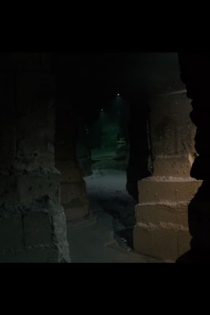
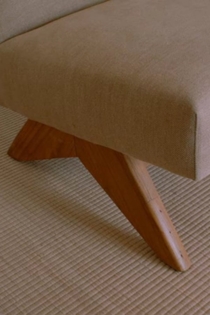
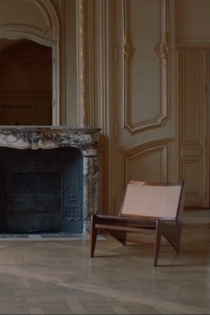
A film work of cinematic scale, Provenance traces in reverse the global trade in furniture from the Indian city of Chandigarh. Conceived in the 1950s by architects Le Corbusier and Pierre Jeanneret, Chandigarh’s controversial modernist architecture includes original pieces of furniture—tables, chairs, settees, desks—created specifically for the building’s interiors. Recently these pieces have appeared at auction houses around the world, commanding record prices. Starting with the Chandigarh furniture in the present, the film begins in New York apartments, London townhouses, Belgian villas and Paris salons of avid collectors. From there, it moves backwards to the furniture’s sale at auction, preview exhibitions, and photography for auction catalogues, to restoration, cargo shipping containers, and Indian ports — ending finally in Chandigarh, a city in a state of entropy.
Provenance
Empathy
Amie Siegel
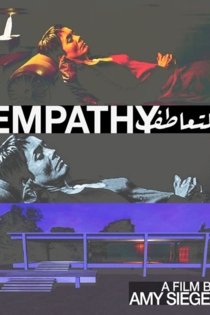
Empathy reverses the psychoanalytic gaze back onto the psychoanalyst. Three genres—fiction, screen test & documentary interview—provoke questions about power, manipulation and understanding. A fictional narrative about a voice-over actress in psychoanalysis interweaves with “screen tests” of actresses auditioning for her role in Empathy, as well as interviews with actual psychoanalysts.
Empathy
Winter
Amie Siegel
Winter is a film installation of multiple tenses—shot in the recent past, depicting an unknown future, unfolding (and changing) in the present of the exhibition. Shot in the white-washed homes of New Zealand architect Ian Athfield, including his own communal compound high above Wellington harbor, the film suggests various temporal and cultural conditions of instability, hinting at concerns of global warming and nuclear accidents, pushing at the boundaries of science fiction, stripped of narrative explication and causal explanation.
Winter

The Sleepers
Amie Siegel
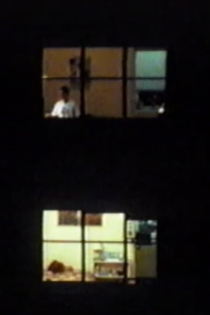
The architecture of city windows at night, lives glimpsed at a distance—a man talks on the phone as his wife reads the paper, another watches TV, a woman stares out into the dark. Are these scenes set-up? Are the people actors? Do they know they are being watched?
The Sleepers
Fetish
Amie Siegel
Fetish unfolds at London’s Freud Museum, depicting the yearly nighttime cleaning of the psychoanalyst’s personal collection of archeological statues and artifacts. Exposing the unseen procedural activities of the museum, the material and exquisitely mundane qualities of these objects are disclosed. The leading protagonists–analyst, patient (and tourist visitor)—are present only in the objects’ endless accumulation of dust and its painstaking, methodical removal. The artist’s rendering of the ritual cleaning allows for a reverse gaze at Freud’s personal collection and furniture—alternately tender, projective and voyeuristic, as the conservator’s brush sweeps the delicate surfaces of each object, or pulls back fabric upon fabric to reveal a couch’s hidden structure. Through subtle parallels, these objects, processes, and the intimate empathy their simultaneous systems each suggest, are both mirrored and revealed.
Fetish
DDR/DDR
Amie Siegel
One in a series “ciné-constellations,” feature-length associative visual essays. Dream-like and propositional, works in this series mirror shared concerns of voyeurism, psychoanalysis, memory, surveillance and modernist architecture. These films engage in a self-reflexive inquiry into non-fiction film practices, including objectivity, authority and performance.
DDR/DDR
Double Negative
Amie Siegel
Two 16mm films simultaneously project images of Le Corbusier’s iconic white Villa Savoye outside Paris, and its doppelgänger, a black copy located in Canberra, Australia. Each film has been printed on 16mm stock as a negative image, or polarity print, thus reversing light and dark. The Antipodean black Villa Savoye is, in fact, an ethnographic institute, dedicated now to the digital duplication of its extensive collections of anthropological films, photographs, slides and sound recordings, as Siegel reveals in a high definition colour video. The work enacts the infinite loop of recorded artefacts—the urgency to document and record “vanishing” rituals and cultural practices becomes instead the contemporary archival impulse to copy vanishing media formats to digital. These concatenated elements extend the artist’s engagement with architecture as a foil, enacting and revealing across constellation-like works, layered sociological and aesthetic concerns.
Double Negative
Black Moon
Amie Siegel
A present-day science-fiction without dialogue, Siegel’s “Black Moon” traverses multiple film tropes – action, guns, lonely campfires, the end of the world – and, like its band of armed female revolutionaries, resists taking up residence in a fixed genre or narrative.
Black Moon
Quarry
Amie Siegel
Marble—in its raw state and as a noble product—is the matter that Quarry is made of. The film portrays two distinct interiors, a large underground marble quarry in Vermont, and several showrooms of Manhattan luxury condos. In between stands a solid reflection about the material choices associated to these architectures and the stone's value within a speculative economy.
Quarry