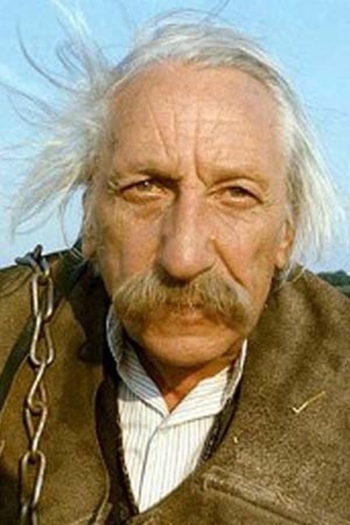
Gustav Opočenský
1920 - 1992Originally, he began to study law, but after closing Nazi colleges in 1939 he headed for the theater, close to art, thanks to his father. He did not undergo any professional training, but after the war he gained his first permanent engagement in the Realistic Theater in Prague (1945-1946). Due to his unbridled inheritance, his father in the mid-1950s came into conflict with the Communist power, he had to go to the theater in Cologne from Pardubice and eventually in 1956 he banned the ban on artistic activity. Then he worked as a miner, later a worker in Stalin's races in Záluží near Most, but at the beginning of the following decade he managed to return to the theater.
Subsequent banning of activity silenced Opočenský for twelve years, he reappeared in the film MARATÓN (1968).
We can also remind him of his comedic role as an old Nazi in the movie ZÍTRA VSTANU AND I WILL BE TEA (1977).
Gustav Opočensky's wife was actress Eva Strupplová (* 1926). Bohemian and artistic family genes also accompany the lives of their two sons, the artist and musician Petr Opočenský (* 1950) and sculptor Pavel Opočensky (* 1954).

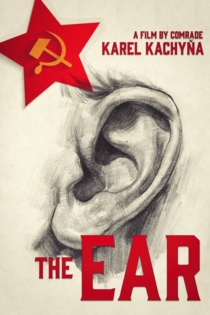
The Ear
Karel Kachyňa
Jiřina Bohdalová, Radoslav Brzobohatý
Senior ministry official Ludvik and his wife Anna come back from an official party only to find their home has been broken into and is riddled with listening devices. A harrowing night follows as the couple becomes more and more paranoid that they’re being targeted by the government.
The Ear
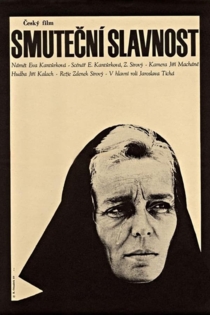
Smuteční slavnost
Zdeněk Sirový
Jaroslava Tichá, Josef Somr
Matylda (Jaroslava Ticha), who lives in the Czech countryside, is trying to arrange burial plans for her dying husband, Jan (Ludvik Kroner). While Matylda hopes to have a funeral for Jan in the small town where they once lived, there are complications. Years earlier, Jan spoke out against the Communist government and was consequently expelled from the town. When Matylda fails to convince a local politician to allow the ceremony, she uses her husband's funeral as a public show of dissent.
Funeral Ceremony
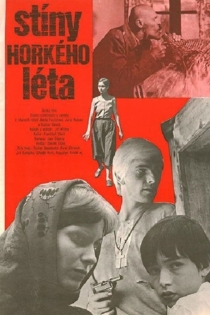
Stíny horkého léta
František Vláčil
Juraj Kukura, Marta Vančurová
The story of 1947, when Bender's band, after a beating of the Nazis, tried to fight their way through Czechoslovakia to Austria. They come out of the forest to occupy the family's rural estate, kidnap doctors to help heal one of their wounded.
Shadows of a Hot Summer
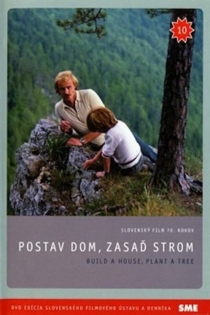
Build a House, Plant a Tree
Juraj Jakubisko
Jana Březinová, Ivan Drozdy
Juraj Jakubisko's first feature film after a forced nine-year-long break is a story about an unconventional man, Jozef Matúš. He arrives to a small village in eastern Slovakia to settle down and start a family. He is ready to subordinate everything to his goal. It all starts with stealing building material and ends with him disregarding those close to him to a point where his ambitions are turning against him. Build a House, Plant a Tree is a viewer-friendly film with a plot resembling a western, including several attractive action sequences.
Build a House, Plant a Tree
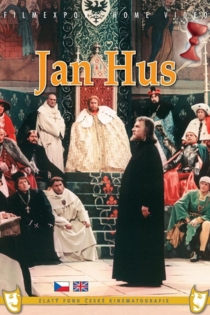
Jan Hus
Otakar Vávra
Zdeněk Štěpánek, Karel Höger
Jan Hus is a 1954 Czechoslovak film directed by Otakar Vávra. It is the first part of the "Hussite Revolutionary Trilogy", one of the most famous works of the Czechoslovak director, completed with Jan Žižka (1955) and Proti všem (Against All Odds, 1957).
Jan Hus
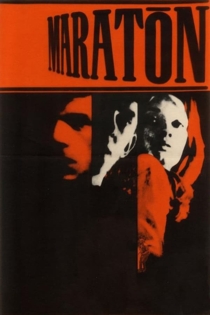
Maratón
Ivo Novák
Jaromír Hanzlík, Jana Brejchová
It is 5 May 1945 and the uprising against the hated German occupiers has broken out in Prague. The Czech guards open the gate of the Pankrác prison to allow the prisoners to escape en masse. Many of them are shot dead by the German guards but young Ruda (Jaromír Hanzlík) manages to run away. He is taken care of by one of the Prague fighters, concierge Kytka. Kytka hides him in the flat of the house's owner where only the young maid Karla (Jana Brejchová) is left, ordering her to take care of Ruda.
Maratón
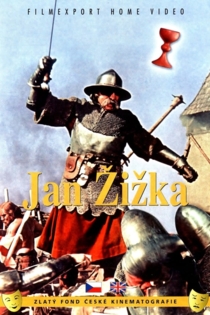
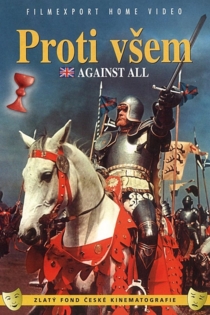
Proti všem
Otakar Vávra
Zdeněk Štěpánek, Gustav Hilmar
After the battle of Sudoměř the Hussite teaching spreads through the whole country and people start leaving their homes to help build the fortification of Tábor. Prague citizens request help against the army of Zikmund. The Hussite army with Jan Žižka in the lead make their way towards Prague. They fortify themselves on the mountain Vítkov and engage in a bloody battle with Zikmund’s huge army.
Against All
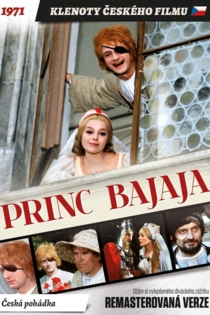
Princ Bajaja
Antonín Kachlík
Magda Vášáryová, Ivan Palúch
The hero of this popular fairy tale is a young prince who, after the death of his parents, goes out into the world. During his travels he meets a magical talking horse and falls in love with the beautiful princess Slavna. On the advice of his horse, he binds one eye and pretends to be dumb and enters into service as the castle gardener.
Prince Bajaja