
Mark Leckey
2021Dream English Kid 1964-1999 AD
Mark Leckey
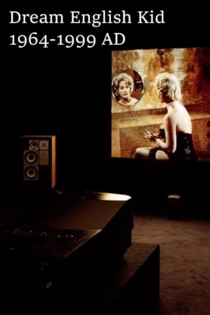
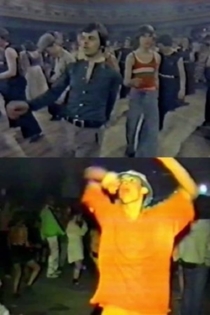
Mark Leckey’s heady Dream English Kid started with a found bootleg video of a Joy Division gig that Leckey attended in 1979-- and the realisation that snippets of our personal memories and experiences may now be found online. The film is a record of the significant events in Leckey’s life during the late 20th century through traces of film, adverts and popular music.
Dream English Kid 1964-1999 AD
In this lingering Twilight Sparkle.
Mark Leckey
"In the Age before These Times I’d been reading lots of folklore about Fairies, and Changelings and the like. At the same time I’d watch all these shows with my young daughter which revolved around magic and myth: enchanted realms, unicorns, mermaids, trolls etc. That I could instantaneously conjure up these shows on various devices made them appear even more magical. In my head these two worlds began to converge; the contemporary magic of consumerism, embodied within a rainbow unicorn, and an older mindset that could transact between the mundane and the supernatural. When the lockdown began this sense of the modern and medieval co-existing grew and grew, along with the belief that all the streaming services served as a protective magic from the encroaching dark age..."
In this lingering Twilight Sparkle.
O Magic Power of Bleakness (Five screens)
Mark Leckey
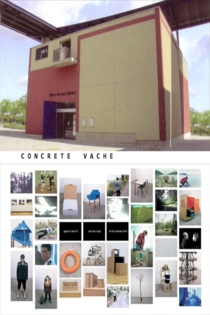
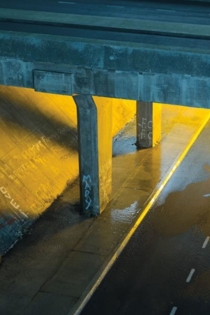
O’ Magic Power of Bleakness takes you through the doors of Tate Britain’s galleries into the underside of a motorway flyover – more specifically, the M53 Eastham Rake Bridge near the artist’s childhood home. Leckey brings the audience into a replica of the concrete space frequented by children and teenagers with nowhere to go, including the young Leckey himself.
O Magic Power of Bleakness (Five screens)
Ghosted Version of Fiorucci. 20 Years Later
Mark Leckey
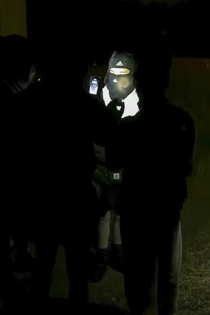
On October 4, 2019, Leckey created a "ghosted" version of Fiorucci Made Me Hardcore to mark its 20th anniversary “I always think of Fiorucci as a ghost film,” he says. “I was thinking the other day about how Fiorucci was made in the same year as Blair Witch Project, with the same technology. I started it in 1997, because it was only then that you could get desktop computers that were strong enough to run video editing software. That work is about memory and also what happens when these experiences have been recorded and then they’re played back.”
Ghosted Version of Fiorucci. 20 Years Later
Made in 'Eaven
Mark Leckey
This video takes place in Leckey’s empty London studio. The camera rotates around Jeff Koons’ Rabbit (1986), which is placed in the center of the empty room. The video was transferred to 16 mm film and “is presented on a pedestal, like a sculpture.” The shiny surface of the sculpture reflects the room clearly, but there is no reflection of the camera, after a while the viewer realizes that there was never a bunny in the studio: it is a computer-generated image of Koons' work. Leckey is an admirer of Koons and has talked about what it is that attracts him to his work: "I like the idea of something that's almost inhuman in its perfection, like Bunny. It's as if it just appeared in the world, as if Koons just imagined it and it appeared. I always get too involved in the work."
Made in 'Eaven
GreenScreen Refrigerator Action
Mark Leckey
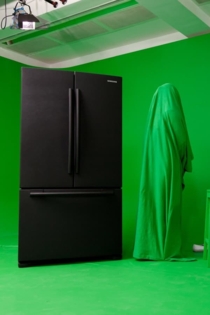
Green Screen Refrigerator is a work of video art by Mark Leckey. The work was created during a performance at Gavin Brown's Enterprise in New York in 2010 in which the artist employed live video mixing and distorted voiceover in order to portray the subjectivity of a Samsung refrigerator.
GreenScreen Refrigerator Action
Exorcise the Bridge @Eastham Rake
Mark Leckey
More a song than a video, an attempt to cast out the ever-present past that haunts me, haunts the UK, haunts vimeo. Sound mix by Steve Hellier. Respect to the Fugs and their 'Exorcising the Evil Spirits from the Pentagon'.
Exorcise the Bridge @Eastham Rake
Cinema in the Round
Mark Leckey
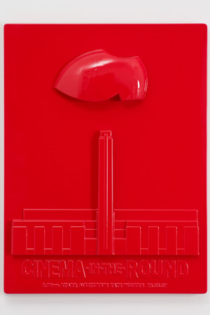
Pairing a handsome suit with his blonde, surfer shag, Leckey looked every bit the irreverent orator as he assumed the lectern in the museum auditorium and delivered a refreshingly unorthodox reading of art and cinema history. Of particular importance was the question of how something cinematic may move from a state of "pure horizontality" to that of "pure verticality," which, for Leckey, was analogous to asking how a cinematic image may become an object, sculpture, monument or "beast." James Cameron's Titanic was one of many exemplars of this process, described by Leckey as a "time-travel film" that compressed "the bookends of the 20th century" (the materiality of early industrial manufacturing, the immateriality of late software production and 3D design) and torqued this resulting hybrid around one deceptively small iceberg.
Cinema in the Round
Parade
Mark Leckey
Parade consists of a phantasmagoric procession of images, in which the neon glow of the night-time city conjures up a spate of apparitional figures, circling around the slicked-up silhouette of the artist himself; alighting on, or emanating from, him like phantom projections of his personality. Within this twilit demi monde, which may be entirely a figment of the dandy’s own fevered imagination, clothes take on a heightened importance: as prized commodities and as treasured, almost talismanic objects. This closed circuit of desire and display turns increasingly claustrophobic, as if tracing a compulsive, repetitive groove in the protagonist’s mind; culminating, in a self-consciously solipsistic flourish, in a cool 360-degree pan round the walls of Leckey’s flat.
Parade