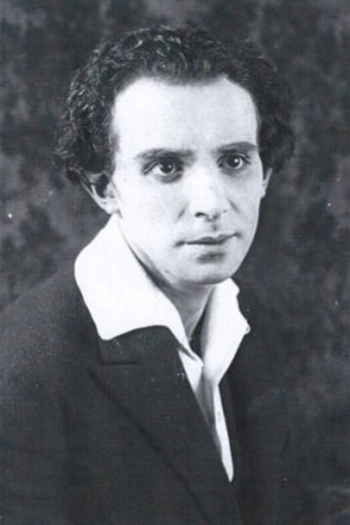
Dimitri Kirsanoff
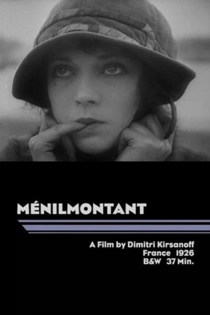
1899 - 1957Kirsanoff was born Markus David Sussmanovitch Kaplan in Tartu (then Juryev), Estonia, then Russian Empire in 1899 to Lithuanian Jewish parents. In the early 1920s he moved to Paris and became involved in cinema through playing cello in the orchestra at showings. He began making films on his own, and never worked with a production company. Kirsanoff was at the forefront of Parisian avant-garde filmmaking thanks to works such as Ménilmontant (1926), which combined soviet style montage with hand-held camerawork and lyrically composed static shots. Kirsanoff's early silent films, many starring his first wife Nadia Sibirskaia, are considered his best works. With the coming of sound the quality of his output declined, though he continued to direct commercial ventures into the 1950's. He was married to the actress Nadia Sibirskaïa who starred in several of his early films. His second marriage was to editor Monique Kirsanoff.
Deux amis
Dimitri Kirsanoff
Richard Francoeur, Henri Villemur
The story closes in Paris in January 1871, at the height of the siege, and introduces the main character, Monsieur Morissot, a watchmaker who has enrolled in the National Guard. Morissot, who is bored, hungry, and depressed, is walking along the boulevard when by chance he bumps into an old friend, Monsieur Sauvage, with whom he used to go fishing before the war. The two old friends reminisce over several glasses of absinthe in a café;, talking wistfully of the pleasant Sunday afternoons they used to spend fishing on the banks of the Seine before the war. Tipsy from the absinthe, the friends, for want of anything else to do, decide to go fishing in their old spot, and having obtained a laissez-passer from their officer, walk along the river to Argenteuil, a few miles west of the city, in the no man's land between the French and Prussian lines.
Two Friends

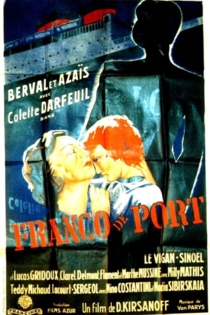
Franco de port
Dimitri Kirsanoff
Antonin Berval, Colette Darfeuil
Monsieur Fred is a friendly Southerner who recruits pretty girls down on their luck to send to South America. After some dramatic incidents and an eventful chase, a policeman manages to lock up the gang he runs.
Franco de port
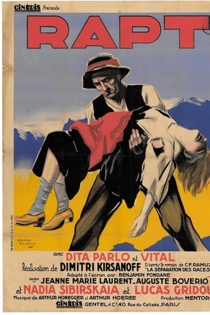
Rapt
Dimitri Kirsanoff
Dita Parlo, Geymond Vital
Hans has killed the dog of Firmin, a shepherd. Wild with rage, Firmin kidnaps Elsi, Hans' fiancée and locks her up at his home. Hans, a peddler, vows to find the missing girl. This is what he does and he manages, with the help of Mânu, the village idiot, to give Elsi a letter. On seeing her, the changeling falls in love at first sight with the young woman. Elsi soon realizes that Mânu can become her instrument of vengeance.
The Kidnapping

Les berceaux
Dimitri Kirsanoff
Ninon Vallin
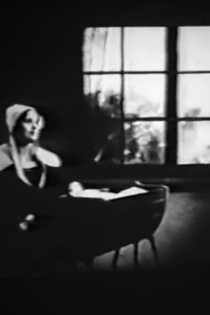
Les Berceaux is about the dedicated sailors who venture out into the deepest ocean, and the wives who must await their return. The woman sits in her living room, gently rocking her infant’s cradle as she sings, the movement mimicking the rolling motion of the ocean waves. Many men will lose their lives to the ocean’s vast waters, but the juxtaposition of death and life (in the cradle) suggests an endless and noble cycle. Kirsanoff imaginatively places a rear-projection screen outside the woman’s window, through which, as she sings, we can watch the ocean waves lapping up against the shore, or the ship charging majestically over the water. Also worth noting is that the film was photographed by Boris Kaufman, who later also shot On the Waterfront (1954) and 12 Angry Men (1957). —Shortcutcinema.blogspot.pt
The Cradles
La fontaine d'Aréthuse
Dimitri Kirsanoff
Sabine Earl, Michel Gevel
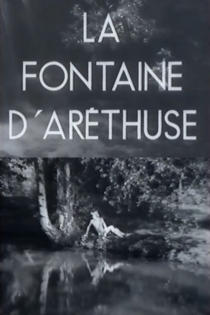
“La Fontaine d'Aréthuse” opens with what has been described as a “shimmering wash of sound in the piano, octave leaps in the left hand passing above and below repeated chords in the right,” a tune which apparently suggests the splashing waters of a fountain. The story “told” by the music involves a naked water goddess on the river shore, who is pursued by a hunter, before disappearing into thin air to join her water once again. (IMDb)
The Fountain of Arethusa
Arrière-saison
Dimitri Kirsanoff
Gilliane Sarno, Pierre Lobreau
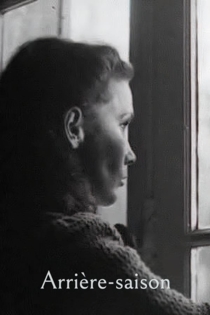
A woman waits for her husband, a woodcutter, during long lonely days. She becomes weary and leaves him to live with her sister. He takes the news with a look of resignation, but the next day she returns to wait for him again.
Backward Season
Une chasse à courre
Dimitri Kirsanoff
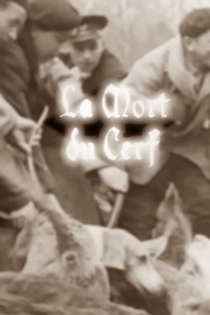
Russian emigré Dimitri Kirsanoff’s film, alternatively titled Death of A Stag and Une chasse à courre, is a post-war study of a traditional stag hunt. The pursuit of the animal finds a cross-cutting parallel in the felling of a tree in the forest.
Death of a Stag
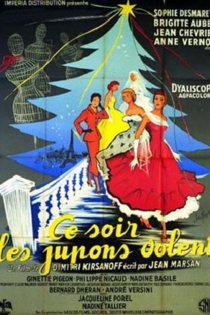
Ce soir les jupons volent
Dimitri Kirsanoff
Sophie Desmarets, Brigitte Auber
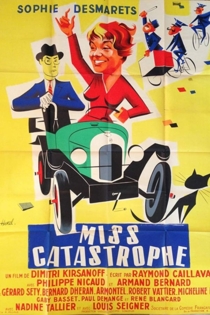
At Christmastime, the love affairs of five clothing models working for Pierre Roussel, a renowned Paris fashion designer. Marlène hesitates between two suitors. Blanche, who loves Jean, Roussel's son, wants him to talk to his father about their relationship. Catherine learns that her lover has a wife and two kids. Jeannette throws herself into the arms of an Oriental prince. In despair the fifth one attempts to commit suicide...
Tonight the Skirts Fly