Izabella Pruska-Oldenhof
2021Light Magic
Izabella Pruska-Oldenhof
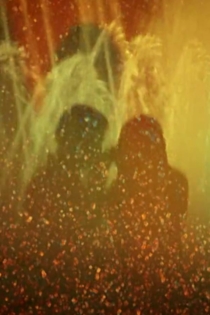
“Light Magic” utilizes and examines one of the earliest photographic processes, discovered at the birth of the photographic medium: the photogram. This technique combines science and art in order to record the process of transformation. Images created through this technique are traces of light that pass through each object, leaving their mark on the film surface. Photograms bring both the maker and the viewer closer to the object, thus revealing its essence - that neither the naked eye nor the camera lens could see.
Light Magic
Song of the Firefly
Izabella Pruska-Oldenhof
“Song of the Firefly” is a visual poem which utilizes the camera-less photogram technique that was introduced in Pruska-Oldenhof's 2001 film “Light Magic.” “Song of the Firefly” transports the viewer to an open field on a warm summer night, where the luminous dance of the fireflies can be experienced. The exhuberant display of light, as each flash illuminates different portions of the field, reveals fragments of the space in which we are contained, leaving us always waiting in anticipation to see more.
Song of the Firefly
Relics of Lumen
Izabella Pruska-Oldenhof
(Please note that this preview is at one-sixth of the full resolution) [...] As light travels through space over time, its voyage leaves its traces either as starlight we can see in the night sky or as photographic inscriptions (on paper, acetate, or CCD) in our family albums and home movies. Photographic and cinema archives are essentially archives of light, of timeless moments drawn with light. Relics of Lumen draws on the Black Star photography collection, archived at Ryerson Image Centre in Toronto, and on NASA’s digital archives. It combines thousands of still and moving images captured over the last century of people in travel (tourists, explorers, immigrants, refugees, and migrant workers), and technologies of transport and communication, while simultaneously reminding us of the persistent human desire for discovery, adventure, travel, and conquest.
Relics of Lumen
The Garden of Earthly Delights
Izabella Pruska-Oldenhof
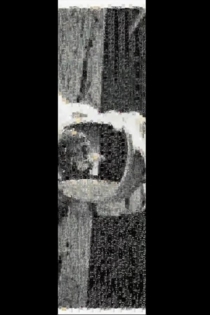
A visual duet consisting of a 16mm film and a 16mm photogram self-portrait collage. It is inspired by earthly pleasures and wonders as revealed in the vibrant marvels of Stan Brakhage's cinema and in the central panel of the 1504 triptych by Hieronymous Bosch titled “The Garden of Earthly Delights.”
The Garden of Earthly Delights
Scintillating Flesh
Izabella Pruska-Oldenhof
Izabella Pruska-Oldenhof
In a dark room holding a flashlight in my hand, I paint with light. Each stroke of light unveils an image and permits it to spill over to the adjacent film frames, thus breaking out of its rectangular prison while at the same time being woven into the fluidity of moving body, the whiteness of light, and the redness of flesh. Using the photogram technique and my body as a tool and a means to inscribe myself into this film, “Scintillating Flesh” is a self-inscription, where the filmmaker is not so much its subject but becomes its form.
Scintillating Flesh
fugitive l(i)ght
Izabella Pruska-Oldenhof
Loïe Fuller, Crissie Sheridan
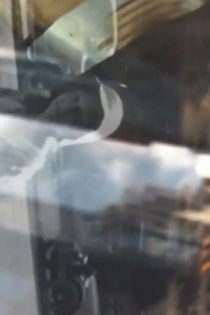
Edison and Lumiere footage of the Serpentine Dance, created by Loïe Fuller, is reworked to follow the poetic interpretations of several artists who experienced Fuller’s performances in person: texts of Mallarmé, lithographs of Toulouse-Lautrec, sketches of Whistler, and a futurist manifesto on dance by Marinetti.
fugitive l(i)ght
Echo
Izabella Pruska-Oldenhof
Izabella Pruska-Oldenhof
A self-portrait of Pruska-Oldenhof's childhood and native home in three segments of image, song and text. Images of her birth country are shown as she silently mouths a Polish emigrants' song, followed by a recording of her singing the same song as a child, followed by a text translation of the song into English.
Echo
my I's
Izabella Pruska-Oldenhof
Izabella Pruska-Oldenhof, Agata Pruski
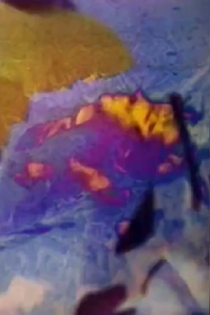
my I's is a visual journey through time, space, and memories of the filmmaker from her childhood to the present. Not parting with her Super 8 camera for four years, she accumulated a variety of images from different parts of the world and from different times of the year. She then combined these images with home movie footage of herself and her mother.
my I's
her carnal longings
Izabella Pruska-Oldenhof
“her carnal longings” is an audiovisual meditation on the human body and the film medium at a time when the futures of both are in question. Using the “emulsion lift” technique on 16mm film, sections of emulsion were lifted off, torn up or smudged, and then re-adhered. In combination with digital video technology, Pruska-Oldenhof creates an intricate analogue-digital weave that explores both the body’s and the film’s surface. The film emulsion wrinkles, rips and dissolves - reminding us that it, like human flesh, is fragile and perishable.
her carnal longings