
Charles Ludlam
1943 - 1987Lupe
José Rodriguez-Soltero
Mario Montez, Salvador Cruz
The film — a mix of music, colors, abstract scenes and little dialogue — is based loosely on the life and death of Mexican-American actress Lupe Velez. The music, far more than mere background, borders on serving as the film’s narrative and ranges from classical to contemporary pop music.
Lupe

Doomed Love
Andrew Horn
William Rice, Black-Eyed Susan
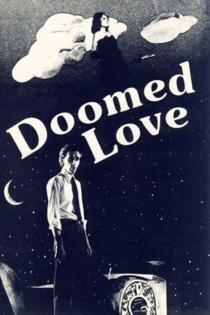
Depressed after losing his lover a long time ago, Andre visits a psychiatrist. While in the doctor's waiting room, he strikes up a friendship with Lois, the doctor's receptionist, and later with Lois' husband, Bob. Although the couple wants to help Andre recover from his depression, Andre finds himself unable to pull his life out of the past.
Doomed Love
Pink Narcissus
James Bidgood
Don Brooks, Bobby Kendall
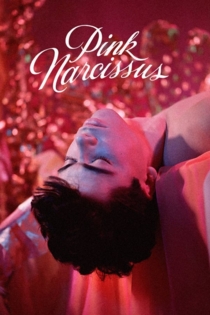
An outrageous erotic poem focusing on the daydreams of a beautiful boy sex worker who, from the seclusion of his ultra-kitsch apartment, conceives a series of interlinked narcissistic fantasies populated by matadors, dancing boys, slaves and leather-clad bikers.
Pink Narcissus
Impostors
Mark Rappaport
Peter Evans, Ellen McElduff
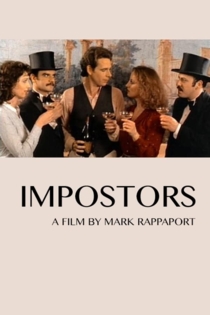
One of Mark Rappaport's later narratives (which won the Gold Hugo for Best First Feature at the Chicago International Film Festival in 1979), Impostors is an off-kilter comedy/mystery focused on two magicians trying to find Egyptian jewels, their promiscuous assistant, and a man who loves the assistant.
Impostors

Underground and Emigrants
Rosa von Praunheim
Fernando Arrabal, Lee Breuer
In this film, outspokenly homosexual filmmaker Rosa von Praunheim has documented his encounters with friends in the New York "underground" arts movement, the better-known of whom are William Burroughs (who says nothing for the camera), Andy Warhol (seen in the distance) and Fernando Arrabal (who is interviewed in Spanish). The emigrants named in the title are notable Germans who left the country before World War II, such as Greta Keller and Grete Mosheim. Reviewers at the time of the film's release considered it to have been a sort of paid vacation for the filmmaker rather than a serious effort. (Clarke Fountain, Rovi)
Underground and Emigrants

The Sorrows of Dolores
Charles Ludlam
Black-Eyed Susan, John Brockmeyer
Film recounts the madcap tale of sweet Dolores who, after being tortured by her sadistic mother, is thrown into the harsh city environs, innocent and alone. Chased by villains, abducted into white slavery, and ravaged by monstrous beasts, Dolores spirals deep into the underworld unable to find redemption.
The Sorrows of Dolores
Museum of Wax
Charles Ludlam
The black-and-white, silent short, Museum of Wax (1981-1987), is the more classically structured of Ludlam’s recovered films. Fluently adopting a silent-era cinematic language, the vaudevillian narrative follows an escaped prisoner (Ludlam) who seeks refuge in a Coney Island wax museum. The set-up is a clever ploy to involve the rows of wax puppets (and boxes of celebrity heads) in a whimsical deracination of gender conventions.
Museum of Wax