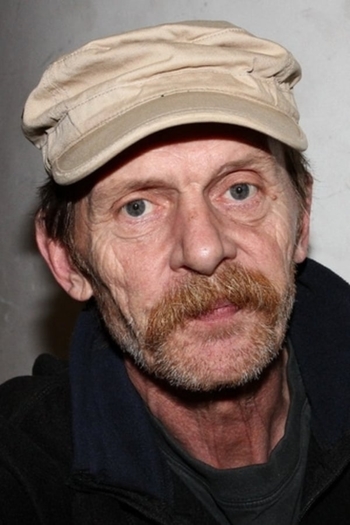
Jiří Schmitzer
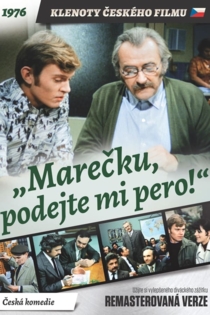
1949 (76 лет)Marecek, Pass Me the Pen!
Oldřich Lipský
Jiří Sovák, Jiří Schmitzer
This comedy is about one average family. The father works as master in the factory and his son is studying on high school. One day father must start to visit the evening school. It's the same school as his son visiting. The lives both students are connecting together. The son must teach the math and physics his own father. The father getting to know, that the life of the students is not simple as he supposed.
Marecek, Pass Me the Pen!
My Sweet Little Village
Jiří Menzel
János Bán, Marián Labuda
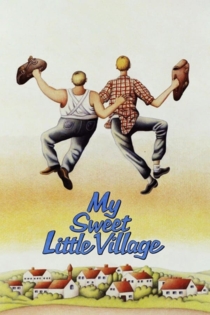
The movie's main storyline follows the life of Otík, a young man, in a tight-knit village community. The sweet-tempered Otík works as an assistant truck driver with Mr. Pávek, his older colleague and practical-minded neighbor. Pávek's family takes care of Otík, whose parents are dead. However, the two coworkers become at odds over Otík's inability to perform even the simplest tasks. Pávek demands that Otík be transferred to assist another driver, who happens to be a choleric and suspicious man named Turek (Turk in Czech). Rather than work with Turek, Otík decides to accept an offer of employment in Prague, but finds he does not fit in to the city life. After discovering that the transfer of Otík to Prague was a trick by a crooked politician to get a deal on Otík's large inherited house, Pávek agrees to give Otík a second chance and retrieves him from the city to resume their work together.
My Sweet Little Village
Cerni baroni
Zdeněk Sirový
Ondřej Vetchý, Pavel Landovský
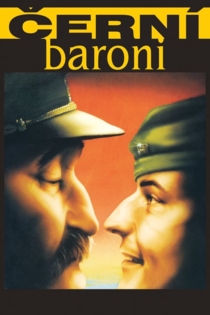
Life of Czechoslovak soldiers in a military unit for the so called "politically unreliable" - the Technical auxiliary battalions, aka "the black barons". Although it might seem like a political satire and it's mostly funny, it shows the reality and the absurdity of military service under the communist regime. Based on a novel by Miloslav Svandrlik.
Cerni baroni
Slavnosti sněženek
Jiří Menzel
Rudolf Hrušínský, Jaromír Hanzlík
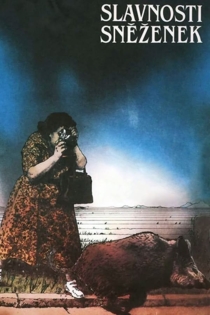
This movie is based on texts of Bohumil Hrabal, world-known Czech prosaic. It's a story (in a form of a mosaic of short episodes and pictures) about the sadness and happiness of inhabitants of Kersko (Kersko is a small woody area full of cottages and roods). These people are both simple and sensitive, they have their own pleasures (e.g. Leli is a collector of cheap, but inutile things) and the greatest delight of all of them is a hunting. Crude poetics of amateur hunting is screened by dreamy pictures of this area. Menzel mixes sentimental lyricism and rough (but not vulgar!) humor and the outcome is the never-ending landscape of continuous life in the proximate nearness of nature. The performances of actors are brilliant. Both Rudolf Hrusinsky as a Franz and Jaromír Hanzlik as a Leli have nonrecurring charm bottomed on a pain and inebriation. Only the music is not perfect: Jiri Sust usually assembled his film music from his older works and in this movie there is many quotations.
The Snowdrop Festival
Postřižiny
Jiří Menzel
Rudolf Hrušínský, Petr Čepek
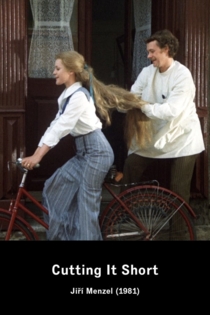
Francin, manager of a small-town brewery, has a charming wife whose abundant blonde locks are an adornment to the town. Maryska looks ethereal but loves meat and beer, while Francin is an ascetic. The strict members of the brewery board of directors come to audit the accounts, but are diverted from concentrating on Francin's detailed reports by Maryska, who has organized a pig-killing feast and is ably assisting the butcher. When she invites the old curmudgeons on the board to enjoy the fresh pork, they are too happy to agree. Francin doesn't know whether he is going to get a permanent contract. To make things worse his brother Pepin - eccentric, noisy and garrulous - turns up on an indefinite visit.
Cutting It Short
Boomerang
Hynek Bočan
Jiří Schmitzer, Vladimír Dlouhý
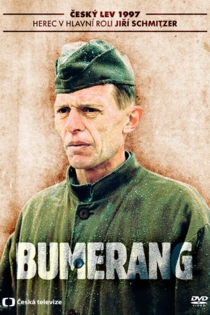
The story, written by former George Stransky former political prisoners and today's chairman Pen Club is situated to 50 years and uranium camp of political prisoners in Pribram, where after the fall of the Stalinist cult comes at the end of 1958 as a prisoner of the former Chief of Main Administration of correctional facilities Colonel Good. Former chief topic of coexistence, "a guard" and political prisoners in the Bolshevik camp served timeless makers to reflect on the possibility (or impossibility) of forgiveness and a sense of justice. The film, unfortunately, below expectations - mainly because of its rarity and lack syžetovou arching dramatic arc of the story, including natural gradation. Nice camera and vice versa are cast, formed literally myriad of top Czech actors. A representative of one of the main roles - Jiri Schmitzer in 1997 was awarded the Czech Lion.
Boomerang
Kooky
Jan Svěrák
Zdeněk Svěrák, Ondřej Svěrák
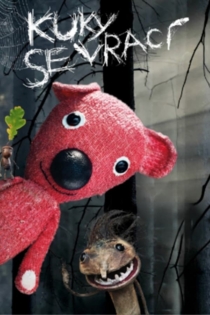
Young Ondra has asthma and so his parents throw away his favourite toy: a musty old stuffed bear named Kooky. That night Ondra dreams that Kooky is determined to find his way back home from the dump. In the boy's fantasy, the bear gets lost in a forest occupied by strange animals and remarkable beings that he never heard of while living on the toy shelf in Ondra's room. And of course even in this small imaginary world, true good exists as does real evil, which Kooky must face up to in order to become a real hero.
Kooky
Báječná léta pod psa
Petr Nikolaev
Ondřej Vetchý, Libuše Šafránková
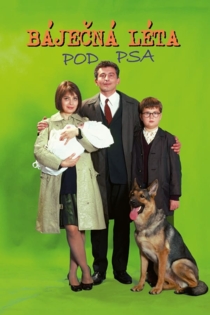
Capturing the dark humor of Czech author Michal Viewegh's chronicle of life after the Velvet Revolution, this black comedy chronicles three decades in the life of a small Czech family. While the original novel centered on the protagonist Kvido from his conception through his adulthood, first time director Petr Nikolaev and screenwriter Jan Novak changed the focus to his parents Milena, an extremely self-effacing lawyer who acts on stage in her spare time, and Ales, a rather aimless government worker who tends to drift wherever the wind takes him. The lives of Ales and Milena change dramatically following the Russian invasion of Prague in 1968.
The Wonderful Years That Sucked

Wild Flowers
F. A. Brabec
Martina Bezoušková, Sylvie Kraslová
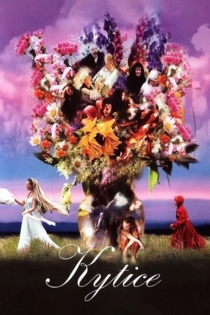
Seven seemingly unconnected fairy tales - glued together only by folklore, mood, color and light - make up this Czech collection of visual poetry. The original piece of literature, written by Karel Jaromír Erben in 1853, contained twelve tales.
Wild Flowers
Vůně vanilky
Jiří Strach
Jiří Schmitzer, Jana Hlaváčová
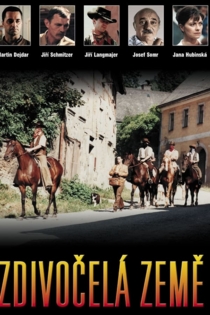
A dramatic love story, taking place in the final days of the Second World War when the American Army liberated the Pilsen region of West Bohemia. Anne lives with her mother, husband and stepchildren at a solitary country farm. But her life is not what she would wish it to be. She had previously lived with her aunt in London, and the only reason why she returned to Czechoslovakia was to look after the orphaned children of her sister. She married their father, but the rural environment is alien to her, and neither does she get on very well with her husband. A group of American soldiers arrives at the farm, having strayed away from their designated route of advance. To their great surprise, they are welcomed by a young woman who speaks fluent English, and invite her to go with them to Pilsen as an interpreter. Anne long hesitates, well aware that she attracts the affection of one of the soldiers, and herself becomes fond of him, too. She feels that the trip to Pilsen could mean an ....
Vůně vanilky
Kráska v nesnázích
Jan Hřebejk
Anna Geislerová, Jana Brejchová
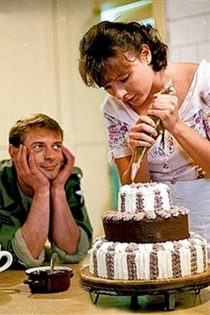
Marcela can't bear Jarda any longer, so she threatens divorce and takes the kids to her mom's, whose husband is a creep. While Marcela is there, Jarda is jailed, because he is part of a gang steeling cars and they get caught in the act. Benes, the urbane man whose car got stolen by Jarda and his gang, befriends Marcela. Soon she feels drawn to Benes and all of a sudden she must make up her mind: Jarda is still sexually attractive to her, but Benes offers security, and her own body and mind may not pull at the same strand.
Beauty in Trouble