
Paul Virilio
1932 (94 года)urbanist. He is best known for his writings about technology as it has
developed in relation to speed and power, with diverse references to
architecture, the arts, the city and the military.
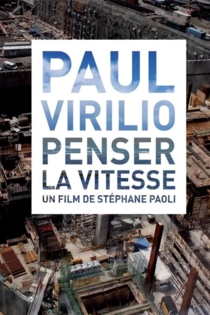
Paul Virilio: Penser la vitesse
Stéphane Paoli
Paul Virilio
Paul Virilio (born 1932 in Paris, France) is a cultural theorist and urbanist. He is best known for his writings about technology as it has developed in relation to speed and power, with diverse references to architecture, the arts, the city and the military.
Paul Virilio: Penser la vitesse
Le Celluloïd et le Marbre
Éric Rohmer
César Baldaccini, Georges Candilis
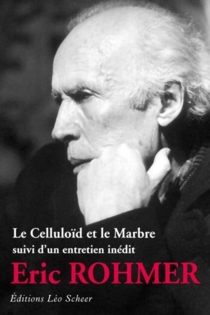
Celluloid and Marble is based on Rohmer's own articles published in "Cahiers du cinéma", discussing film in relation to the other arts, maintaining that, in an age of cultural self-consciousness, cinema was “the last refuge of poetry” - the only contemporary art form from which metaphor could still spring naturally and spontaneously.
Celluloid and Marble
Unknown Quantity
Andrei Ujica
Svetlana Alexievich, Paul Virilio
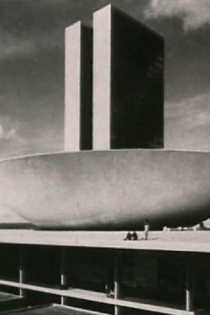
In the immediate aftermath of the 11 September Paul Virilio suffered from a malaise found very seldom among philosophers, which was caused by an excessive degree of confirmation on the part of reality. He broke off work on his book "L'accident Intégral" to put together an exhibition that was designed to illustrate the concept of the global accident in all its topicality. The outcome was the much-vaunted Ce qui arrive, which was housed in the Fondation Cartier pour l'art contemporain in Paris from 29 November 2002 to 30 March 2003. The cinematic installation, Unknown Quantity, which was a key part of the exhibition, features the staging of a discussion between Paul Virilio and Svetlana Alexiyevich, the author of the book "Chernobyl. Chronicle of the Future", the essential witness's statement on the conversion of history in catastrophe.
Unknown Quantity