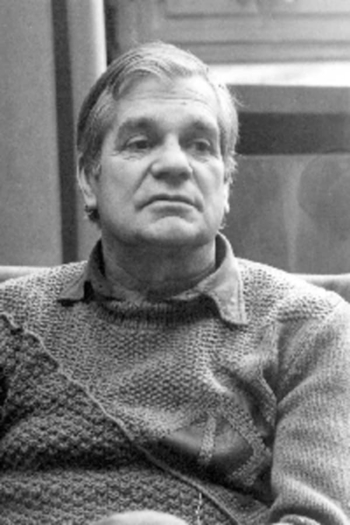
Konstantin Kotsev
1926 - 2007After the graduation, Kotsev was appointed in the Burgas Theatre for a year. In 1959, he joined the troupe of the newly founded Satirical Theatre „Aleko Konstantinov“ in Sofia where he remained until 1984. During the end of the 1980s, Kotsev was part of the Municipal Theatre of Sofia.
His film debut in a main role was in 1958 in the Bulgarian film classic On a Small Island directed by Rangel Valchanov.
Kotsev has a son Dimitar (born 1971) and a daughter Zornitsa (born 1972).
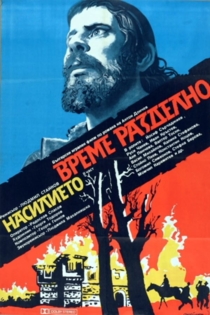
Време разделно
Ludmil Staikov
Iossif Surchadzhiev, Rousy Chanev
In the 17th century, a Bulgarian Christian region is selected by the Ottoman rulers to serve as an example of conversion to Islam. A Janissary who was kidnapped from the village as a boy is sent to force the reluctant inhabitants to convert. The Turkish governor seeks a peaceful solution, but ultimately torture, violence, and rebellion break out.
Time of Violence
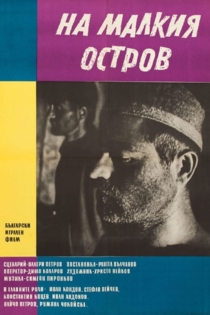
На малкия остров
Rangel Vulchanov
Ivan Kondov, Stefan Pejchev
In the 1920s several dozen political prisoners are exiled on a small island in the Black Sea awaiting sentencing. The old sea wolf and adventurer Kostadin (nicknamed Costa Rica) is planning an escape together with а carpenter named Zheko, an idealistic student and a doctor.
On the Small Island
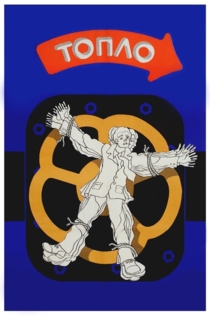
Топло
Vladimir Yanchev
Naum Shopov, Konstantin Kotsev
A tenement house needs to have steam heating installed. The residents find the necessary workers to do it, sign the contract and pay them in advance. The workers show up and start their job, but disappear immediately. Panic-stricken, the residents set up to search for them, only to find the workers in jail. Totally desperate, their only chance is to come up with an ingenious plan how to bring the work to the end.
The Central Warmth
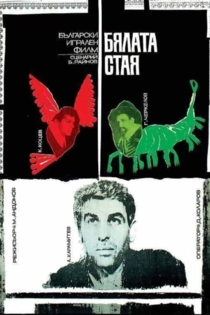
Бялата стая
Metodi Andonov
Apostol Karamitev, Elena Rainova
In a white ward in a clinic a lifetime balance on the verge of death. Memories are herding together in the mind of seriously ill Aleksandrov, a scientist, who evaluates and reevaluates his own life: friendships, loves, career. Images of his youth are crowding in: of his beloved, of his children, of evenings, spent with his friends, ups and downs. And no one is able to say if all this made any difference.
The White Room
Къщи без огради
Georgi Stoyanov
Kircho Petrov, Konstantin Kotsev
Misho becomes an orphan. The good people from the neighborhood take care of him until the child is placed in an orphanage. Everyone is trying to bring joy to the kid. However, Misho is searching for his mother's love in their eyes. Now the people are being kind to him, but there is always an invisible wall. Maybe uncle Elenko is the most sincere, since he shows his feelings in a tragic moment when Misho gets on a roof of a construction site. However, why does he care for Misho end with him convincing him to go to the orphanage?
Houses Without Fences
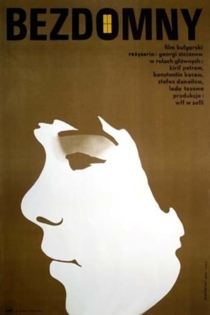
Heimlichkeiten
Wolfgang Staudte
Karl Michael Vogler, Reinhild Solf
People from all over the world spend their summer holidays at the Black Sea. German Walter and his girlfriend Gisela check in at the hotel as spouses. Walter uses the passport of his wife. The police find the body of a young woman washes up by the waves. Inspector Damyanov begins an investigation. Walter is not under suspicion, but he is ill at ease. It is because of his wife passport? Ex-Nazi officer Kunze has his own little secret and causes for worry. Dutch musician Jan has something on his conscience, too, after a little love with a Bulgarian girl. Having penetrated the unsavory secrets of all those people, Damyanov leads them to the conviction that it is difficult to live a life of deception.
Sets

Случаят Пенлеве
Георги Стоянов
Naum Shopov, Konstantin Kotsev
The three grotesque novels whose action takes place at different times of the recent past are united by a common thematic key - their protest against violence and militarism, expressed by means of a kind of absurd humor.
The Penleve Case
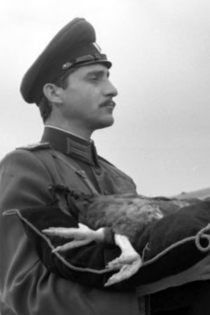

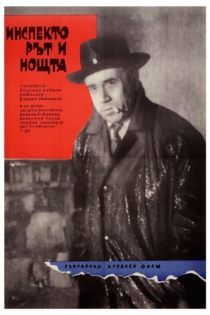
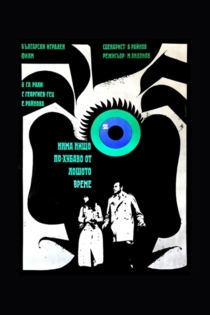
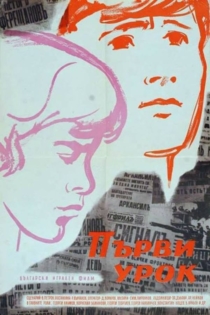
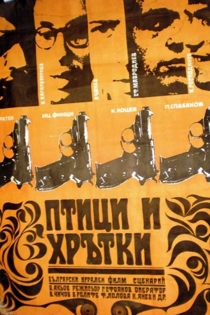
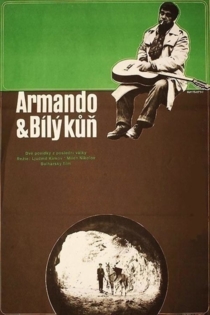
Армандо
Lyudmil Kirkov
Konstantin Kotsev, Asen Georgiev
Yanko, a young partisan, arrives in a small coastal town. He has to carry out a mission and return to his unit immediately. However, he runs into Armando, a former schoolmate. The guitarist Armando is genuinely overjoyed. He throws back a glass or two, plies his friend with questions, and indulges in memories. Yanko's heart is torn between conflicting emotions: Should he kill Armando and thus avoid the risk of detection? On the other hand, should he take a chance and spare his onetime friend? In a moment of lucidity, Armando realizes the tight spot that he is in. He offers the partisan his own, better clothes and wishes him god luck. Just when Armando is at his happiest, the police, who have mistaken him for the outlaw they want, shoot him.
Armando