
Peter van Houten
2021I'm Still Alive
Peter van Houten
A poetic and visual portrait of the old Polish woman Jadwiga Kubis Waslicka (1919). Her life coincided with the 20th century. The great movements of history, such as communism, capitalism and fascism, meant she had to roam Europe from Poland via Germany and the United Kingdom to Holland. Now she’s back in her homeland, in Warsaw. She is old. Her body is decaying and she’s basically waiting until the angels come to fetch her. The filmmaker is aware of Jadwiga’s old age and approaching demise, but he also sees much beauty in her appearance. He juxtaposes her wrinkled face with the guilty Polish landscape. At the most intimate of moments, he does not look away and continues to seek beauty in fragility. The woman no longer leaves her house, but the filmmaker does. He brings images and sounds back that tell us things about her life, but without words. Images that mix the suffering from the past with the suffering now.
I'm Still Alive
Je m'appelle Liotta
Peter van Houten
The film revolves around a chance encounter between two pregnant women. One woman is Liotta, as in the title of the film. The other woman, wearing a red cloak, does not provide her name. Throughout the 12 hours that the film covers, she remains cloaked in total silence. Alongside apples and statues of Christ, children’s portraits play a major role as symbols in the film. The film maker says they refer to an approaching birth, but also to the fact that the woman in the red cloak lost her child and her husband in a car accident. The film maker is a follower of the thought that people’s urge to find paradise is linked to the individual experience they had as a fetus in the womb. The unconscious desire for this experience steers our everyday existence.
My Name Is Liotta
La vie de Jean-Marie
Peter van Houten
Jean-Marie is the eldest son of a large family, of which the Dutch father bought a mountain in the French Pyrenees in 1948. Now he is a pastor for 25 villages located in the area. Jean-Marie speaks of the harsh rejection by the great love of his youth in the village of Olette, his subsequent taking of the cloth as well as his spiritual love for his neighbour later in life. With his simplicity, openness and humour he manages to move us all. At the age of 75, he makes a drastic decision that leaves everyone baffled. Recordings from 2004 until 2010 in the Eastern Pyrenees.
The Life of Jean-Marie
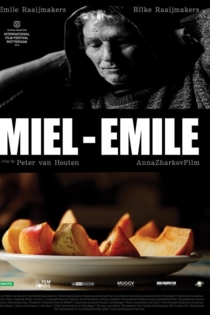
Miel-Emile
Peter van Houten
After WWII, Dutch artist Pierre Raaijmakers bought a house in the French Pyrenees, and went to live in it with his Flemish wife. They had twelve children; Peter van Houten made the film La vie de Jean-Marie, about their eldest son. Having spent six years following Jean-Marie, Van Houten turned his camera on his brother, Emile. He too still lives in the shadow of the Cabrils mountain.
Miel-Emile
The Exposition of Anna Zharkov
Peter van Houten
The pregnant Anna is tormented by nightmares. The film is situated in a sanatorium where Anna’s dreams and memories are juxtaposed with events at Anna’s home, where she has two children. In the meantime, a special yet doomed relationship develops in the clinic between the young women and Leonore, one of the nurses. Much of the film was re-shot a second time from a monitor, for which the director developed a special camera. In addition, van Houten thought of a way to filter the images of Anna’s memories and re-scanned them to make the newly created images reminiscent of paintings.
The Exposition of Anna Zharkov