Paul Winkler
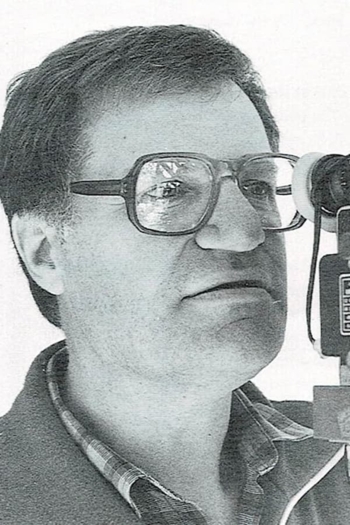
1939 (86 лет)Winkler characterises his films as "a synthesis of intellect and emotion, filtered through the plastic material of film". "I try to let 'imagines' flow freely to the surface". The ideas which he terms ‘imagines’ may reflect Australian icons like Bondi Beach, Ayers Rock/Uluru and the Sydney Harbour Bridge, or textures, as in Bark/Rind, Green Canopy, and the bush.
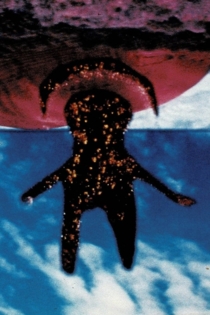
In 1973, Winkler's film Dark identified with the Aboriginal land rights movement, acquiring a spirituality which was also manifested in Chants and Red Church. Later films take contemporary society for their subject, as in Rotation, Time out for Sport and Long Shadows. His early apprenticeship is recalled in Brickwall, Backyard and Brick and Tile.
In 1995, the Museum of Contemporary Art and Sydney Intermedia Network mounted a retrospective screening of 30 of his films. The following year, the Carpenter Center for the Visual Arts, Harvard University, USA screened 30 films in a three-day retrospective. The Museum of Modern Art in New York, USA holds 15 of his films in their collection.
Isolated
Paul Winkler
“An impressionistic documentary. Black and white, alcoholics, blind people, wheelchairs...the down and out in Sydney. I was greatly influenced by documentary films I saw at the Workers’ Education Association Film Group. Real images were cut together with footage I’d shot in Waverley Cemetery—a cemetery here in Sydney—in a sort of symbolising where I suppose we all finish up, whether we’re handicapped or not! The film has no narration. Someone said I ought to have a composer write a soundtrack, so I went to great lengths...working with musicians in a studio. It was completely new to me, and I wasn’t really comfortable with it.” (Paul Winkler)
Isolated
Green Canopy
Paul Winkler
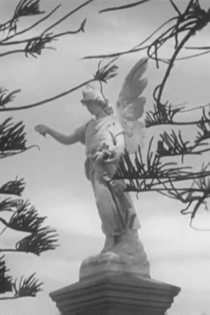
“Somewhere I read a headline ‘One million trees will be chopped down’ and I was absolutely horrified. My association with the Bush goes back a long time, and thinking that one day it might not be there tied my stomach in knots. I felt physically sick...like seasick...really off. Images were fermenting in my head, but I couldn’t see how to film what I was feeling. How do you film a blinding headache? A churning premonition? I tried shooting toothpaste glasses, filters, but nothing worked...until I found a way of doing it where I had these household glasses spinning at very fast speed in front of the lens. I didn’t want the film to be didactic, like Scars...more a veiled and brooding warning about impending loss.” (Paul Winkler)
Green Canopy
Incongruous
Paul Winkler
“I made this film in the heyday of the ‘80s... a lot of people spending and making a lot of money in a kind of mad frenzy... advertisements, everywhere, interest rates up to 15%, 17%. Everything was for sale, one way or another... high pressure selling, lending. I figured ‘Good grief, this is all water off a duck's back.’ I used a lot of advertisements cut out of newspapers, and juxtaposed ‘important’ images (the Queen, Jesus, warships) and hectic activity with ducks, swimming around serenely in their ponds... things overwhelmingly important to some, totally unimportant to others. Ducks carry a lot of associations in the English language... ‘ducking for cover’, ‘sitting duck’ and so on.” (Paul Winkler)
Incongruous

Urban Spaces
Paul Winkler
“A totally artificial city created entirely in camera. There is virtually no sky…just a city gone mad and town planning berserk. Crazy angles created by a tilted camera are mirrored and enhanced by dutifully askew mattes which mock the architectural logic of urban space. Shadows and wind generated by the city’s structures defy pedestrians as the soundtrack (an insistent sine-wave) aggravates and reverberates off heavy geometric facades.” (Paul Winkler)
Urban Spaces
Neurosis
Paul Winkler
“I now knew that I'd found a style to interpret an emotional event filmicly. The unabating atrocities of the Vietnam War, the growing protest movement in Australia, and the ghastly images we witnessed each day in newspapers and on TV formed my material. I wanted to get into the minds of the protesters, into their (my) anger. Protest rallies and the horror of the press were captured with a frantic camera and very fast zooming. The power of sound and image was heightened with often-rapid (sometimes single-frame) montage.” (Paul Winkler)
Neurosis
Chants
Paul Winkler
“After three very hectic films, I needed something to soothe my nerves. I came across these Coptic crosses in a Greek souvenir shop. and at the time I also heard some Gregorian chants. I thought these cheap plastic crosses looked really beautiful...and I shot them against black velvet so that they appeared to float, emanating something, in a deep space...kind of heavenly images. Nothing much happens...it's really a meditation. Funnily enough I found that the Hare Krishna Movement (which was flourishing at the time) rented the film out a lot to use at their camps. Another time Albie [Thoms] used some of the footage on GTK [ABC TV's youth/pop program], where it looked very odd indeed. I believe that Gregorian chants were in the hit parade only recently. This sort of spirituality touches all kinds of people...” (Paul Winkler)
Chants

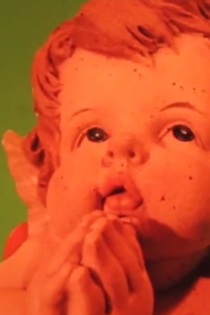

Scars
Paul Winkler
“The destruction of trees in Sydney...chainsaws, the trees really screaming out. Rapid zooming, often close up shooting. In Edgecliff and Paddington, near where I lived, I'd travel around with the council workers as they lopped established trees, made way for progress...power lines, new buildings. On the Cahill Expressway, across from the Art Gallery of New South Wales, huge old Moreton Bay Figs were being butchered. As they were ripping and cutting into the trees, I was ripping into them…very physically, rapid zooming. I wanted a very strong message. It was way over the top, really…screeching chainsaws and woodchip machines. There was no real Green Movement in those days. When I showed the film, people came up to me and said I’d made them feel guilty for lopping down trees in their own yard. The aggression of the film still causes people trouble.” (Paul Winkler)
Scars
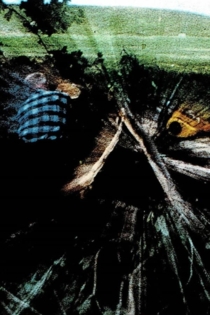
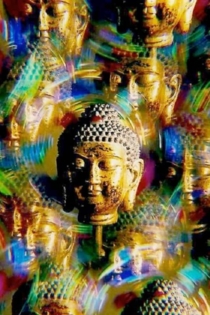
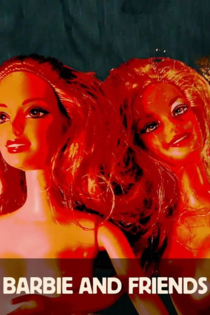
Bark-Rind
Paul Winkler
“I wanted to make grass grow...to show the life force of a tree. Bark-Rind was shot totally single-frame...each shot exposed three times...close-up, mid shot, long shot. I used the sound of insects, signifying pollination, life...and I tried to make their sound visible. The camera starts on the grass, flowers, then works its way up the trunk, into the crown of the tree, then onto the next tree. The film vibrates...switching from sound/film...film/sound. You wonder whether you're looking at a film image or at the sound itself.” (Paul Winkler)
Bark-Rind
Glitter
Paul Winkler
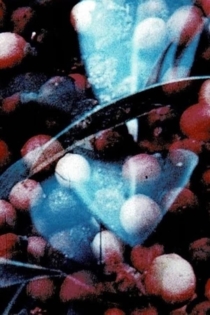
“Sydney. Another symphony of the city...inspired by the hectic, rollercoaster times. Buildings were going up left right and centre...‘Money Makes the World Go Round’ came to mind...I developed a little device which carried lenses in front of the camera, with a motor which made the images actually go around...people in the city...people and money going ‘round and ‘round. The soundtrack was pinball machines and muzak. Sydney was showing off its wealth, spreading out and up...Darling Harbour...more and more sparkling glass. A lot of it was the Emperor’s new clothes...many of those ‘buildings’ are still only holes in the ground.” (Paul Winkler)
Glitter
Ayers Rock
Paul Winkler
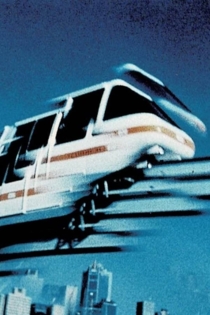
“For many years I had wanted to visit the Rock, but I had never really had the means. A little funding from Germany finally got me there. I had read a lot about the history and mythology of the Rock and of the Aboriginal people, but I was only too aware that I, as a European, could never hope to get into or feel that mythology. So I decided to make a film about it from my perspective. I cut out all these mythological figures…lizards, emus, wallabies…some of them from drawings in caves on the Rock, and carefully employed them as mattes for footage I shot in real time. In those days hotels were very close to Ayers Rock [now known as Uluru], so I never had to go very far with my camera. I used filters and telephoto lenses to suggest a kind of unknowable aura…to show that there was truly something out there on that flat plain.” (Paul Winkler)
Ayers Rock