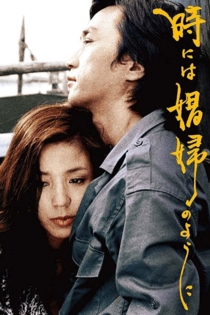
Sumiko Sakamoto
1936 (89 лет)Sumiko Sakamoto was born on November 26, 1936 in Osaka, Japan. Sakamoto is a singer and award-winning actress whose heartfelt performances made her a favorite of the late film director Shohei Imamura. Imamura cast her in three of his films, among them "The Ballad of Narayama," winner of the Palme d'Or at the 1983 Cannes Film Festival, in which her brilliant portrayal of an elderly mother not only earned her a kiss from Orson Welles, but also the Japanese Best Actress Award from Nihon Academy.
Description above from the Wikipedia article Sumiko Sakamoto, licensed under CC-BY-SA, full list of contributors on Wikipedia.
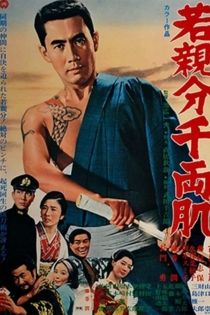
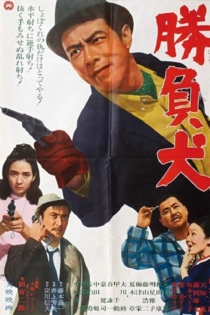
勝負犬
Yoshio Inoue
Jirō Tamiya, Shigeru Amachi
A series of murders has been committed by someone with a new model gun, a Mord-Gessel X 38. Indeed, Daisuke himself is almost killed while investigating the case. This occurred while he was with Ritsuko, daughter of a company president. Detective Kimura thinks that the president himself, returned to Japan after an absence of fifteen years, might be the killer, or at least the man who supplied the gun. Ritsuko's father limps and though she explains this as the result of a traffic accident, Kimura remembers a narcotics smuggler named Suginami who shot himself in the ankle and then escaped from the hospital. He believes that the company president and the drug peddler are the same.
The Silent Gun

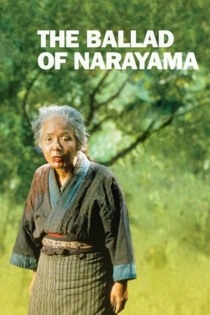
The Ballad of Narayama
Shōhei Imamura
Ken Ogata, Sumiko Sakamoto
In a small village in a valley everyone who reaches the age of 70 must leave the village and go to a certain mountain top to die. If anyone should refuse they would disgrace their family. Old Orin is 69. This winter it is her turn to go to the mountain. But first she must make sure that her eldest son Tatsuhei finds a wife.
The Ballad of Narayama
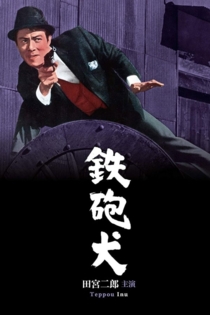
Silence Has No Wings
Kazuo Kuroki
Mariko Kaga, Hiroyuki Nagato
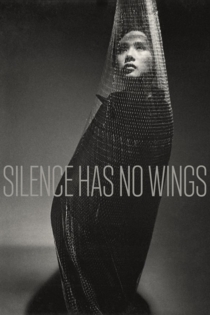
Following the journey of a caterpillar along the Japanese islands from Nagasaki to Hokkaido, this allegorical and oblique first feature film by Kuroki depicts in exquisite images a series of encounters and life's turning points.
Silence Has No Wings
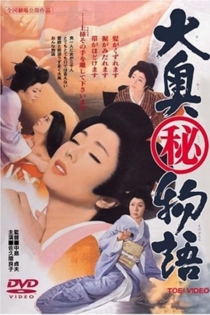
The Pornographers
Shōhei Imamura
Shoichi Ozawa, Sumiko Sakamoto
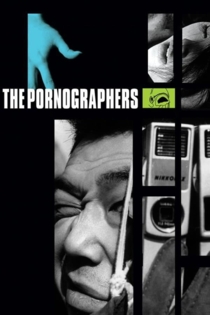
Subu makes pornographic films. He sees nothing wrong with it. They are an aid to a repressed society, and he uses the money to support his landlady, Haru, and her family. From time to time, Haru shares her bed with Subu, though she believes her dead husband, reincarnated as a carp, disapproves. Director Shohei Imamura has always delighted in the kinky exploits of lowlifes, and in this 1966 classic, he finds subversive humor in the bizarre dynamics of Haru, her Oedipal son, and her daughter, the true object of her pornographer-boyfriend’s obsession. Imamura’s comic treatment of such taboos as voyeurism and incest sparked controversy when the film was released, but The Pornographers has outlasted its critics, and now seems frankly ahead of its time.
The Pornographers

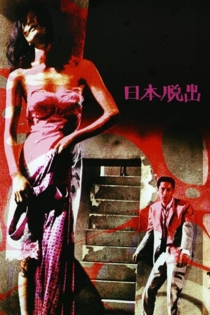
遙かな時代の階段を
Kaizô Hayashi
Masatoshi Nagase, Kiyotaka Nanbara
Broke, with his vintage Nash convertible repossessed, private eye Mike Hama is reduced to combing the mean streets of the Yokohama waterfront on a borrowed bicycle. But when Lily, a beautiful stripper from out of Hama's past, returns to town, the fuse is lit on a criminal powder keg set to blow the lid off the Yokohama underworld.
The Stairway to the Distant Past


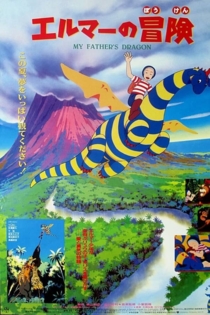
エルマーの冒険
Masami Hata
YU-KI, Megumi Hayashibara
Elmer is told by a traveling cat about a baby dragon who is being held captive and mistreated on the scary Wild Island. Elmer decides to investigate and battles tigers, crocodiles and gorillas in order to rescue the little dragon.
My Father's Dragon