Sanshô Shinsui
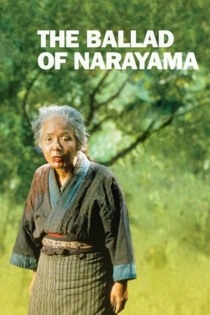
2021The Ballad of Narayama
Shōhei Imamura
Ken Ogata, Sumiko Sakamoto
In a small village in a valley everyone who reaches the age of 70 must leave the village and go to a certain mountain top to die. If anyone should refuse they would disgrace their family. Old Orin is 69. This winter it is her turn to go to the mountain. But first she must make sure that her eldest son Tatsuhei finds a wife.
The Ballad of Narayama
The Eel
Shōhei Imamura
Koji Yakusho, Misa Shimizu
White-collar worker Yamashita finds out that his wife has a lover visiting her when he's away; so he suddenly returns home and kills her. After eight years in prison, he returns to live in a small village, opens a barber shop (he was trained as a barber in prison) and talks to almost no one except for the eel he "befriended" in prison. One day he finds the unconscious body of Keiko, who attempted suicide and reminds him of his wife. She starts to work at his shop, but he doesn't let her become close to him.
The Eel

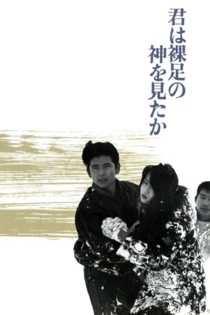
君は裸足の神を見たか
Kim Soo-Kil
Tamotsu Ishibashi, Gen Kodama
2 almost inseparable friends. The talented painter recognized by all decided to leave the town where they live and become an artist and the shy poet who only sees his future in his mother's business.
Have You Seen the Barefoot God?
女衒
Shōhei Imamura
Ken Ogata, Mitsuko Baisho
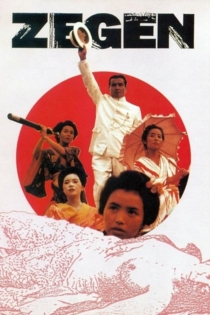
At the time between the World Wars, Japan is involved in empire-building throughout East and Southeast Asia. After a brief career as a low-level military adventurer, Iheiji sets up chains of brothels throughout Asia. As Japan's power in the region grows, so does Iheiji's prosperity and patriotism.
Zegen
ええじゃないか
Shōhei Imamura
Shigeru Izumiya, Kaori Momoi
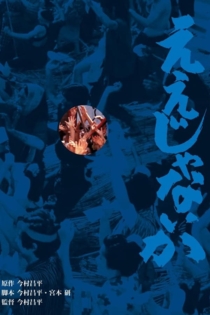
The film depicts carnivalesque atmosphere summed up by the cry "Ei ja nai ka" ("Why not?") in Japan in 1867 and 1868 in the days leading to the Meiji Restoration. It examines the effects of the political and social upheaval of the time, and culminates in a revelrous march on the Tokyo Imperial Palace, which turns into a massacre. Characteristically, Imamura focuses not on the leaders of the country, but on characters in the lower classes and on the fringes of society.
Why Not?
The Scythian Lamb
Daihachi Yoshida
Ryo Nishikido, Fumino Kimura
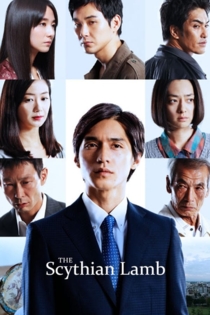
Based on a manga written by Tatsuhiko Yamagami, the story is set in a former seaport town Uobuka, where 6 former criminals were sent to live there by the government, with the intention of re-socialising them. Aside from the few who know about the project, the general townsfolk has no idea of the former convicts' identities. Tsukisue is the pleasant and efficient municipal official put in charge of the programme. As he slowly learns about their past, a body is discovered.
The Scythian Lamb
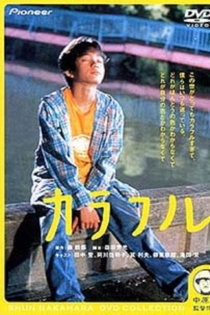
Colourful
Shun Nakahara
Kôki Tanaka, Koki Tanaka
Upon reaching the train station to death, a dejected soul is informed that he is "lucky" and will have another chance at life. He is placed in the body of a 14-year-old boy named Makoto Kobayashi, who has just committed suicide.
Colorful
謝罪の王様
Nobuo Mizuta
Sadao Abe, Mao Inoue
Ryoro Kurojima (Sadao Abe) is the director of a Tokyo apology center. His job is to teach others how to apologize. Ryoro Kurojima solves problems by using his apology techniques on anything from simple arbitration to a national crisis.
The Apology King


殺し
Masahiro Kobayashi
Ryo Ishibashi, Nene Otsuka
The movie is absurd, and a thoroughly original take on the morale in Japanese society. The images are beautiful, and the people are as cold as the snow that surrounds them. The take on Melville's "Samoraï" from -67 is obvious, but Kobayashi turns the image around and portrays the killer as the weakest person in the movie - haunted by his demanding wife and the moaning contractor, who is one of the most mysterious characters ever portrayed in a movie.
Film Noir

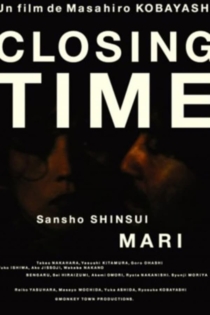
Closing Time
Masahiro Kobayashi
Sanshô Shinsui, Takeo Nakahara
A down-and-out scriptwriter spends his days and nights in the bars of Tokyo. When he is thrown out of a joint because it is closing time, there is always a willing lady to spend the rest of the night with. In the street he has countless semi-philosophical discussions with fellow drinkers, male and female, (shot in black-and-white, as prologue to the different chapters) but in the end it often comes down to one thing: the bottle of whisky that has to be finished. An encounter with a homeless young man with AIDS marks a turning point in the life of the writer.
Closing Time
Parasite Eve
Masayuki Ochiai
Hiroshi Mikami, Riona Hazuki
Toshiaki Nagashima is a biologist who is doing major research on mitochondria. When his beautiful young wife is tragically involved in a car accident which leaves her brain dead, in desperation he steals her liver from her body in order to recieve the mitochondria from it to resurrect his wife from the dead. The killer mitochondria takes the form of his assistant.
Parasite Eve

女高生 天使のはらわた
Chūsei Sone
Machiko Ohtani, Tatsuma Higuchi
Three gangsters spend their time assaulting students until their leader feels guilty and saves a young girl from being raped. Following the incident the gang decides he must now prove himself by raping her himself.
Angel Guts: High School Co-Ed

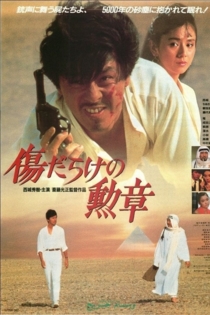
傷だらけの勲章
Kōsei Saitō
Hideki Saijô, Naomi Chiaki
In the desert of Egypt, Kurata, the CEO of the Japanese corporation Tokokaihatsu, is killed by a sniper. After the news reaches Japan, the CEO's lawyer, Yamamoto, receives a visit from two men that attempt to steal the deceased CEO's will. This is witnessed by two detectives, Tsuzuki and Ōnuki, but they fail to catch the perps. Yamamoto hands the detectives a set of keys before he stops breathing. Tsuzuki and Ōnuki now have to investigate Kurata's murder...
Desperate Pursuit